

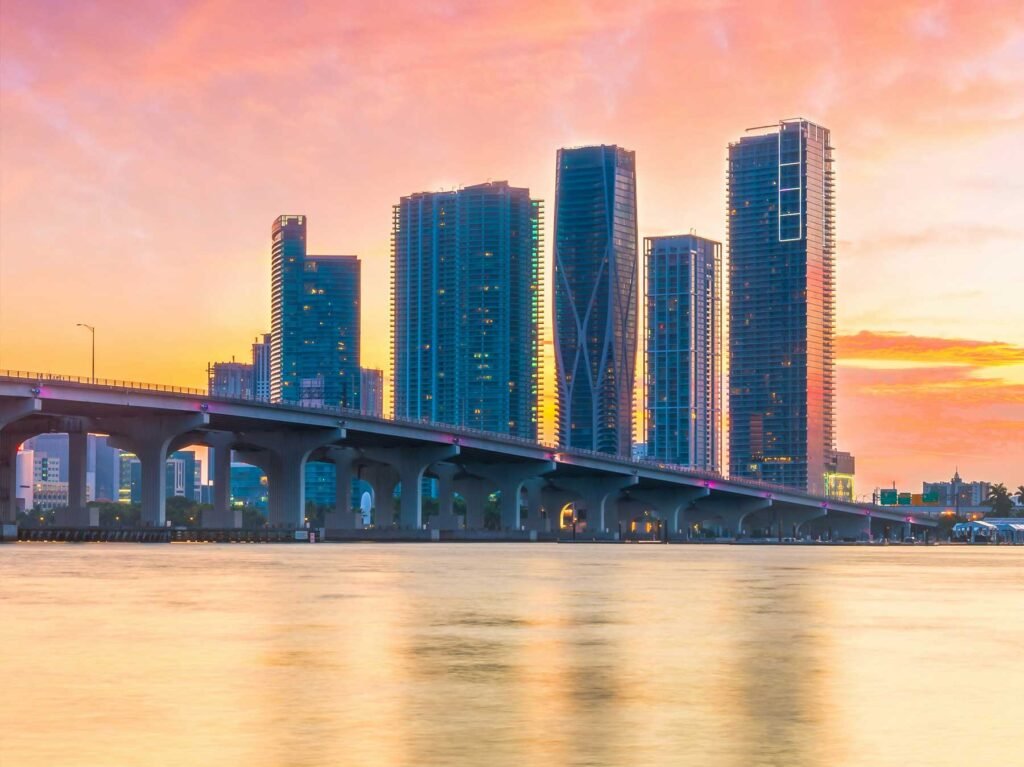
A condo hotel is not a condominium with a nice lobby. It is a legally distinct asset that Fannie Mae and Freddie Mac will not finance at all, and a single feature is enough to put a building in that category — a registration desk, daily cleaning, a mandatory rental pool, or simply the word “hotel” in the building’s name. Buyers discover this at the mortgage application, which is the most expensive possible moment to discover it.
| Conventional financing (Fannie/Freddie) | Ineligible |
| Disqualifying features needed | Any one |
| Florida licence trigger | More than 3 lets a year under 30 days |
| Remaining lender universe | Non-QM and portfolio |
What makes a building a condotel
The classification is not a matter of degree or of marketing. Under Fannie Mae and Freddie Mac guidelines a project is treated as a condotel — and therefore ineligible for conventional financing — if it exhibits any one of the following:
Hotel-type services. A rental or registration desk, daily cleaning service, central key systems, room service, or comparable guest services.
Mandatory rental pooling. Any legal requirement that owners participate in a rental programme or share revenue with the association or a management company — including blackout dates or seasonal restrictions on the owner’s own use of their own unit.
Hotel-style management. The association holds a hotel, motel or resort licence, or a hotel or resort operator manages the project and facilitates short-term letting.
Hotel naming or branding. The building’s legal or common name contains “hotel,” “motel” or “resort,” unless that is purely historical and no longer operational.
Hotel conversion. The structure began life as a hotel and was not fully rehabilitated to remove its transient-housing characteristics.
A project-level hotel rating. The complex carries a hotel or resort rating on travel or booking platforms.
Read that list again with Miami in mind. Sunny Isles, Mid-Beach, Brickell and Downtown are full of buildings that trip at least one of those wires. A great many of them are marketed simply as luxury condominiums, and a great many buyers go under contract without ever asking the question.
The financing consequence, and why it just got sharper
Because the agencies treat condotels as ineligible commercial-style properties, the conventional mortgage market is closed. What remains is non-QM lending and portfolio lenders — institutions that keep the loan on their own balance sheet and write their own rules.
That market functions and it is not exotic. But it prices differently: larger deposits, different rate structures, and underwriting that looks harder at the unit’s income than at the borrower’s salary. The gap between a conventional rate and a condotel rate is the real cost of the category, and it persists for as long as you hold the asset — and for whoever buys it from you.
This matters more this month than it did last month. On 3 August 2026 the agencies retired Limited Review, so every conventional condo loan on a building of more than ten units now triggers a Full Review of the project. Full Review is precisely the process at which a building’s hotel characteristics surface. Features that previously slipped through on a light questionnaire — a rental desk, a management agreement, a hotel-branded name — are now examined on every file.
The practical effect is that some buildings which have been financing as ordinary condominiums are about to be reclassified in the eyes of lenders. Nothing about the building will have changed. The examination did.
Condo hotel, hotel condo, branded residence: three different things
The vocabulary is used loosely and the distinctions carry real money.
A condo hotel is a hotel whose rooms are individually owned. There is a rental programme, usually run by the operator, and the unit is a hospitality asset that you happen to hold title to. Your use of it is typically limited. This is the category the agencies refuse.
A hotel condo — a residential condominium sharing a site, and sometimes amenities, with a separately owned hotel — may or may not be a condotel depending entirely on how the documents are written. If the residences have their own association, no mandatory rental pool, no registration desk of their own and no hotel branding on the residential component, they can finance conventionally. If any of those are shared, they may not.
A branded residence is a residential condominium licensing a hospitality brand’s name and service standards without being a hotel. These usually finance conventionally, provided the service package does not import daily housekeeping and a registration desk into the residential building.
The lesson is that the label on the brochure decides nothing. The declaration, the management agreement and the association’s licence status decide everything, and all three are documents you can read before you close.
The Florida licence, and the number that triggers it
If you intend to let the unit at all, a second regulatory layer applies and it is more specific than most buyers expect.
Florida’s Department of Business and Professional Regulation requires a vacation rental licence when an entire unit is rented more than three times in a calendar year for periods of less than thirty days, or when it is advertised or held out to the public as a place regularly rented to guests. Renting individual rooms does not trigger the requirement.
The state issues two classifications: Vacation Rental – Condominium, for units within a condominium or cooperative, and Vacation Rental – Dwelling, for houses, townhouses and buildings of four units or fewer.
Licences are then held in one of three forms. A single licence covers one property owned or operated by one person or entity. A group licence is issued to an agent representing all units in one building or complex. A collective licence covers an agent managing separate properties, capped at 75 units within one district.
Two things follow for a Miami buyer. First, “three times a year” is a low bar — a unit let for four long weekends is over it. Second, if the building runs a rental programme, the operator usually holds a group licence, which is convenient but also one of the features that makes the project a condotel. The thing that makes letting easy is the same thing that makes financing hard.
What you are actually buying, financially
A condo hotel unit is a small hospitality business with a deed attached, and it should be underwritten that way.
Revenue is shared, and the split is the deal. In a typical programme the operator takes a percentage of room revenue before costs. Read where in the waterfall your share sits, because a split calculated on gross revenue and one calculated after operating expenses are entirely different economics.
Your own use is a cost. Owner-occupancy nights are usually capped, often blacked out in peak season, and every night you stay is a night that does not earn. Value the asset on the nights you can actually sell, not on the nights that exist.
Furniture, fixtures and equipment reserves are real and recurring. Hotel rooms are refurbished on a cycle. That cost is passed to owners, and it is not the same line as the condominium’s structural reserves.
Occupancy is seasonal and Miami’s season is short. Underwrite on annual occupancy, not on March.
Exit liquidity is narrower than entry liquidity. Your future buyer faces the same financing constraint you did, minus whatever enthusiasm the market has lost in the meantime. A category with a restricted lender universe has a structurally smaller resale pool.
None of that makes the category a bad investment. Some of these buildings are among the best-located and best-run assets in the city, and a professionally operated rental programme can outperform a private short-term letting operation comfortably. But it is an income asset, and income assets are valued on income, not on price per square foot.
The six questions to ask before you go under contract
1. Is this project classified as a condotel by lenders? Ask a mortgage broker who has financed in the building. This is a five-minute question with a five-figure answer.
2. Is participation in the rental programme mandatory? If yes, the building is a condotel and conventional financing is closed. If it is optional, ask whether it is optional in the declaration or merely optional in practice — only the first counts.
3. Does the association hold a hotel, motel or resort licence? One line in the association’s records, and it settles the classification.
4. How many nights a year may I use my own unit, and when? Get the blackout calendar in writing before you fall in love with the view.
5. How is the revenue split calculated, and against what? Gross room revenue, net of what, and who bears channel commissions and credit-card fees.
6. What does the FF&E reserve run at, and when is the next refurbishment cycle? A refurbishment year converts an income asset into an expense.
Where the condo hotels are in Miami
Sunny Isles Beach and Mid-Beach hold the largest concentration of true condo hotels, generally the newest product and the most professionally operated programmes, with the tightest owner-use restrictions.
Downtown and Brickell hold the mixed-use towers where a hotel occupies lower floors and residences sit above. These are the buildings where the classification question is genuinely ambiguous and where reading the declaration pays for itself.
South Beach holds the converted historic hotels, where the transient-use character is often original to the building and therefore hardest to remove for financing purposes.
North Miami Beach and Aventura hold the older programmes, which sometimes offer better yields and almost always carry the heaviest refurbishment liabilities.
The right question is never whether condo hotels are good or bad. It is whether this particular building’s documents produce an asset you can finance, use on terms you accept, and eventually sell to somebody facing the same constraints you did. That is knowable in advance, from documents you are entitled to see, before you have spent anything but time.
Miami condo hotels: what buyers get wrong
Can I get a conventional mortgage on a condo hotel?
No. Fannie Mae and Freddie Mac treat condotels as ineligible, so conventional financing is closed to the category. Buyers use non-QM lenders or portfolio lenders, which keep the loan on their own balance sheet. That market works, but it generally requires a larger deposit, prices differently from a conventional loan, and underwrites the unit’s income more than the borrower’s salary.
What exactly makes a building a condotel?
Any one of the following is enough: hotel-type services such as a rental or registration desk, daily cleaning, central key systems or room service; mandatory rental pooling or revenue sharing, including blackout dates on the owner’s own use; a hotel, motel or resort licence held by the association, or management by a hotel or resort operator; the words “hotel,” “motel” or “resort” in the building’s legal or common name; conversion from a hotel without full rehabilitation; or a hotel or resort rating on travel and booking platforms.
Did the August 2026 rule changes affect condo hotels?
Indirectly, and significantly. On 3 August 2026 Fannie Mae and Freddie Mac retired Limited Review, so every conventional loan on a building of more than ten units now requires a Full Review of the project. Full Review is exactly where hotel characteristics surface. Buildings whose hotel-like features previously passed unexamined on a light questionnaire are now being looked at on every file, so some are effectively being reclassified without anything about the building having changed.
Do I need a licence to rent out my Miami condo?
In Florida a vacation rental licence is required if you rent the entire unit more than three times in a calendar year for periods of less than thirty days, or if it is advertised or held out to the public as regularly rented to guests. Renting individual rooms does not trigger it. Units in a condominium are licensed as “Vacation Rental – Condominium,” and the licence itself is issued as single, group or collective — the last being for an agent managing separate properties, capped at 75 units in one district. Local rules and the condominium’s own declaration apply on top of this.
Is a branded residence the same as a condo hotel?
No. A branded residence licenses a hospitality brand’s name and service standards without being a hotel, and it usually finances conventionally — provided the residential building has not imported a registration desk and daily housekeeping. A condo hotel is a hotel whose rooms are individually owned, with a rental programme and limits on your own use. A third case, the mixed hotel-and-residence tower, can fall either way depending entirely on how the declaration and management agreement are written.
Are condo hotels a good investment in Miami?
They can be, provided you value the unit as an income asset rather than on price per square foot. Underwrite the revenue split and where in the waterfall your share sits, the number of nights you may actually use it and when, the furniture and equipment reserve and the refurbishment cycle, and annual rather than peak-season occupancy. Then account for exit liquidity: your future buyer faces the same restricted lender universe you do, which structurally narrows the resale pool.
Sources and further reading
- Florida DBPR — Guide to vacation rentals and timeshare projects, licence categories and triggerswww2.myfloridalicense.com
- Florida DBPR — Which rental properties need a vacation rental licencemyfloridalicense.custhelp.com
- Gibson Home Loans — What is a condotel, and why Fannie and Freddie say nogibsonhomeloans.com
- CNBC — Condo buyers face new mortgage rules under Fannie Mae, Freddie Mac, 1 August 2026cnbc.com