

Miami Luxury Condos · Downtown Miami · One Thousand Museum
84 residences across 62 floors.
By Josh Stein · Florida license SL3057661 · Updated 12 October 2026Leer en español →
12 condos for sale at One Thousand Museum, average list price $1,687.62 per sq ft (total list price ÷ total sq ft).
- Asking range$6,700,000 to $21,950,000
- List price per sq ft$1,687.62
- Months of inventory48.0
- Sold, 12 months3


Listing information is deemed reliable but is not guaranteed and is provided exclusively for consumers' personal, non-commercial use. Data is supplied by the MLS and may be subject to change or withdrawal without notice.
Last updated 1 second ago
Key facts about One Thousand Museum
| Address | 1000 Biscayne Boulevard, Miami FL 33132 |
|---|---|
| For sale now | 12 |
| For rent now | 3 |
| List price range | $6,700,000 to $21,950,000 |
| Size | 4,600 to 10,411 sq ft |
| Bedrooms | 4 to 6 BR |
| List price per sq ft | Average $1,687.62, low $1,457, high $2,113 |
| Monthly HOA | $8,000 to $19,876 |
| Year built | 2019 |
| Amenities | Beach Rights, Bike Storage, Business Center, Clubhouse, Community Kitchen, Elevators, Fitness Center, Golf Course, Hobby Room, Maintenance Grounds, Management, Parking, Pool, Sauna, Spa Hot Tub, Trash |
| Neighborhood | Miami |
Residences at One Thousand Museum
| Bedrooms | For sale | Size (sq ft) | List price | Avg $/sq ft | Last sale |
|---|---|---|---|---|---|
| 3 or more | 12 | 4,600 to 10,411 | $6,700,000 to $21,950,000 | $1,687.62 | $21,925,000 (September 3, 2026) |
Unit lines
| Line | Records | Bedrooms | Size (sq ft) |
|---|---|---|---|
| 01 | 8 | 4 to 6 BR | 4,600 to 10,411 |
| 02 | 10 | 4 BR | 4,600 to 4,755 |
The last two digits of the unit number (05 in 305, 405, 505).
Recently sold in
4 listings


One Thousand Museum is an 84-residence, 62-floor tower at 1000 Biscayne Blvd in Downtown Miami, completed in 2019 and designed by Zaha Hadid. It recorded 4 sales in the 12 months to 23 September 2026, at a median of $9,600,000, or $1,392 per square foot, on the Miami-Dade County Property Appraiser record. The latest recorded sale was on 2 July 2026.
Verified 23 September 2026Dezeen, Zaha Hadid Architects, One Thousand Museum +3 more6 sources
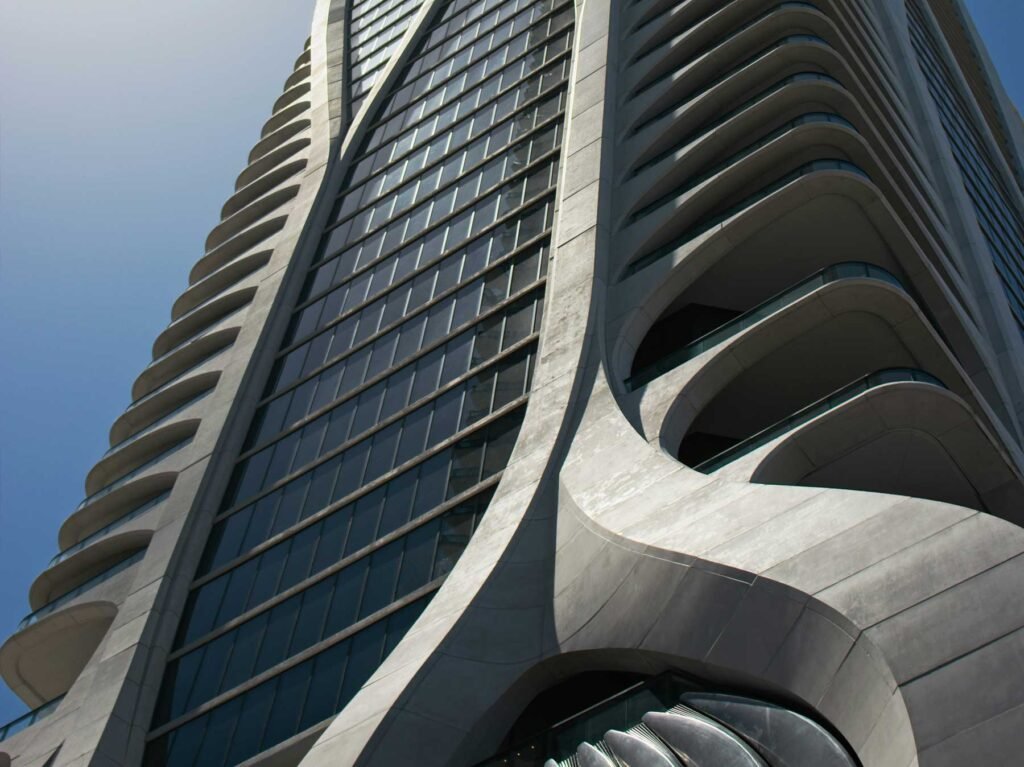
One Thousand Museum tower by Zaha Hadid seen from below
Key Takeaways
- One Thousand Museum recorded 4 sales in the 12 months to 23 September 2026 — at a median of $9,600,000, or $1,392 per square foot, on the Miami-Dade County Property Appraiser record. The latest recorded sale was on 2 July 2026. Own at One Thousand Museum? Ask Josh what yours would sell for on WhatsApp.
- 84 residences across 62 floors — at 1000 Biscayne Blvd.
- Status: Delivered — completed 2019 — verified against the county roll and the development trade record.
- Developed by Louis Birdman, Gregg Covin, Kevin Venger, Regalia Group.
- Architecture by Zaha Hadid.
- Year built: 2019.
One Thousand Museum, by the numbers
Developer: Louis Birdman, Gregg Covin, Kevin Venger, Regalia Group · Architect: Zaha Hadid. Source: the building record on this site.
Get this building’s next recorded sale — before the listing sites catch up
- Every closed sale we can verify from the Miami-Dade record — price, date, and $/sqft when the deed supports it — not an IDX feed.
- Optional alert when a new deed posts in this building (or a short list of comps you choose).
- No spam inventory blasts. One building. One record. You decide what happens next.
Tell Josh which building. He’ll send the latest closed sales and set a quiet alert.
Have a question about One Thousand Museum? This page is built from the county record and the trade press, not a listing feed. If you want what has actually closed here, or an honest read on whether it suits you, ask me directly.
One Thousand Museum was “Zaha Hadid’s first residential tower in the Western Hemisphere, and one of the final projects designed by Hadid in her lifetime.” It is 700 feet and 62 stories containing 84 residences on the county roll (83 as published), and its exterior is not a façade in the ordinary sense: it is 5,000 pieces of glass-fibre-reinforced concrete forming the building’s actual structure.
That single decision — putting the skeleton on the outside — is the reason to buy here, and the reason to read the reserve study more carefully than usual.
- 1000 Biscayne Boulevard, Miami — facing Museum Park
- 700 feet (210 m), 62 stories
- 83 residences as published (the county roll carries 84): 4 townhouse-style, 70 half-floor apartments, 8 duplex penthouses, 1 penthouse
- Architect Zaha Hadid Architects, with ODP Architects; structure by DeSimone Consulting Engineers
- Topped out February 2018; completed 2019
- Exoskeleton of 5,000 pieces of glass-fibre-reinforced concrete
- Double-height rooftop aquatic centre; helipad on the roof
What the exoskeleton actually does for you
Structure on the outside
Most towers carry their loads through internal columns and a central core, then hang a glass curtain wall on the outside. One Thousand Museum inverts that. The white curving elements you see from Biscayne Boulevard are doing structural work. Project director Chris Lepine described the intent precisely: “The design expresses a fluidity that is both structural and architectural. What you see is literally structure getting thicker and thinner, as needed.”
The late Zaha Hadid designed One Thousand Museum’s 62 stories and just 84 residences, one building in Miami condos designed by starchitects.
Engineering, not sculpture
At the base, those elements “widen and splay out to form ‘rigid tubes’ that are ‘highly resistant’ to demanding wind loads” — which, in a hurricane-exposed downtown location, is the engineering justification for what most people read as sculpture.
What it frees inside
The consequence inside is the part that sells the building and is rarely explained: moving the structure outward frees the interiors. With 70 of the 84 residences occupying half a floor each, and the load path largely at the perimeter, you get expanses of uninterrupted space and glass that a conventional column grid would break up. Buyers who tour it register “the views” — what they are actually reacting to is the absence of columns in front of them.
The question to ask about a structural façade
Here is the corresponding diligence point, and it is not in any brochure.
Envelope and structure are one programme
When the exterior is the structure, envelope maintenance and structural maintenance become the same programme. On a conventional tower a curtain wall can be resealed, repaired or in the limit replaced without touching the frame. Here, 5,000 bespoke GFRC elements sit permanently exposed to a saltwater-adjacent, high-UV, hurricane-loaded environment — and they are load-bearing.
That is not a defect. GFRC is durable and the engineering is serious. But it means:
- The reserve study’s treatment of the exoskeleton is the single most important line in the association’s finances. Ask what inspection cycle, sealing and repair regime it assumes, and whether that line is funded.
- Ask whether the association has an engineer on retainer familiar with the system. This is not a building where a generalist façade consultant is adequate.
- Ask what has already been done. A tower completed in 2019 should by now have an established inspection history. Its absence is more informative than its contents.
Divided across only 84 homes, any significant envelope programme here is expensive per unit. That is the arithmetic of boutique luxury and it applies to the amenities too — a double-height rooftop aquatic centre and a helipad are not diluted across four hundred households.
The location — Museum Park, and why it holds
The building faces Museum Park on Biscayne Boulevard, which puts the Pérez Art Museum Miami and the Frost Museum of Science at the doorstep, with the Kaseya Center and the Arsht Center within a short walk and Brickell, the Design District and the causeways all close.
The park that cannot be built on
The durable part of that is the park itself. Like the public parkland beside Renzo Piano’s Eighty Seven Park in North Beach, a civic open space is not a neighbour who might sell to a developer. Downtown Miami has been comprehensively re-platted around this building since 2019; the park has not. In a submarket where the standard risk is that someone builds taller and closer, that matters more than any amenity.
The honest counterpoint: this is downtown, not a barrier island. It is urban, it is busy on event nights at the arena, and it is not a beach address. Buyers who want quiet and sand should be looking at Bal Harbour or Key Biscayne. Buyers who want a landmark building, cultural institutions on foot and genuine bay-and-city views are in the right place.
Where does One Thousand Museum stand on its milestone inspection?
Under Florida Statute 553.899, buildings three stories or taller require a milestone structural inspection by December 31 of the year the building turns 30 years old by default, and every 10 years after that. A separate provision, §553.899(3)(b), lets the local enforcement agency require an earlier 25-year inspection where local conditions such as proximity to salt water warrant it. Miami-Dade County has exercised that discretion for unincorporated Miami-Dade: coastal buildings three-plus stories built in 1998 or later must recertify at 25 years. One Thousand Museum sits in the City of Miami, however — not unincorporated Miami-Dade — and the city’s own building department has independent jurisdiction over recertification. Whether it has adopted the same 25-year threshold for buildings inside city limits has not been confirmed from a City of Miami primary source.
On a 2019 completion, that puts the first milestone inspection somewhere between the mid-2040s (if the 25-year coastal threshold applies) and around 2049 (if the statutory 30-year default applies) — a range, not a single settled year, until the City of Miami’s own determination is confirmed. Contact the City of Miami Building Department directly, or confirm against the certificate-of-occupancy date on record, before treating either figure as final.
Two decades of runway
Two decades of runway is a real asset in the current market, where a large share of Miami’s condominium stock is inside the milestone cycle now and assessing for deferred work. But note the specific nuance for this building: a structural exterior means the milestone inspection, when it comes, will be an inspection of the thing you look at. Associations that have maintained an inspection record from the start will meet that far more comfortably than those that have not.
- The reserve study’s exoskeleton line — inspection cycle, sealing and repair assumptions, and whether it is funded.
- The façade/structural inspection history since completion, and who performed it.
- Three years of budgets and the assessment history. With 84 homes carrying a landmark building, the monthly is a material part of the purchase and should be compared like-for-like against alternatives.
- The operating cost of the rooftop aquatic centre and the helipad — including whether the helipad is licensed and operable, or decorative. This is worth knowing before it becomes a disappointment.
- The certificate of occupancy date, which fixes the milestone year.
- The master insurance policy and its per-unit deductible. Above $50,000 per unit it breaks Fannie Mae eligibility.
- Twenty-four months of board minutes.
Financing context
Since 3 August 2026, Fannie Mae’s Lender Letter LL-2026-03 has retired the Limited Review path for established projects over ten units, so Full Review applies at every down-payment level and the lender reads the milestone report, reserve study, budget and insurance. From 4 January 2027, minimum reserves rise from 10% to 15% of annual budgeted assessment income.
In June 2026 Miami-Dade condominiums ran 11,550 active listings, 12.3 months of supply and a median down 3.1% to $431,000, with 48.5% of sales closing in cash. A project that fails Full Review becomes cash-only and loses roughly half its buyer pool — which is why a well-reserved, recently completed building is worth a premium that is not obvious from the finishes.
The price record — what seventy identical homes reveal
Everything above is about the building. This is about what it costs, taken from the Miami-Dade County Property Appraiser’s own file rather than from a listing site.
I pulled all 86 folios in the One Thousand Museum Condo declaration. One is the reference folio and one is a 5,864 sq ft ground-floor store, coded commercial and assessed at $2,565,500 — leaving 84 residential homes. The declaration’s undivided common-element shares close to exactly 100%. (The commonly published figure is 83 residences; the county carries 84 assessable homes today, and I have used its number.)
The building is unusually uniform, and that turns out to be the most useful thing about its record. 70 of the 84 homes are 4,600 square feet. Ten are 9,200 and four are 8,400 — every one of those a pair of units recorded under a single folio, with legal descriptions like units 5901 & 5902 and units 1202 & 1402. Bedroom counts run 70 four-bedrooms and 14 five-bedrooms. On the 2026 tax roll the 84 homes are assessed between $2,990,834 and $16,006,300, median $4,899,108.
| Year | Qualified sales | Median price | Median $/sq ft |
|---|---|---|---|
| 2023 | 3 | $7,500,000 | $1,630 |
| 2024 | 7 | $7,300,000 | $1,576 |
| 2025 | 6 | $6,625,000 | $1,239 |
| 2026 to date | 3 | $10,600,000 | $1,522 |
Do not read the 2026 row as a price level. Two of its three sales are combined homes, 8,400 and 9,200 square feet, so the median mixes very different sizes. Only one standard 4,600 sq ft home has traded in 2026 so far: $7,000,000 on 2 July 2026, or $1,522 per square foot (county pull of 23 September 2026). One sale is a data point, not a median.
Here is the version that cannot be argued with. Because seventy homes in this building are dimensionally identical, the record supports a comparison almost no Miami tower allows: the same floorplate, priced year after year, with size held constant.
| Year | Sales of the 4,600 sq ft plan | Median $/sq ft | Range |
|---|---|---|---|
| 2019 | 42 | $1,152 | $891 – $1,480 |
| 2020 | 15 | $891 | $695 – $1,304 |
| 2021 | 24 | $1,304 | $989 – $1,576 |
| 2022 | 10 | $1,484 | $1,260 – $1,630 |
| 2023 | 3 | $1,630 | $1,413 – $1,652 |
| 2024 | 6 | $1,581 | $1,521 – $1,630 |
| 2025 | 5 | $1,260 | $1,188 – $1,661 |
| 2026 to date | 1 | $1,522 | $1,522 |
That is the building’s whole life on one plan. It sold into 2019 at a median of $1,152 per square foot, fell to $891 in 2020, and then ran up almost without interruption to $1,630 in 2023 — an 83% recovery in three years. Since then it has gone the other way: $1,581 in 2024 and $1,260 in 2025, which is 22.7% below the 2023 peak on homes that are physically identical. The one 2026 sale so far, in July, was $1,522.
No mix argument can explain that away, and I am not going to soften it. What I will say is that 2023 rests on three sales and 2025 on five, so the shape of the arc is far better supported than any single year’s exact figure — and the 2025 range, $1,188 to $1,661, tells you that identical homes were still selling 40% apart within that year depending on floor and exposure.
Across the last four years, 19 qualified sales against 84 homes is a turnover of one home in 18 each year, which is illiquid, as you would expect at this size and price. The four-year band runs $940 to $2,677 per square foot.
The record sale is recent and it is a combined home: $24,625,000 on 29 January 2026 for units 5901 and 5902 together — 9,200 square feet, $2,677 per square foot, the highest price and the highest rate the county records here.
One more figure worth sitting with. There are 44 completed round trips, and 13 of them, 29.5%, resold for less than the previous owner paid, over a median hold of just 2.1 years. The median outcome across all 44 is a gain of 17.6%. Both numbers are true at once: this has been a good building to have bought in 2020 and a difficult one to have bought in 2023.
What I take from it. If you are buying, the 4,600 sq ft plan gives you a very clean comparable set: seventy identical homes, seven years of trades, and it currently argues that the 2023 level is not the market. If you are selling, price against 2024 and 2025 trades on your own floor band, and be ready for a buyer to produce the same table I just did.
The honest summary
One Thousand Museum is a genuine landmark: Hadid’s first residential tower in this hemisphere and among her last designs, 84 residences behind a structural exoskeleton that buys the interiors their column-free openness, opposite a park that cannot be built on, two decades from its first milestone.
What a buyer is underwriting is a bespoke structural envelope carried by 84 households. Get the reserve study and the inspection history, and this is one of the more defensible landmark purchases in Miami. Skip them and you are buying an icon without knowing what it costs to keep.
See also neighbourhood coverage across Miami, Monad Terrace and the Miami luxury tower market.
Related reading: the tower opposite on Museum Park · the downtown Miami market · penthouse inventory across Miami.
Own at One Thousand Museum?
If you own here, this page already carries the county’s record of what homes in One Thousand Museum have sold for. Here is how to use it.
Your three options
- Sell. Price against what comparable homes in the building have actually recorded, not against asking prices.
- Rent it out. Within the condominium’s rental rules, which vary from building to building.
- Hold. Watch the record: this page is updated from the county as new sales are posted.
What I will send you
Tell me your unit. I will send you the recorded sales of comparable homes in One Thousand Museum, what they sold for per square foot, and a straight read on what yours could sell for today.
Two free things for owners
One Thousand Museum — common questions
What have homes at One Thousand Museum sold for in the last 12 months?
4 sales were recorded on the Miami-Dade County Property Appraiser record in the 12 months to 23 September 2026, at a median of $9,600,000 ($1,392 per square foot). The latest recorded sale was on 2 July 2026. These are recorded closings, not asking prices. If you own at One Thousand Museum and want to know what your home would sell for, message Josh Stein on WhatsApp at (305) 695-8257.
Did Zaha Hadid design One Thousand Museum?
Yes. It was “Zaha Hadid’s first residential tower in the Western Hemisphere, and one of the final projects designed by Hadid in her lifetime.” Zaha Hadid Architects worked with ODP Architects, and DeSimone Consulting Engineers was responsible for the structure. The tower topped out in February 2018 and completed in 2019.
How many units are in One Thousand Museum?
84 residential homes on the Miami-Dade County Property Appraiser roll (83 residences as published), across 62 stories and 700 feet. The published mix is four townhouse-style properties, 70 half-floor apartments, eight duplex penthouses and one penthouse. Because 70 of the 84 occupy half a floor each, the typical residence is unusually large and open for a downtown Miami tower.
What is the One Thousand Museum exoskeleton?
The building’s exterior is its structure — 5,000 pieces of lightweight glass-fibre-reinforced concrete. At the base these elements “widen and splay out to form ‘rigid tubes’ that are ‘highly resistant’ to demanding wind loads.” Project director Chris Lepine described it as “structure getting thicker and thinner, as needed.” Moving the load path to the perimeter is what gives the interiors their column-free spans.
What should I check before buying at One Thousand Museum?
The most important item is how the reserve study treats the exoskeleton — inspection cycle, sealing and repair assumptions, and whether that line is funded. Because the exterior is structural, envelope maintenance and structural maintenance are the same programme, and 5,000 bespoke elements sit permanently exposed in a saltwater, high-UV, hurricane-loaded environment. Also request the inspection history since completion, three years of budgets, the operating cost of the rooftop amenities, the certificate of occupancy date and the master policy deductible.
When is One Thousand Museum’s milestone inspection due?
We can’t state a single year with confidence yet. Florida Statute 553.899 sets a default of 30 years from the certificate-of-occupancy date, with local building departments able to require 25 years for buildings near salt water. Miami-Dade County has exercised that 25-year option for unincorporated county buildings; whether the City of Miami applies the same threshold to buildings inside city limits, including this one, has not been confirmed from a City of Miami source. On a 2019 completion, that puts the range at roughly mid-2040s to 2049. Contact the City of Miami Building Department directly for a binding answer. Note the specific nuance here regardless of the exact year: with a structural exterior, that inspection will be an inspection of the visible building, so a continuous maintenance record matters more than usual.
What is around One Thousand Museum?
It faces Museum Park on Biscayne Boulevard, with the Pérez Art Museum Miami and the Frost Museum of Science immediately adjacent, and the Kaseya Center and Arsht Center within walking distance. The park is the durable part: civic open space cannot be sold to a developer, so the building has permanent protection from adjacent construction on that side — unusual in a downtown that has been comprehensively redeveloped since 2019.
Sources and further reading
- Dezeen — Zaha Hadid’s One Thousand Museum in Miami features aquatic centerdezeen.com
- Zaha Hadid Architects — 1000 Museum project recordzaha-hadid.com
- One Thousand Museum — building recorden.wikipedia.org
- Florida Statute 553.899 — Mandatory structural inspectionsflsenate.gov
- Fannie Mae — Lender Letter LL-2026-03singlefamily.fanniemae.com
- MIAMI REALTORS — South Florida Market Stats, June 2026miamirealtors.com
Thinking about One Thousand Museum?
I have sold South Florida property since 2002, more than $1 billion of it. Ask me for the recorded declaration, what has genuinely closed, or a straight answer on whether this building fits what you are after.
Josh Stein · Florida real estate sales associate, license SL3057661 · (305) 695-8257 · hello@joshsteinrealtor.comRelated coverage
Part of Miami Luxury Condos.