

Miami Luxury Condos · Downtown Miami · 900 Biscayne Bay
A 3.4% four-year gain in price per square foot.
By Josh Stein · Florida license SL3057661 · Updated 10 October 2026Leer en español →
19 condos for sale at 900 Biscayne Bay, average list price $878.84 per sq ft (total list price ÷ total sq ft).
- Asking range$635,000 to $2,980,000
- List price per sq ft$878.84
- Months of inventory11.4
- Sold, 12 months20


Listing information is deemed reliable but is not guaranteed and is provided exclusively for consumers' personal, non-commercial use. Data is supplied by the MLS and may be subject to change or withdrawal without notice.
Last updated 1 second ago
Key facts about 900 Biscayne Bay
| Address | 900 Biscayne Boulevard, Miami FL 33132 |
|---|---|
| For sale now | 19 |
| For rent now | 16 |
| Pending | 2 |
| List price range | $635,000 to $2,980,000 |
| Size | 912 to 2,647 sq ft |
| Bedrooms | 1 to 3 BR |
| List price per sq ft | Average $878.84, low $616, high $1,166 |
| Monthly HOA | $1,200 to $4,249 |
| Year built | 2008 |
| Amenities | Bike Storage, Billiard Room, Business Center, Cabana, Clubhouse, Elevators, Fitness Center, Library, Maintenance Grounds, Management, Parking, Picnic Area, Playground, Pool, Sauna, Spa Hot Tub, Storage, Trash |
| Neighborhood | Miami |
Residences at 900 Biscayne Bay
| Bedrooms | For sale | Size (sq ft) | List price | Avg $/sq ft | Last sale |
|---|---|---|---|---|---|
| 1 | 10 | 912 to 1,031 | $635,000 to $900,000 | $753.02 | $675,000 (August 18, 2026) |
| 2 | 5 | 1,169 to 1,845 | $885,000 to $1,748,000 | $882.24 | $1,000,000 (July 28, 2026) |
| 3 or more | 4 | 2,145 to 2,647 | $1,975,000 to $2,980,000 | $1,002.94 | $2,500,000 (September 8, 2026) |
Unit lines
| Line | Records | Bedrooms | Size (sq ft) |
|---|---|---|---|
| 02 | 5 | 2 to 4 BR | 1,575 to 2,754 |
| 03 | 7 | 1 BR | 912 to 1,006 |
| 04 | 9 | 1 BR | 938 |
| 05 | 4 | 1 to 2 BR | 929 to 1,620 |
| 06 | 4 | 3 BR | 2,145 |
| 07 | 2 | 1 BR | 938 |
| 08 | 3 | 2 BR | 1,169 to 1,450 |
| 09 | 7 | 2 to 3 BR | 1,579 to 1,712 |
| 10 | 6 | 1 BR | 1,031 |
| 12 | 8 | 2 BR | 1,237 |
The last two digits of the unit number (05 in 305, 405, 505).
Recently sold in
4 listings


Verified 23 September 2026Miami-Dade County Property Appraiser1 source
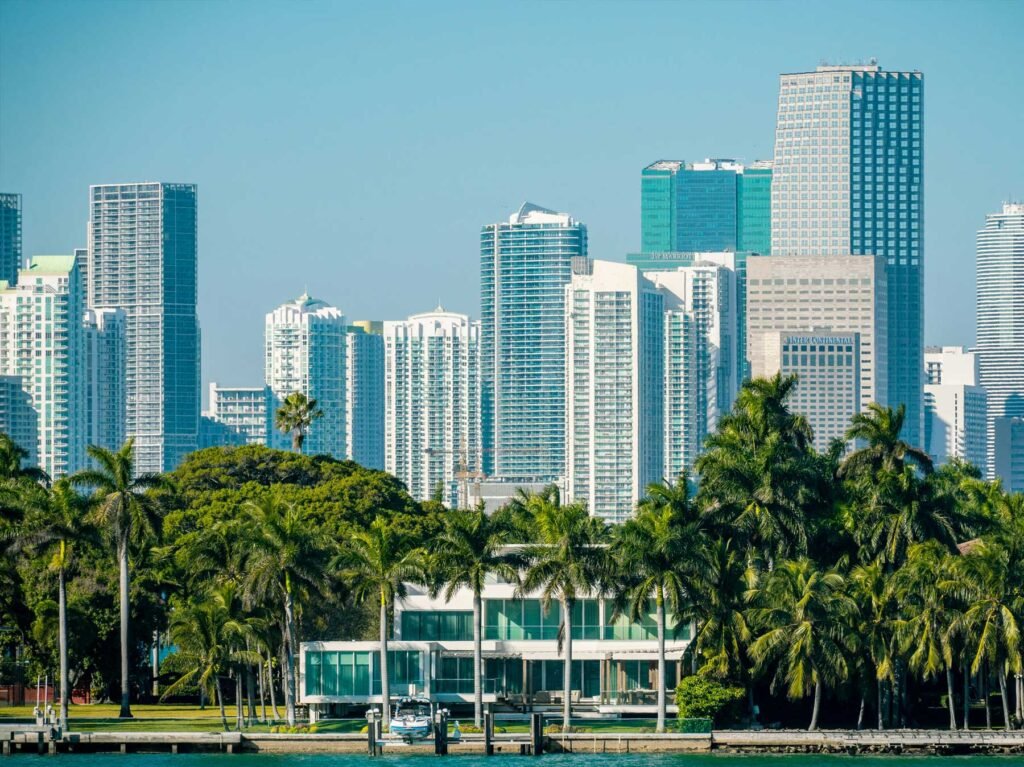
Aerial view of 900 Biscayne in Downtown Miami
On recorded 2026 sales this building runs $730 per square foot — cheaper than 73 of the 116 other buildings on the Miami Condo Index. Figures are closed sales from the Miami-Dade County Property Appraiser, not asking prices. Hover or tap a color to see the split.
Key Takeaways
- 900 Biscayne Bay recorded 20 sales in the 12 months to 23 September 2026 — at a median of $892,500, or $720 per square foot, on the Miami-Dade County Property Appraiser record. The latest recorded sale was on 29 June 2026. Own at 900 Biscayne Bay? Ask Josh what yours would sell for on WhatsApp.
- A 3.4% four-year gain in price per square foot — from $706 in 2023 to $730 in 2026 to date.
- 112 qualified sales across four years — is a genuinely deep sample for a single building, not a handful of transactions to caveat around.
- A roughly 26% drop in 2025’s median sale price — was a floorplate-mix shift, not a market decline — the per-square-foot figure moved less than 2% the same year.
- 147 three-bedroom homes out of 508 residential units — give this building an unusually deep supply of large-format stock for downtown Miami.
- A 1,450 sq. ft. median unit size — sits above the one- and two-bedroom-heavy profile typical of most downtown and Brickell condo stock.
- Roughly one home in eighteen changes hands here every year — based on 112 qualified sales across the four years on record, a healthy liquidity signal for a building this size.
900 Biscayne Bay, by the numbers
Developer: Terra Group · Architect: Revuelta Vega Leon Architects. Source: the building record on this site.
900 Biscayne Blvd, Miami, Florida 33132 | Neighborhood: Downtown Miami
What’s Actually in 900 Biscayne Bay
The Miami-Dade County Property Appraiser carries 550 folios under the 900 BISCAYNE BAY CONDO subdivision at 900 Biscayne Boulevard in Downtown Miami. Of those, 508 are classified as residential homes and 41 as commercial units. That accounts for 549 of the 550. The remaining folio is a reference folio — an administrative master record carrying zero square feet, not a home — and I would rather name it than guess at what it is.
The 508 residential homes split into 208 one-bedrooms, 153 two-bedrooms and 147 three-bedrooms — that bed-mix count adds up to the full residential total on its own, so there’s no meaningful studio or four-bedroom presence in this subdivision’s county record.
Heated area runs from 912 to 3,654 square feet, median 1,450. In my experience touring towers up and down Biscayne Boulevard and Brickell, a median that large is unusual — most downtown one-and-two-bedroom-heavy stock runs smaller. With 147 three-bedrooms out of 508 homes, nearly 29% of the building, the larger median makes sense: this is a building with real depth in large-format inventory, not a one-bedroom rental machine with a few penthouses bolted on top.
2026 assessed values across the subdivision run from $170,858 to $2,315,480, with a median of $640,393. That spread reflects the building’s mix of unit sizes — a 912-square-foot one-bedroom and a 3,654-square-foot three-bedroom were never going to assess anywhere near each other.
Four Years of Sales, and What They Actually Show
The county record shows 112 qualified, arm’s-length sales at 900 Biscayne Bay across the last four years — a genuinely useful sample size for a single building, not the handful of transactions I have to caveat on some of the smaller enclaves I cover. Bulk and portfolio transfers are already collapsed to a single transaction in these counts, so this is 112 real, individual sales.
| Year | Qualified sales | Median price | Median $/sq ft |
|---|---|---|---|
| 2023 | 34 | $1,028,750 | $706 |
| 2024 | 37 | $1,035,000 | $722 |
| 2025 | 24 | $767,500 | $709 |
| 2026 to 23 September | 17 | $1,110,000 | $730 |
Read by price per square foot — the number I lead with, and the reason is below — 900 Biscayne Bay moved from $706 in 2023 to $730 in 2026 to date. That’s a 3.4% gain over roughly three and a half years. It’s not a dramatic number, and I’m not going to dress it up as one. But it’s a gain, on a sample of over a hundred sales, in a Miami condo market where plenty of buildings I’ve pulled this same data for went the other direction over the same stretch. That alone makes 900 Biscayne Bay worth a second look if price direction matters to you.
Turnover here is healthy too. The four-year record carries 112 qualified sales against 508 residential homes — roughly one home in eighteen changing hands annually. That is measured on the same basis as every other building in this series, so the figures are directly comparable. Because 2026 is still incomplete, the true current rate is likely a little higher than eighteen.
2026 itself is incomplete: 17 sales through the date I pulled this record, against 34, 37 and 24 in the three years before it. I’m treating its figures as provisional for that reason: the direction is consistent with the rest of the record, but a partial year shouldn’t be read with the same confidence as a full one.
Did 900 Biscayne Bay Really Fall 26% in 2025?
Look at the table above by median price alone and the building appears to have fallen off a cliff in 2025, then staged a dramatic recovery in 2026. Median price dropped from $1,035,000 in 2024 to $767,500 in 2025, a 25.8% decline. Then in 2026 to date, the median jumped back to $1,110,000, a 44.6% increase over 2025. Read that way, this looks like a building that ran into trouble and then suddenly didn’t.
Neither happened. Look at the same two years by price per square foot instead: $722 in 2024, $709 in 2025, a move of 1.8%, essentially flat. Then $709 to $730 in 2026 to date, up 3.0%. The building didn’t crash and it didn’t roar back. What changed between 2024, 2025 and 2026 wasn’t the market’s opinion of 900 Biscayne Bay — it was which floorplans happened to trade in each year.
This is exactly why I lead with $/sq ft on every building page and treat median price as the secondary number, not the headline. A building with only one or two floorplan sizes doesn’t run into this problem — the two figures move together. 900 Biscayne Bay has a genuinely wide range of unit sizes, 912 to 3,654 square feet, and a deep stock of large three-bedrooms, 147 of 508 homes. When a disproportionate share of smaller units happens to close in a given year, the median price falls even though per-square-foot values hold. When larger three-bedrooms trade instead, the median rises even though per-square-foot values barely move. 2025 and 2026 are a clean demonstration of that mechanism.
The building’s two largest sales on record bracket this well: $3,500,000 in February 2013 for a 2,625-square-foot home, and $3,180,000 in July 2024 for a 3,199-square-foot home. The 2013 sale predates the four-year window above and the July 2024 sale falls inside it; I’m noting both here as ceiling context, not as evidence of a pricing trend. Two data points more than a decade apart can’t establish a trend, and I’m not going to pretend they can.
Who 900 Biscayne Bay Suits — and Who It Doesn’t
This building suits a buyer who wants a price record backed by a real sample size, not a hopeful two-sale anecdote. The 3.4% gain in $/sq ft from 2023 to 2026 to date rests on 112 qualified sales.
It also suits a buyer who actually wants the larger floorplan. 147 three-bedrooms out of 508 homes is real depth, and a 1,450-square-foot median gives you more room than most downtown Miami towers offer at a comparable price. If you’re trading up from a one-bedroom investment unit into a home you plan to live in, this building has genuine inventory in that size range.
Liquidity-minded buyers and investors should take the roughly one-in-eighteen annual turnover rate noted above as a healthy sign — homes here sell with some regularity, which matters if you may need to exit.
It suits this building badly if you read the 2025 numbers and expect a bargain. The $767,500 median that year wasn’t a discount on the building — smaller homes happened to trade. Price by $/sq ft, not by matching last year’s median, or you’ll misprice your offer in either direction.
A word for sellers: if you own a smaller one-bedroom here, don’t let a strong three-bedroom sale in your comp set inflate expectations, and don’t let a soft median year like 2025 talk you into underpricing a well-supported $/sq ft number. Price the square footage, not the headline.
Building age, story count and amenity detail are not in the county record. The year and story count shown at the top of this page come from the building record on this site. What’s above is what the county record actually supports.
Own at 900 Biscayne Bay?
If you own here, this page already carries the county’s record of what homes in 900 Biscayne Bay have sold for. Here is how to use it.
Your three options
- Sell. Price against what comparable homes in the building have actually recorded, not against asking prices.
- Rent it out. Within the condominium’s rental rules, which vary from building to building.
- Hold. Watch the record: this page is updated from the county as new sales are posted.
What I will send you
Tell me your unit. I will send you the recorded sales of comparable homes in 900 Biscayne Bay, what they sold for per square foot, and a straight read on what yours could sell for today.
Two free things for owners
900 Biscayne Bay — Frequently Asked Questions
What have homes at 900 Biscayne Bay sold for in the last 12 months?
20 sales were recorded on the Miami-Dade County Property Appraiser record in the 12 months to 23 September 2026, at a median of $892,500 ($720 per square foot). The latest recorded sale was on 29 June 2026. These are recorded closings, not asking prices. If you own at 900 Biscayne Bay and want to know what your home would sell for, message Josh Stein on WhatsApp at (305) 695-8257.
Has 900 Biscayne Bay’s price per square foot actually gone up since 2023?
Yes. The Miami-Dade County Property Appraiser’s qualified sales record shows median price per square foot moving from $706 in 2023 to $730 in 2026 to date, a 3.4% gain across 112 qualified sales. That’s a real, if modest, four-year increase.
Why did the median sale price drop so sharply in 2025 if per-square-foot values held?
Because median sale price and price per square foot measure different things. The 2025 median fell to $767,500 from $1,035,000 in 2024, a 25.8% drop, but the median $/sq ft barely moved, from $722 to $709, down just 1.8%. The explanation is floorplate mix: a disproportionate share of smaller homes happened to sell in 2025. The building’s own value didn’t fall anywhere near 26%.
How many homes are actually in 900 Biscayne Bay?
The county record shows 550 folios in the 900 BISCAYNE BAY CONDO subdivision: 508 classified as residential homes and 41 as commercial units (the remaining folio is an administrative reference record carrying zero square feet). Of the 508 residential homes, 208 are one-bedrooms, 153 are two-bedrooms and 147 are three-bedrooms.
What size are the units at 900 Biscayne Bay?
Heated area ranges from 912 to 3,654 square feet, with a median of 1,450 square feet — a larger median than most downtown Miami condo stock, driven by a deep supply of 147 three-bedroom homes.
How liquid is this building — how often do units actually sell?
Across the four years on record the building recorded 112 qualified sales, an average of 28 a year against 508 residential homes. That works out to roughly one home in eighteen changing hands annually, a healthy turnover rate for a building this size.
What’s the highest price ever paid for a unit at 900 Biscayne Bay?
The highest qualified sale on record is $3,500,000, closed in February 2013 for a 2,625-square-foot home. The most recent high-water mark is $3,180,000, closed in July 2024 for a 3,199-square-foot home. The 2013 sale predates the four-year sales window and the 2024 sale falls inside it; both are noted here as ceiling context, not as evidence of a trend — two sales over a decade apart can’t establish one.
Is 900 Biscayne Bay a good fit for every buyer?
No, and I’d rather say that directly. It fits a buyer who wants a documented price record and genuine large-format inventory. It fits poorly a buyer looking for a 2025-priced bargain — that year’s low median reflected which units sold, not a discount on the building.
Sources and further reading
Interested in selling at 900 Biscayne Bay?
Learn more about selling your condo at 900 Biscayne Bay with Josh Stein.
Thinking about 900 Biscayne Bay?
I have sold South Florida property since 2002, more than $1 billion of it. Ask me for the recorded declaration, what has genuinely closed, or a straight answer on whether this building fits what you are after.
Josh Stein · Florida real estate sales associate, license SL3057661 · (305) 695-8257 · hello@joshsteinrealtor.comGet this building’s next recorded sale — before the listing sites catch up
- Every closed sale we can verify from the Miami-Dade record — price, date, and $/sqft when the deed supports it — not an IDX feed.
- Optional alert when a new deed posts in this building (or a short list of comps you choose).
- No spam inventory blasts. One building. One record. You decide what happens next.
Tell Josh which building. He’ll send the latest closed sales and set a quiet alert.
Get the sales recordRelated coverage
Part of Miami Luxury Condos.