

Miami Luxury Condos · Coconut Grove · Grove Isle
By Josh Stein · Florida license SL3057661 · Updated 8 October 2026Leer en español →
13 condos for sale at Grove Isle, average list price $1,217.35 per sq ft (total list price ÷ total sq ft).
- Asking range$950,000 to $8,940,000
- List price per sq ft$1,217.35
- Months of inventory17.3
- Sold, 12 months9


Listing information is deemed reliable but is not guaranteed and is provided exclusively for consumers' personal, non-commercial use. Data is supplied by the MLS and may be subject to change or withdrawal without notice.
Last updated 1 second ago
Key facts about Grove Isle
| Address | 2 Grove Isle Drive, Miami FL 33133 |
|---|---|
| For sale now | 13 |
| For rent now | 8 |
| List price range | $950,000 to $8,940,000 |
| Size | 1,642 to 5,012 sq ft |
| Bedrooms | 2 to 6 BR |
| List price per sq ft | Average $1,217.35, low $579, high $2,171 |
| Monthly HOA | $2,208 to $7,563 |
| Year built | 1980 |
| Amenities | Beach Rights, Bike Storage, Boat Dock, Car Wash Area, Clubhouse, Community Kitchen, Elevators, Fitness Center, Library, Maintenance Grounds, Management, Parking, Picnic Area, Playground, Pool, Sauna, Spa Hot Tub, Storage, Tennis Courts, Trails, Trash |
| Neighborhood | Miami |
Residences at Grove Isle
| Bedrooms | For sale | Size (sq ft) | List price | Avg $/sq ft | Last sale |
|---|---|---|---|---|---|
| 2 | 5 | 1,642 to 1,882 | $950,000 to $1,395,000 | $689.53 | $1,225,000 (September 14, 2026) |
| 3 or more | 8 | 2,398 to 5,012 | $2,850,000 to $8,940,000 | $1,398.54 | $3,100,000 (August 4, 2026) |
Recently sold in Grove Isle
4 listings


Verified 23 September 2026The Real Deal, Florida Statute 553.899, Fannie Mae6 sources
Building facts
- Address
- 1 Grove Isle Dr & 2 Grove Isle Dr & 3 Grove Isle Dr
- Year built
- 1980
- Floors
- 18
- Residences
- 497
- Status
- Delivered: original buildings completed 1980 (county record), Vita completed 2025
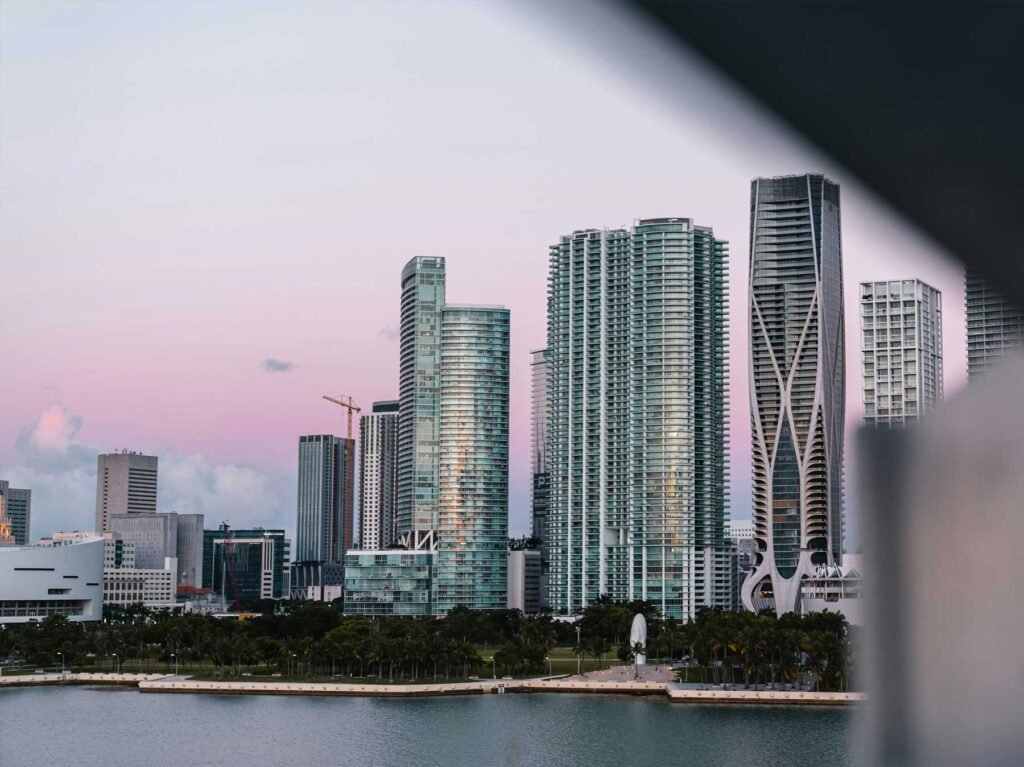
Grove Isle is a private island in Biscayne Bay off Coconut Grove, reached by a single causeway. For nearly five decades it held three condominium buildings and a club, governed by a 1977 covenant capping the island at 575 residential units. In late 2025 that changed: Vita at Grove Isle completed — 65 residences by Ugo Colombo’s CMC Group, the first new building on a private Miami island in 47 years, and the subject of a decade of litigation over whether it should have been built at all.
- Private island in Biscayne Bay, Coconut Grove, single causeway access
- 1977 covenant establishing a 575-unit residential cap for the island
- Vita at Grove Isle: 65 residences, developer CMC Group (Ugo Colombo), completed late 2025
- $239 million construction financing from Bank OZK
- Residents’ complaint alleged the island would reach 589 units, exceeding the cap
- Grove Isle Racquet & Yacht Club rebuilt — tennis, fitness, spa, poolside bar, La Sponda restaurant
What Grove Isle actually is
The island’s appeal is structural rather than stylistic. It is a genuinely private island with one point of vehicular access, sitting in the bay off a sought-after mainland neighborhood, with the Coconut Grove waterfront on one side and open water on the other.
Have a question about Grove Isle? This page is built from the county record and the trade press, not a listing feed. If you want what has actually closed here, or an honest read on whether it suits you, ask me directly.
What a private island produces
That produces a set of conditions that money generally cannot buy elsewhere in Miami-Dade: a fixed and very small number of residences, no through traffic of any kind, water on every side, and a club that functions as the island’s social infrastructure rather than as a building amenity. The Grove Isle Racquet & Yacht Club — rebuilt as part of the recent development, with tennis, a fitness centre, spa, poolside bar and the La Sponda restaurant — is the practical centre of life there.
The constraint that defined the decade
It also produces the constraint that has defined the island’s last decade. When the total unit count is capped by covenant, every additional residence is contested by definition, because it comes out of a fixed pool that existing owners believe they bought into.
The covenant fight, with both sides
The 1977 covenant established a 575-unit residential cap for Grove Isle. For most of the island’s history the point was academic. It stopped being academic when CMC Group moved to build.
Ten years of litigation
The dispute ran roughly ten years. In April 2022, a lawsuit sought to stop the project; that action was dropped in October 2022. A further complaint filed in January alleged that the City of Miami had improperly granted permits without the land platting the objectors argued was required, and that the completed development would bring the island to 589 units — fourteen above the covenant cap. The homeowners’ attorney, David Winker, argued the project proceeded without “setbacks or other elements that would come along with platting.”
The 2020 club settlements
Separately, in 2020, settlements were reached with residents over the loss of the island’s original club facilities — the hotel, restaurant, pool and tennis courts — which the new club has since replaced.
The developer’s position is expressed by the outcome: permits were issued, $239 million of construction financing was advanced by Bank OZK, the building was completed, and it sold. That is not a legal argument, but it is the operative fact for anyone buying today.
Vita at Grove Isle
What Vita is
Vita is 65 residences, developed by CMC Group under Ugo Colombo, completed in late 2025 and marketed by Cervera Real Estate and CMC Real Estate. It was reported as 85% presold at completion, with around ten residences remaining and asking prices from $6.5 million to $22 million for the penthouse. In January 2026, a hedge fund principal paid $20 million for a penthouse there.
Why supply here is arguably finished
The relevant fact for a buyer is not the price list, which will change. It is that Vita is the first new building on a private Miami island in 47 years, on an island whose covenant caps total units — which means the supply of new product here is not merely limited, it is arguably finished. Whatever one thinks of how the entitlement was obtained, a second Vita is a considerably harder proposition than the first.
What a buyer needs to establish — on either side of the island
Grove Isle now contains two distinct propositions: the original buildings, and Vita. The diligence differs.
- Get the current status of every open matter in writing from the association. Litigation history is a Fannie Mae Full Review item. Whether actions are resolved, pending or on appeal directly affects financing eligibility, and therefore price. Do not accept a verbal assurance on this.
- Establish exactly what club membership is — mandatory or optional, transferable or not, what the initiation and dues are, and whether they are an association charge or a separate contract. On an island where the club is the amenity, this is a material part of the cost of ownership.
- For the original buildings: certificate of occupancy date, milestone status, and the reserve study. These are 1970s-era structures on saltwater. Under Florida Statute 553.899, buildings within three miles of the coastline require a milestone inspection at 25 years and every 10 years thereafter — so the older buildings here are well inside that cycle. Ask specifically whether Phase 2 was triggered.
- For Vita: the certificate of occupancy date and the developer turnover position. A newly completed building is typically still under or near developer control. Understand when turnover occurs, what the reserve position looks like at handover, and what warranty coverage exists.
- Causeway, seawall and infrastructure responsibility. A single-access island has shared infrastructure — the bridge, the seawall, utilities. Establish who owns it, who maintains it, and how the cost is shared between the associations. This is the item most likely to produce an unexpected assessment.
- Marina and dockage terms. Assigned, deeded or licensed; vessel size limits; depth; and the route out.
- Flood zone, elevation certificate and insurance quote — on a bay island, before anything else is agreed.
Why the litigation history is a pricing issue, not just a story
Since 3 August 2026, Fannie Mae’s Lender Letter LL-2026-03 has retired the Limited Review path for established condominium projects over ten units. Full Review now applies at every down-payment level, and lenders read the litigation position, the reserve study, the budget and the master insurance policy.
Unresolved litigation is one of the classic Full Review problems. A project that cannot clear it does not become unsellable — it becomes cash-only, and loses roughly half its buyer pool. In June 2026, 48.5% of Miami-Dade condominium sales closed in cash, meaning 51.5% required a lender, in a county carrying 12.3 months of condominium supply with the median down 3.1% year over year.
So the question “is the litigation over?” is not curiosity about a neighbourhood dispute. It determines who can buy your unit when you sell it.
The honest summary
Grove Isle offers something close to unrepeatable: a private bay island, one causeway, a capped number of residences, a rebuilt club, and Coconut Grove on the mainland side. The scarcity is real and it is written into a covenant rather than into marketing copy.
The same covenant is why the island spent a decade in dispute, and a buyer should treat the litigation position as a live diligence item rather than as settled history — confirmed in writing, from the association, with the lender’s view obtained before the deposit goes hard. Handled that way, the scarcity is documented in the covenant rather than asserted in marketing. Handled casually, it is the kind of purchase where the financing problem surfaces at resale rather than at closing.
See also the Grove, Miami’s waterfront inventory and luxury condominiums across Miami.
Related reading: Camp Biscayne on the same shoreline · Coral Gables across the water · waterfront houses in the Grove.
Own at Grove Isle?
If you own here, this page already carries the county’s record of what homes in Grove Isle have sold for. Here is how to use it.
Your three options
- Sell. Price against what comparable homes in the building have actually recorded, not against asking prices.
- Rent it out. Within the condominium’s rental rules, which vary from building to building.
- Hold. Watch the record: this page is updated from the county as new sales are posted.
What I will send you
Tell me your unit. I will send you the recorded sales of comparable homes in Grove Isle, what they sold for per square foot, and a straight read on what yours could sell for today.
Two free things for owners
Grove Isle — common questions
What have homes at Grove Isle sold for in the last 12 months?
14 sales were recorded on the Miami-Dade County Property Appraiser record in the 12 months to 23 September 2026, at a median of $1,645,000 ($855 per square foot). The latest recorded sale was on 16 June 2026. These are recorded closings, not asking prices. If you own at Grove Isle and want to know what your home would sell for, message Josh Stein on WhatsApp at (305) 695-8257.
What is the 1977 Grove Isle covenant?
A covenant dating from 1977 that established a 575-unit residential cap for Grove Isle. It sat largely unexamined until CMC Group moved to develop Vita at Grove Isle, at which point objecting residents argued the new building would take the island to 589 units — fourteen above the cap. The covenant is the reason a decade of litigation followed, and it is also the reason the island’s supply is genuinely finite.
Is Vita at Grove Isle completed?
Yes. The 65-residence building by Ugo Colombo’s CMC Group completed in late 2025, financed with $239 million from Bank OZK. It was reported as 85% presold at completion, with roughly ten residences remaining priced from $6.5 million to $22 million, and in January 2026 a hedge fund principal paid $20 million for a penthouse. It is the first new building constructed on a private Miami island in 47 years.
What was the Grove Isle lawsuit about?
Multiple actions over roughly a decade. A suit filed in April 2022 seeking to stop the project was dropped in October 2022. A later complaint alleged the City of Miami granted permits without required land platting and that the completed development would exceed the 1977 covenant’s 575-unit cap. The homeowners’ attorney David Winker argued the project lacked “setbacks or other elements that would come along with platting.” Separately, 2020 settlements addressed the loss of the island’s original club facilities. Confirm the current status of all matters with the association before offering.
Does litigation affect buying at Grove Isle?
It can, materially. Since 3 August 2026 Fannie Mae has required Full Review for established projects over ten units, and unresolved litigation is a classic reason a project fails that review. A project that fails becomes effectively cash-only — and with 48.5% of Miami-Dade condo sales closing in cash, that removes about half the buyer pool. Get the litigation position in writing and ask your lender to confirm the project’s status before your deposit goes hard.
What amenities does Grove Isle have?
The Grove Isle Racquet & Yacht Club, rebuilt as part of the recent development, with tennis courts, a fitness centre, spa, poolside bar and the La Sponda restaurant. Because the club functions as the island’s social infrastructure rather than as a building amenity, establish exactly how membership works — mandatory or optional, transferable or not, initiation and dues, and whether it is an association charge or a separate contract.
How do you get to Grove Isle?
By a single causeway from Coconut Grove. That single point of access is the source of the island’s privacy and also of its shared-infrastructure exposure: the bridge, seawall and utilities are common costs. Establish who owns and maintains them and how the cost is apportioned between the associations, because this is the item most likely to produce an unexpected assessment.
Sources and further reading
- The Real Deal — Ugo Colombo completes Vita at Grove Isle condo project after years of legal fightstherealdeal.com
- The Real Deal — Lawsuit aims to stop controversial Grove Isle projecttherealdeal.com
- The Real Deal — Homeowners drop lawsuit over Grove Isle project approvalstherealdeal.com
- The Real Deal — Hedgefunder drops $20M at newly completed Vita at Grove Isletherealdeal.com
- Florida Statute 553.899 — Mandatory structural inspectionsflsenate.gov
- Fannie Mae — Lender Letter LL-2026-03singlefamily.fanniemae.com
Thinking about Grove Isle?
I have sold South Florida property since 2002, more than $1 billion of it. Ask me for the recorded declaration, what has genuinely closed, or a straight answer on whether this building fits what you are after.
Josh Stein · Florida real estate sales associate, license SL3057661 · (305) 695-8257 · hello@joshsteinrealtor.comGet this building’s next recorded sale — before the listing sites catch up
- Every closed sale we can verify from the Miami-Dade record — price, date, and $/sqft when the deed supports it — not an IDX feed.
- Optional alert when a new deed posts in this building (or a short list of comps you choose).
- No spam inventory blasts. One building. One record. You decide what happens next.
Tell Josh which building. He’ll send the latest closed sales and set a quiet alert.
Get the sales recordRelated coverage
Part of Miami Luxury Condos.