Listing information is deemed reliable but is not guaranteed and is provided exclusively for consumers' personal, non-commercial use. Data is supplied by the MLS and may be subject to change or withdrawal without notice.
What the brochure leaves out. Foreclosures, litigation, blown deadlines and financing that never closed — dated, sourced, and followed by the only part that matters: what it means if you are the one signing.
The Miami Confidential is a dated, sourced file on Miami condo towers that stalled, missed delivery dates or ended up in litigation. It tracks 38 towers: 22 have missed a delivery date and 5 are stalled or in litigation. Lawsuits are reported as filed, which means allegations, not findings.
The Miami Confidential
The reporting, weekly.
Every new case file, every delivery date that moves, every figure dated and sourced. No listings, no press releases dressed up as news.
Every piece of reporting on this site that rests on a filing, a permit, a docket or the county roll. Newest first. This list writes itself — when a new file is published it appears here.
A 25-story, 325-foot tower with 124 residences and 42 hotel rooms at 1501 Collins Avenue, per Florida YIMBY, 20 September 2026. The city file number, the statute, and what has changed since…
A 38-story building with 90 condos and 60 workforce rentals is planned at the Savoy Hotel site, per WLRN, 15 September 2026. The two state laws that make it possible, explained.
A University of Miami study (13 December 2024) measured 2 to 8 cm of settlement at 35 coastal buildings from 2016 to 2023. What it found, what the authors said about safety, and what to ask.
On Fisher Island one home in thirty-two changes hands in a year. In the Upper Eastside it is one in fourteen. What turnover tells a buyer that a listing feed cannot.
Most Miami real estate coverage is a press release with a photograph attached. A tower gets announced, a rendering circulates, and eighteen months later nobody mentions that it never got financed.
The Miami Confidential is the other half of the story. When a project stalls, when a lender forecloses, when an association sues its developer, when a delivery date quietly moves for the fourth time — it goes here, dated and sourced.
Nothing on this page is selling you anything. There is no commission attached to a foreclosure filing or a delivery date that moved. The job is to put the most accurate and current picture of this market in front of you — including the parts the brochure leaves out — so that you can make your own decision.
It is not sugarcoated. Where the record is ugly, it gets printed. Where a project did everything right and still delivered five years late, that gets printed too. Where something is not published anywhere, this page says MISSING rather than guessing.
An item runs here only if it clears two bars: something changed, and it changes what a buyer or seller would actually do. Lifestyle, neighbourhood guides and building features live in the blog.
The standard, so you know what you are reading.
Every figure carries a date and a named source I have actually read. Where two credible sources disagree, both numbers appear and I say so.
Litigation is reported as filed. A claim is an allegation, not a finding, and this page says which is which. Nothing here predicts how a case resolves.
Press releases are not news. The story runs when the county record, the docket or the lender says something different.
Found something wrong? Tell me and I will correct it publicly, with a source.
File 01 · SurfsideStatus unconfirmed
Insurance status: The Delmore, Surfside
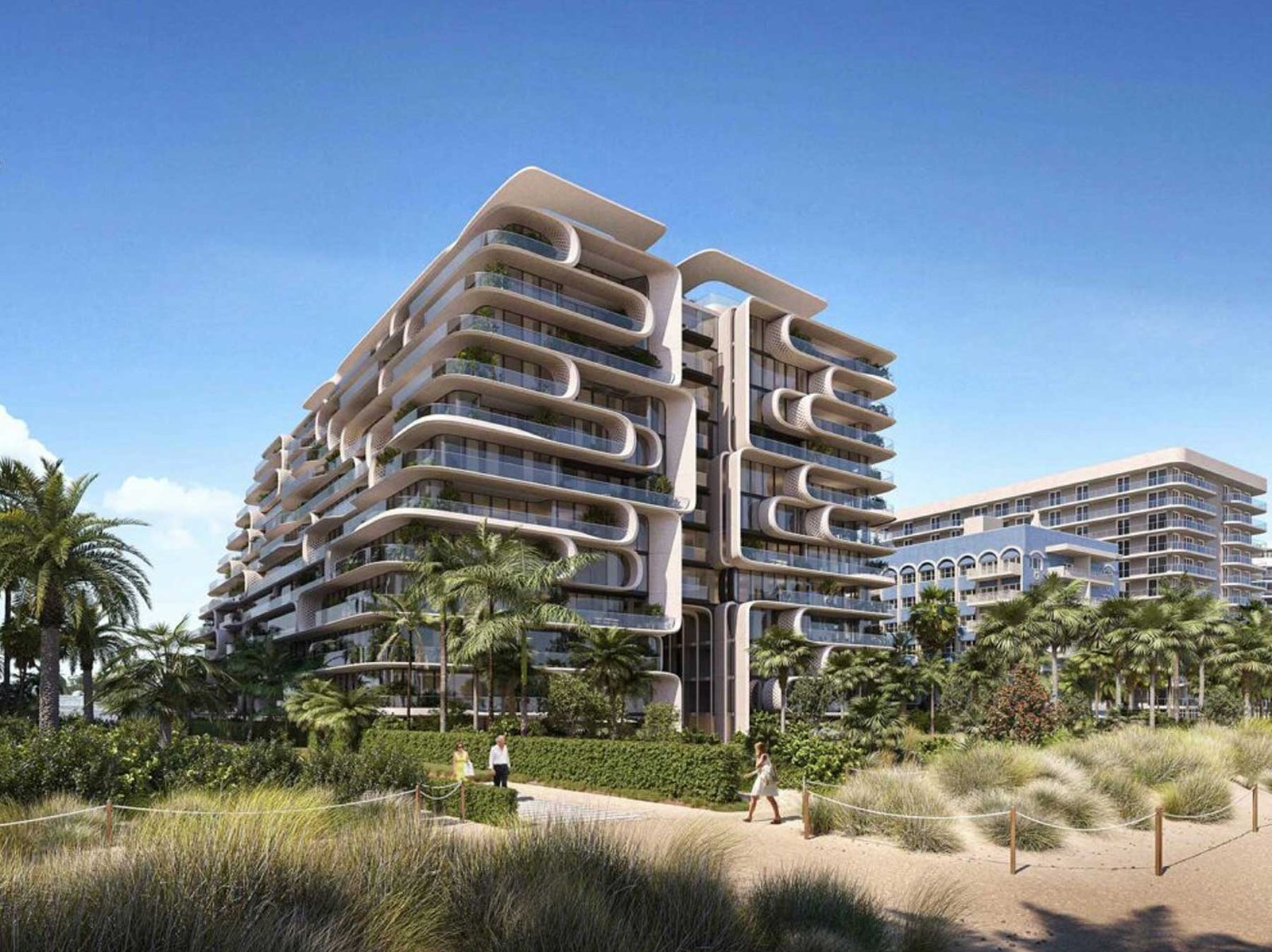
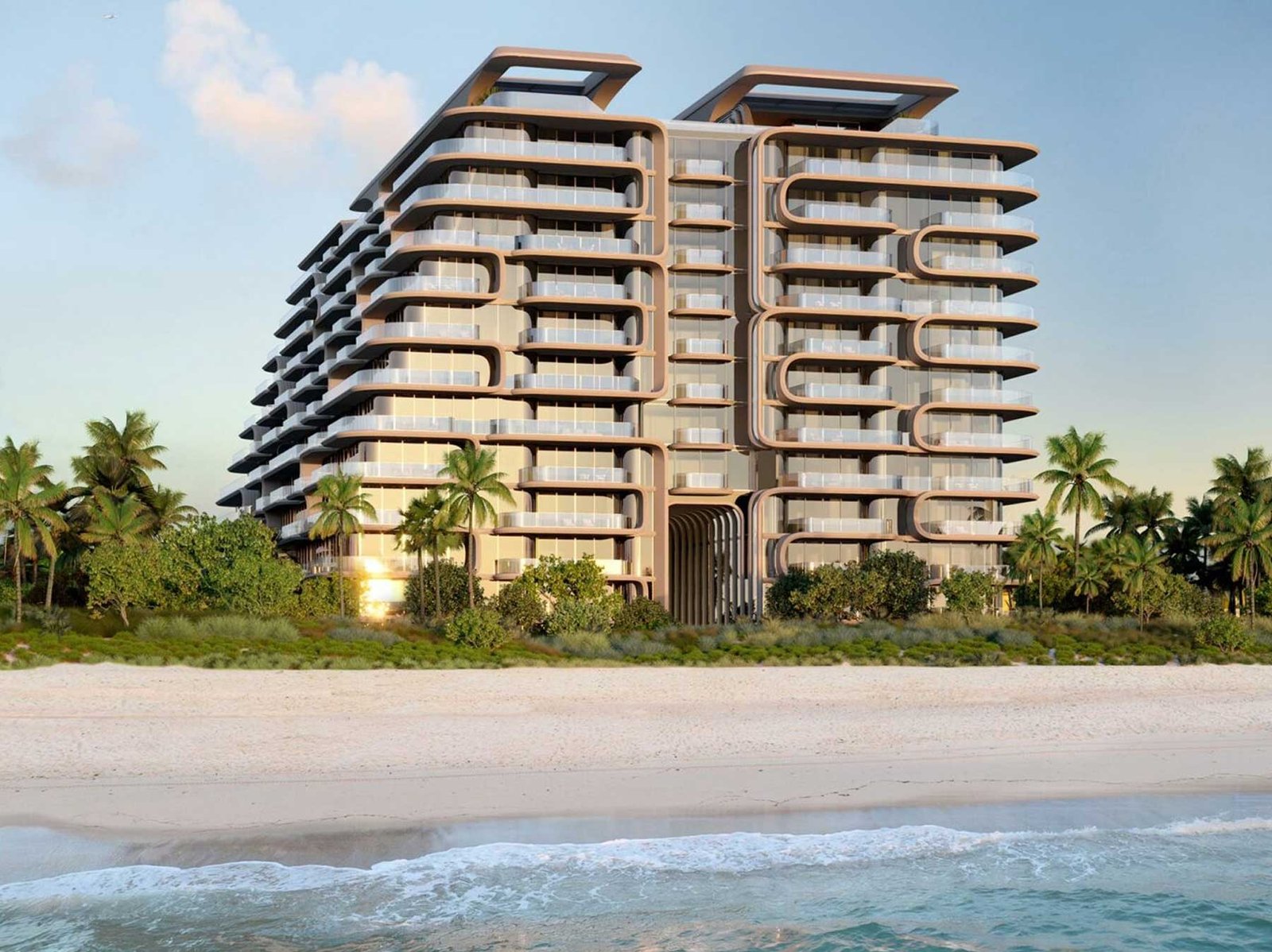
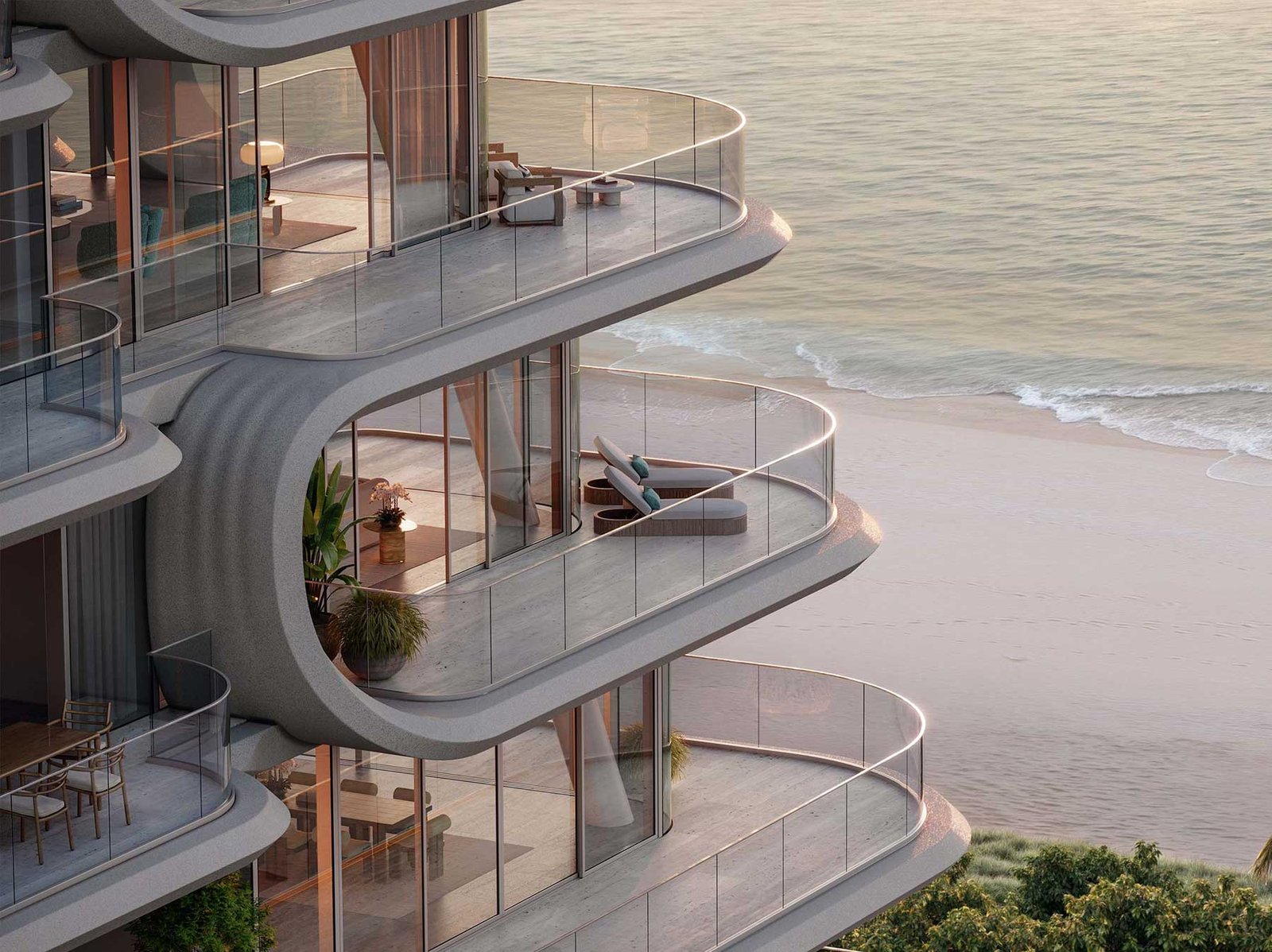
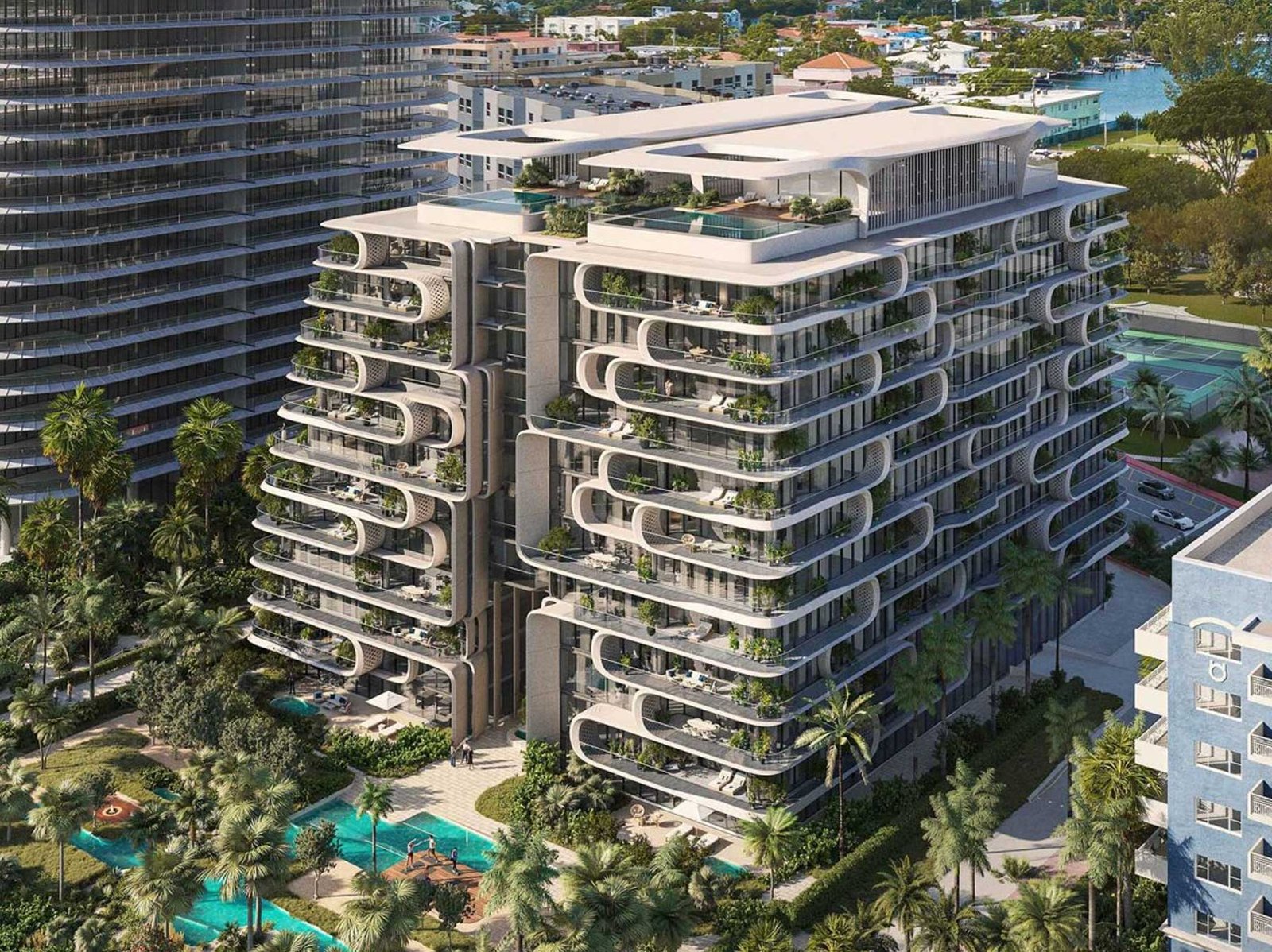
The Delmore, 8777 Collins Avenue, Surfside — the Zaha Hadid-designed tower planned for the Champlain Towers South site. Developer rendering.
The Delmore — 37 residences on the site where 98 people died in 2021 — has reportedly been halted since February 2026 over construction insurance. That report originates with The Wall Street Journal in June 2026. I have not read it. What I have read is Insurance Business relaying it — and that outlet does not independently confirm the halt, and does not name the Journal article it is relaying. Treat the halt as reported, not established. JSR has not verified it.
“We should have spent a bit more time on due diligence, on community reaction, rather than on the physical property itself.”
Jeffery Rossely, SVP of Development, DAMAC International — to NPR, 21 June 2026. He was speaking about community opposition in Surfside, not about the insurance question.
“It’s still a very challenging market.”
Shanna Sweeney, SVP Excess Casualty, Upland Specialty — on placing construction cover
What this means if you are buying or selling
A tower that cannot obtain construction insurance cannot be built, cannot be financed on normal terms, and cannot give you a delivery date. That is a different category of problem from being behind schedule.
DAMAC says it will relaunch late in 2026 contingent on a joint-venture partner and resolving the cover. Those are the same problem — the local partner is what makes the insurance placeable. Until both are announced, any completion date quoted to you is an aspiration.
Developer response — DAMAC has answered publicly. A DAMAC spokesperson said the project “continues to move forward” while it finalises construction insurance, a master building permit and an operations partner, and that completion “remains on track for 2029” — reporting carried by Yahoo Finance, 24 June 2026. The developer has separately said it intends to relaunch late in 2026, contingent on a joint-venture partner and resolving the cover (The Real Deal, 15 April 2026). Both are republished from the public record. JSR did not seek comment.
Sources:Insurance Business · The Real Deal, 15 April 2026 · NPR, 21 June 2026 (carried by WLRN) · Full file: The Delmore. Re-checked 7 September 2026: the halt is still only reported, and JSR still has not independently established it. Trade coverage through July 2026 continues to describe the project as stopped at pre-sale over construction insurance. Nothing found that contradicts this file.
Mercedes-Benz Places Miami — JDS Development’s two-tower, 791-unit project with a 174-key hotel — is the subject of a foreclosure action, according to Bisnow (6 April 2026) and The Real Deal (11 June 2026).
Those reports describe an $86 million acquisition and construction loan from Maxim Capital Group that matured on 15 January 2025 and was not repaid, and a Cottonwood Group affiliate that took the loan over on 24 March 2026 and filed to foreclose in April 2026. JDS is contesting the foreclosure.
What this means if you are buying or selling
If you hold a contract here, go to the contract itself and the escrow agent named in it — not the sales office. Ask where your deposit sits and under what escrow terms, what your outside date is and whether it has passed, and whether a foreclosure or change of sponsor triggers any right on your side.
Developer response — JDS has answered on the record, by filing. A JDS affiliate sued Cottonwood Group, alleging it breached a confidentiality agreement by “feigning interest” in refinancing to obtain confidential information about the project and then use it to foreclose — Bisnow, 12 May 2026. The same report records that JDS declined to comment. Republished from the public record. JSR did not seek comment.
Sources:Bisnow, 6 April 2026 · The Real Deal, 11 June 2026 · Full file: Mercedes-Benz Places. Re-checked 7 September 2026: JDS was still contesting the Cottonwood foreclosure, alongside subcontractor claims, as of August 2026. The lender’s complaint seeks roughly $100 million in total — about $80.4 million of principal plus interest — against the $86 million loan described above. Status unchanged.
SubjectMissoni Baia, 700 NE 26th Terrace, Edgewater — OKO Group and Cain International.
On 30 January 2026 the Missoni Baia condominium association filed suit in Miami-Dade Circuit Court alleging 76 construction and design defects — water intrusion, cracks in structural elements, defective fire-safety systems, elevator malfunctions and lobby finishes missing against the promotional materials.
The defendants are OKO Group, Asymptote Architecture, Revuelta Architecture International, general contractor Civic Construction and 19 subcontractors. Co-developer Cain International is not named. The building received a temporary certificate of occupancy in 2023 and was handed to the association in 2024. Its 2026 suit alleges the defects were unresolved at handover.
2023temporary certificate of occupancy; no final certificate reported as of 7 September 2026
What this means if you are buying or selling
Buying a resale in a building with active defect litigation is a specific transaction, not a normal one. Remediation gets paid for somehow — understand who pays and when, before you close.
Get the association’s reserve study, budget and any pending special assessment; the milestone structural inspection; the current docket; and written confirmation your lender will finance in a building with active structural litigation. Some will not.
A 76-item claim is a pleading, not a finding. The missing final CO is a fact.
Developer response — OKO Group has made no public statement on the association’s 76-defect claim as of 10 September 2026. JSR did not seek comment. OKO has given its own account of the building’s construction problems in a separate action: suing its insurers, it asserts the tower “settled unevenly in 2021, causing direct damage to the property during construction” and that the settling delayed the temporary certificate of occupancy by at least 16 months — Bisnow, 8 April 2026. That is OKO’s account of the cause, not a response to the association’s pleading.
Sources:The Real Deal, 12 February 2026 · 7 April 2026 · Full file: Missoni Baia. Re-checked 7 September 2026: the defect suit is still live and nothing newer than the 7 April 2026 filing was found. The address in this file was corrected from 777 to 700 NE 26th Terrace on 7 September 2026 — the Miami-Dade roll records the building at 700 NE 26 TER, subdivision “700 Edgewater Condo”, 248 folios.
File 04 · StatewideSettled — $50M
Termination ruling and settlement: Biscayne 21 / EDITION Residences
The EDITION Residences, 2121 North Bayshore Drive, Edgewater — Two Roads Development. Developer rendering.
Two Roads Development needed to terminate the existing Biscayne 21 condominium to build its 55-story tower. To do it, the declaration had been amended to lower the termination threshold from 100 percent of owners to 80 percent.
In July 2025 a Florida appeals court sided with the holdout owners, ruling the amendment unlawfully altered unit owners’ voting rights. In October 2025 the Florida Supreme Court declined a rehearing. The decision was reported to carry implications for condominium buyouts statewide. On 14 May 2026 three buyers sued seeking roughly $2.5 million in deposits back.
Then the ruling acquired a price. In January 2026 a Miami-Dade Circuit Court judge ordered Two Roads to restore the building to its May 2023 condition — the state it was in before the developer began stripping it. A report commissioned by the project’s lender, Bank OZK, put the cost of that restoration at $65 million. The developer now had to choose between rebuilding a condominium it intended to demolish and paying the ten owners who would not leave.
On 31 August 2026 it paid. Two Roads settled with all ten holdout owners for approximately $50 million — an average of about $5 million per unit, in a building where it had bought the majority of 192 units for $150 million in 2022. Demolition of the 13-story structure was expected within weeks.
$50Mpaid to 10 holdout owners, 31 August 2026 — about $5M each, after a court put the alternative at $65M
What this means if you are buying or selling
If you are buying: in any project built on a condo termination, site control is the first question, not the last. Ask whether every owner has been bought out, whether the termination is final, and whether any appeal is live. A rendering on a site the developer does not yet control carries that risk.
If you own in an older condominium being courted for a buyout: this is the number to know. Ten owners who refused the offer and litigated for three years were bought out at roughly $5 million each. That is not a promise of what any other unit is worth — it is what a developer paid once a court had ruled and the alternative was a $65 million restoration. A developer cannot amend the threshold down and proceed, and the leverage that creates is now priced on the public record. Read every executed document before signing anything.
Developer response — Two Roads has answered on the record. Taylor Collins, co-founder and managing principal, said the outcome “reflects the strength of our platform”, called the case “a long and arduous process”, and said the firm would now “turn our full attention” to the site — Bisnow, 1 September 2026 and Florida YIMBY, 2 September 2026. Republished from the public record. JSR did not seek comment.
SubjectUna Residences, 175 SE 25th Road, Brickell — OKO Group and Cain International, designed by Adrian Smith + Gordon Gill.
Una Residences received its temporary certificate of occupancy on 26 February 2026. The first public completion expectation, reported April 2020, was 2021. In between: a $128.3 million construction loan closed in April 2021 and the date moved to 2023. The tower topped off in April 2024 and the date moved to early 2025. Three documented slips.
Through all of it the sponsor was well capitalised, the loan closed, construction never stopped, and the building sold more than 90 percent before completion — two tri-level penthouses trading at $17.75 million each.
2021 → 2026first reported completion expectation to temporary certificate of occupancy
What this means if you are buying or selling
The date on the brochure is an estimate. The date in your purchase agreement is the one with consequences. Una is the proof: a project where nothing went wrong still took five extra years.
Ask for the outside date, ask what happens if it passes, and plan your financing, housing and tax position around that date. Buyers who did fine here were the ones not counting on keys in 2021.
Developer response — OKO Group and Cain International marked the delivery publicly. In a joint statement, Vladislav Doronin, chairman and chief executive of OKO Group, and Jonathan Goldstein, chief executive of Cain, said the stage “reflects years of intention behind every element of the building” — Cain International, 27 February 2026. Neither developer has made a public statement about the five-year gap between the first reported completion expectation and delivery, as of 10 September 2026. JSR did not seek comment.
Aston Martin Residences, 300 Biscayne Boulevard Way. Developer renderings. Open the building file →
Fig. 1A finished tower, two years after handover. Drawn for this file — not a photograph and not a developer rendering.
Aston Martin Residences was the trophy. 66 stories, 391 residences, 817 feet, a sail-shaped tower at the mouth of the Miami River, a sellout expected to clear $1 billion. It cut the ribbon on 30 April 2024, roughly four years after the completion date originally expected, with one unit of 391 unsold — a 27,000 square foot triplex penthouse asking $59 million.
The association was turned over to unit owners in March 2025 — eleven months after the ribbon was cut. Within a year of getting control, it had sued twice.
A correction, made here rather than quietly: this file previously said the association took control in March 2024. That cannot be right — it is a month before the building’s own opening. Bisnow, reporting on 3 February 2026, says the association “was turned over to unit owners in March” without printing the year; March 2025 is the only March consistent with a 30 April 2024 opening and a February 2026 report. The corrected date makes the sequence tighter, not looser.
18counts pleaded in the January 2026 complaint — including alter ego liability, breach of fiduciary duty, civil conspiracy and five counts of fraudulent misrepresentation
Read the full file440 words
The first suit, filed 30 January 2026 (Filing #240709382, 11th Judicial Circuit, Miami-Dade), names eighteen defendants — among them Riverwalk East Development LLC, Biscayne 303 LLC, GC Builders International LLC, G and G Business Developments LLC, Super Holdings LLC, Riverside Alliance Management LLC, and several other defendants named individually.
As filed, the association alleges inflated and no-bid vendor contracts, bogus invoices for cleaning, security and water-damage repairs, $34,334 a month charged for concierge services it says were not provided, $70,000 in rent for a third-floor unit used as the developer’s own sales office, and roughly $800,000 paid to a security company it alleges had no track record. It also alleges a promised helipad and beach-club access were never delivered, and that computers were wiped before turnover. Damages sought: over $5 million.
“They took every financial advantage they could … there was nobody who was independent.”
Ariella Gutman, attorney for the condominium association — The Real Deal, 3 February 2026
“None of that was what was expected or represented to us.”
Michael Diaz, association president, on the promised amenities — Bisnow, 3 February 2026
One defendant’s attorney told The Real Deal his client had not seen the complaint and had not been served. Then the developer side sued back. Biscayne 303, an entity tracing to G&G, sued the association for breach of contract after owners terminated the $70,000 sales-office lease, seeking more than $100,000 and possession of the unit.
The second suit, filed mid-April 2026, is about the building itself. As filed, the alleged defects include spalling concrete and exposed rebar on the exterior, cracks and water leaks at the pool and spa structures, exposed post-tension tendons, waterproofing failures, seawall cracks with corrosion, elevator defects, fire-system leaks and corrosion, improperly sloped balconies, and slab-edge erosion on balconies creating a falling-debris hazard.
The two outlets that covered it disagree, and both numbers belong on the record. Bisnow reports 17 named defendants, a minimum of $750,000 pleaded, and names Riverwalk East Developments LLC, Revuelta Architecture International, Coastal Construction South Florida, DeSimone Consulting Engineering and TK Elevator Corp. The Real Deal describes it as filed under Florida Statute 558, names G&G Business Developments, Coastal Construction, Revuelta, Shamrock Engineering, DeSimone and Capform plus roughly a dozen subcontractors, and puts damages at “millions of dollars.” The two lists do not corroborate each other.
“The developer has formally responded to these allegations through the appropriate legal channels and remains confident that, once all facts are fully reviewed, the court will reach a fair and favorable determination.”
Riverwalk East Developments spokesman — Bisnow, 21 April 2026
What this means if you are buying or selling
Nothing here has been decided. Both filings are allegations, not findings, and the developer denies them. But the existence of an active defect action against a two-year-old building is a material fact that will surface in every future closing at this address.
If you are buying here, ask the association directly for: the current status of both cases, whether a special assessment has been discussed to fund repairs, and what the reserve study says. Defect litigation is frequently funded by assessment, and an assessment levied after you close is yours to pay.
If you own here, the falling-debris allegation is the one to watch — it is the kind of finding that drives an emergency assessment rather than a scheduled one.
Fig. 2How a car lift works: the shaft runs the full height of the building and the car rides to the apartment. Drawn for this file — not a photograph and not a developer rendering.
Porsche Design Tower at 18555 Collins Avenue is the building with the “Dezervator” — the elevator that takes your car to your apartment. It delivered in 2017. Dezer Development paid off its $214 million Wells Fargo construction loan, and a document presented at a 2020 trial put the profit at $344.9 million.
By the standards of this section, that is a success. So this file is mostly about what is not on the record — because the gap between what circulates about this building and what a tier-one outlet has actually reported is unusually wide.
0reports in any primary outlet of a Dezervator failure, entrapment or resulting lawsuit — despite how widely the opposite is repeated
Read the full file283 words
What is on the record:
The neighbouring Millennium condo association sued in Miami-Dade Circuit Court, naming Dezer Development, 18555 Developers LLC, the Porsche Design Tower condo association itself, Coastal Construction of South Florida, Sieger Suarez Architects, HJ Foundation, NV5 Global, Pistorino & Alam and CHM Structural Engineers. As filed: excessive vibration from sheet-piling equipment starting in 2013 cracked the Millennium’s lobby, parking garage and pool deck, and concrete overspray damaged the south facade and balconies. Identified damages $4 million, including $1 million to repaint and resurface.
Zarrella Construction sued Coastal Construction for at least $1.42 million in unpaid framing, insulation, drywall and painting work at the tower.
Two separate federal cases touched units here. Prosecutors moved to seize Unit 2205 ($5.3 million), alleging it was compensation in a $1 billion scheme laundering money out of Venezuela’s state oil company. A later indictment tied both Unit 4406 ($12.8 million) and Unit 2205 to an alleged $1 billion laundering scheme involving two individual defendants.
And one unit tells you what the resale floor looked like: Unit 3605 sold for $6.7 million in March 2017, was listed at $8.9 million, went to auction, and Dezer bought it back for $4.1 million — about $2.6 million below the original price — before reselling it at $6.25 million.
“I don’t understand why anybody would go to auction like that. I guess he kind of needed the cash.”
Gil Dezer, President, Dezer Development — The Real Deal, 30 April 2019
“Buyers are showing up to closing. We’re not going to have this bloodbath that we had in 2008.”
Gil Dezer, on paying off the construction loan — Bisnow, 15 December 2016
What this means if you are buying or selling
There is no construction-defect action by this building’s own association in any source I could verify — which, next to Aston Martin, is the meaningful comparison. The litigation here is a neighbour’s construction-damage claim, a subcontractor payment fight, and federal forfeiture actions against two individual owners. None of those is a defect in your unit.
Where I have to be straight with you: a 2024 land-subsidence study naming this tower was covered widely, but I could not find it in a single primary outlet and I have not read the study. So this page says nothing about it. If subsidence matters to your decision — and at an oceanfront tower it reasonably might — commission your own structural review rather than relying on either the coverage or on me.
Ask for: the milestone inspection report, the reserve study, and the current insurance renewal terms. Those three documents answer more than any headline.
Fig. 3A hoarded site with no reported vertical construction. An illustration of what the record says, not a depiction of the site. Drawn for this file.
Swipe →
888 Brickell by Dolce&Gabbana is one of the most heavily marketed addresses in the city. It is also, on the public record, one of the least documented.
Not reporteda closed construction loan or vertical construction, as of 8 July 2026
Two things are worth a buyer’s attention here, and neither is a secret — they are simply things nobody assembles in one place.
First, the developer’s own materials do not agree on how tall the building is. As of 8 July 2026, one page publishes 81 stories; another publishes 90.
Second, no closed construction loan for this project had been reported as of 8 July 2026. A tower without a closed construction loan is a tower that cannot commit to a delivery date, no matter what date appears in the sales gallery.
What this means if you are buying or selling
None of this says the tower will not be built. JDS has built in this market before and the site is real. What it says is that the two milestones that convert an announcement into a building — a closed construction loan and vertical construction — have not been reported.
If you are considering a deposit, ask for three documents in writing before you wire: the construction loan commitment, the building permit, and the current approved story count. If the answer to the third one is not the same number on both of the developer’s own pages, you are contracting into a building whose final form is not settled.
Florida escrow protections are real but they are not automatic, and they do not compensate you for the years. Read your purchase agreement’s outside date and its remedy for missing it.
22 of 38 South Florida towers have missed a delivery date — 33 documented slips in total. Exactly one has ever moved its date forward: Cipriani Residences Miami, from 2028 to summer 2027.
14 towers are selling with no construction loan reported by any source. Buyer deposits go in before any lender has underwritten the project.
Five tracked projects have reported construction pauses or litigation, including one foreclosure action reported by Bisnow on 6 April 2026.
Insurance Business has relayed a Wall Street Journal report that a Surfside tower is paused over construction insurance — JSR has not read the original report and has not verified it.
A July 2025 appeals ruling on the Biscayne 21 condominium termination was followed by a settlement of about $50 million. Bisnow reported on 1 September 2026 that ten holdout owners in Edgewater were bought out on 31 August 2026 for roughly $5 million each, after a restoration estimated at $65 million had been ordered.
Florida’s post-Surfside safety laws are now pushing owners of older condominiums toward developer buyouts — and several have not closed. At the Mutiny in Coconut Grove, three bidders in under two years could not assemble the 80% approval a sale needs. In West Palm Beach, seven waterfront buildings were frozen out of the planned-development route until 20 January 2027, and the owners objecting loudest were the ones facing reserve assessments they cannot pay — one quoted at $800,000 came back at $2.2 million.
The state’s own auditors say the condo inspection data is incomplete and got worse. Filing fell from 71% of Florida jurisdictions in 2024 to 64% in 2025, 44% of Palm Beach municipal building officials did not report for 2025, and the statute requiring a list of “unsafe or uninhabitable” buildings does not define either word.
South Florida is two markets on the same street: single-family supply of 4.8 / 4.3 / 3.7 months across Miami-Dade, Broward and Palm Beach, against condo supply of 12.0 / 10.0 / 6.7. Roughly half of every existing condo sold in the three counties is a cash purchase.
Una Residences received its temporary certificate of occupancy on 26 February 2026, against a first reported completion expectation of 2021 (The Real Deal, 20 April 2021) — funded sponsor, closed loan, continuous construction, 90% presold. The brochure date is an estimate; the outside date in your contract is the one that binds.
Developer response — JDS Development has made no public statement about 888 Brickell’s construction financing or the start of vertical construction as of 10 September 2026, and no statement from JDS or Dolce & Gabbana about the project was found in any outlet after the 2023 partnership announcement. JSR did not seek comment. The Real Deal reported on 8 July 2026 that JDS was in the process of securing new debt for the project — that is reporting, not a statement by the developer.
The Mutiny, Coconut Grove: buyout bids and the 80% approval threshold
The Mutiny Condominium, 2951 South Bayshore Drive in Coconut Grove — 170 units in a twelve-story building approaching sixty years old — has now been the target of three separate buyout attempts in under two years, and not one of them has closed.
The most recent expired on a Sunday in late August 2026. BH Group, the Aventura developer, had written to unit owners in January 2026 setting out a $160 million bulk offer for the whole building. Florida law requires the approval of 80 percent of owners to carry a sale of this kind. BH Group did not reach it before its own deadline lapsed.
A note on that date: Coconut Grove Spotlight reported the expiry on Thursday 27 August 2026 and wrote that the offer ran out “Sunday.” It did not print the date. The Sunday immediately before publication was 23 August 2026. That is an inference from the publication date, not a figure the report states.
3buyout attempts since December 2024 — none completed
The sequence, as reported:
December 2024 — DaGrosa Capital, of Miami.
Early 2025 — Slate Property Group, of New York, at $160 million.
January 2026 — BH Group, of Aventura, at $160 million. Expired late August 2026.
Two different bidders, a year apart, arrived at the same number. That is the part of this file worth sitting with. And the building’s own association says the figure did not come from any conversation with them.
“We have no idea where they got that number from. It was never ever talked about.”
Mayra Gomez, president of the Mutiny condominium association
The offer is not being withdrawn so much as parked. BH Group’s sales agent says the developer is “sitting on the sidelines” and would revive the deal only if owners came back to it.
“Until then, it’s completely up to the owners to decide if it’s a good deal for them or not.”
Greg Greer, sales agent for BH Group
“Another developer will have to know that they need to make an offer a good bit higher.”
Sabrina Wilkinson, a real estate broker who owns in the building
The Mutiny is an unusual asset to price. It ran as a hotel and club through the 1970s and 1980s and became notorious for it, closed in the early 1990s, and reopened as a condo-hotel in 1998. Some units still trade through a hotel programme managed by Provident Resorts; others are held as ordinary condominiums. Unit sizes run from under 600 square feet to a 3,300-square-foot penthouse. A single blended per-unit number has to cover all of that.
What this means if you are buying or selling
The 80 percent threshold is now the live question for every older waterfront condominium in Miami, and this page is watching it from both directions. In Edgewater, a termination that did get its approvals was undone in court — and the developer then paid ten holdout owners roughly $50 million, in August 2026, to clear the site anyway. In Coconut Grove, three bidders in twenty months could not assemble the approvals at all.
If you own in a building of this age and location, the termination question is now part of what your unit is worth — and a failed bid is information, not nothing. It sets a floor that the next bidder has to clear. If you are buying, understand before you sign whether the unit sits inside a hotel programme, because that affects both financing and what your pro-rata share looks like in any future buyout.
Nothing here predicts whether a fourth offer comes, or at what price. No fourth bid has been reported by any source as of 5 September 2026.
Sources:Coconut Grove Spotlight, 27 August 2026 (the expiry, the 80% threshold, and the Gomez, Greer and Wilkinson quotes) · Coconut Grove Spotlight, 12 January 2026 (unit count, address, building history, and the DaGrosa and Slate attempts) · Coconut Grove Spotlight, 26 January 2026. The Real Deal also reported the BH Group offer on 21 January 2026; that article is behind a paywall this page could not read, and nothing here relies on it. Re-checked 7 September 2026: the BH Group bid remains expired and no fourth attempt has been reported. Status unchanged.
File 10 · Tri-countyMarket data
South Florida Has Two Housing Markets. Houses Have 4.8 Months of Supply. Condos Have 12.
Across Miami-Dade, Broward and Palm Beach, single-family houses are in a seller’s market and condominiums are not. This is not a forecast and it is not an opinion. It is in the July 2026 county statistics published by MIAMI REALTORS on 17 August 2026, and it runs the same direction in all three counties.
2.5×Miami-Dade condo supply against house supply — 12.0 months versus 4.8
Miami-Dade
Broward
Palm Beach
Single-family months’ supply
4.8 — seller’s
4.3 — seller’s
3.7 — seller’s
Condo months’ supply
12.0 — buyer’s
10.0 — buyer’s
6.7 — balanced
Single-family median
$685,000 +3.79%
$650,000 +4.84%
$660,090 +7.64%
Existing condo median
$400,000 −1.48%
$255,000 −3.77%
$312,500 +3.99%
Existing condo sales, YoY
+11.4% (921→1,026)
−2.77% (1,047→1,018)
+18.55% (771→914)
Condo days to contract
86 (was 65)
86 (was 71)
69 (was 70)
Total active listings, YoY
−15.1%
−18.9%
−21.1%
Cash share, condo sales
47.5%
49.9%
57.2%
All figures: MIAMI REALTORS, July 2026 data, published 17 August 2026. The “seller’s / buyer’s / balanced” labels are their wording, not mine.
1. Every county is two markets, and they point opposite ways. Single-family is a seller’s market in all three. Condos are a buyer’s market in two of them and balanced in the third. Anyone reading a “South Florida is hot” headline is reading the house market.
2. Rank the counties by condo supply and the price direction falls into line exactly. Miami-Dade at 12.0 months is down 1.48%. Broward at 10.0 months is down 3.77%. Palm Beach at 6.7 months is up 3.99% — and it is the only one of the three not in buyer’s-market territory. That is three data points in a single month. It is a fact about July 2026, not a law of the market, and it is stated here as the former.
3. Broward is the one to watch. It is the only county in the tri-county area where condo sales actually fell (−2.77%), and it carries the steepest condo price decline (−3.77%). One caveat that cuts against overstating it: on time-to-contract, Broward is not the worst. Condos there went from 71 days to 86. In Miami-Dade they went from 65 days to 86 — a larger deterioration. Palm Beach barely moved, 70 to 69.
4. Active listings fell by double digits in all three counties — 15.1%, 18.9% and 21.1%. Condo inventory specifically fell 11.79% in Miami-Dade, 15.79% in Broward and 19.26% in Palm Beach, and Miami-Dade’s condo inventory has now declined for six consecutive months. This cuts against the widely repeated line that South Florida condo oversupply keeps growing. Both things are true at once: supply is high against a normal market and it is falling year over year. A file that prints only one of those is incomplete.
5. Roughly half of every existing condo sold in South Florida is bought for cash. 47.5% in Miami-Dade, 49.9% in Broward, 57.2% in Palm Beach. That matters more than it sounds. A buyer who does not need a mortgage is insulated from rate moves — and from a building being disqualified from conventional financing. As lender review of Florida condominiums tightens, the buildings that fall out of eligibility do not become unsellable; they become cash-only, which is a narrower and more price-sensitive market. Palm Beach is closest to being able to absorb that. Miami-Dade and Broward are further from it.
What this means if you are buying or selling
If you are selling a house, the tri-county numbers are behind you: under five months of supply everywhere, medians up in all three counties, and inventory falling.
If you are selling a condo, you are in a different market on the same street. Twelve months of supply in Miami-Dade, a median that is down year over year, and a buyer who now takes 86 days to go under contract instead of 65. Pricing to last year’s comparable is the single most common way to sit unsold through a season.
If you are buying a condo, this is the strongest negotiating position in the three counties — and the questions that matter are no longer only about price. Ask about reserves, about the milestone inspection, and about whether the building is financeable, because that is what separates a discount from a trap.
Florida’s Own Auditors Checked the Condo Inspection Data. Reporting Got Worse, Not Better.
The milestone inspection is the most useful structural disclosure Florida has ever required of an older condominium. It is also the thing a buyer is most likely to be told “has been done” without ever seeing.
In July 2026 the Florida Legislature’s own nonpartisan research office, OPPAGA, published Report 26-04, Milestone Inspection Reporting Data 2024 and 2025 — 24 pages, public, free. It is an audit of whether the reporting behind that system actually works. It found that it is incomplete, that it is inconsistent, and that it moved backwards between 2024 and 2025.
71% → 64%share of Florida jurisdictions that filed milestone data, 2024 to 2025
DBPR received 2024 reporting data from 71 percent of local enforcement agency jurisdictions (277), and 2025 data from 64 percent (250). Compliance did not improve as the programme bedded in. It fell.
In the three counties this page covers, the county-level building officials all reported. A meaningful share of the municipal ones did not:
Palm Beach County — 44% of municipal building officials did not report 2025 data (17 of 39).
Broward County — 23% did not report (7 of 31).
Miami-Dade County — 21% did not report (7 of 34).
The department collecting this cannot fully police it. OPPAGA states plainly:
“DBPR is unable to verify submissions to ensure that the correct official is reporting for each jurisdiction because the department does not have a comprehensive list of local enforcement agencies and the corresponding jurisdiction.”
OPPAGA Report 26-04, July 2026
The word “unsafe” is not defined
Milestone inspections identified 30 buildings in 2024 and 24 buildings in 2025 as unsafe or uninhabitable, across eight counties. But the statute that requires officials to produce that list does not define either word. OPPAGA found building officials “using multiple approaches to identify unsafe or uninhabitable buildings.” Two buildings in the same condition, in two different cities, can land on opposite sides of that line.
And being on the list does not mean anyone left. OPPAGA reports that most buildings determined unsafe or uninhabitable were not vacated. It contacted four building officials about the 2025 cases; three responded, covering five buildings, and said none of them had been vacated.
1,587extensions granted to initial milestone inspection deadlines — 94% in coastal jurisdictions
One number that looks alarming and should not be read that way
For 2025, Miami-Dade reported 308 buildings requiring a phase two inspection and Broward reported 155, while most Florida counties reported fewer than 30. That gap is not what it appears. Broward, Miami-Dade and Palm Beach all accept a single inspection combining the phase one and phase two requirements, and DBPR directed combined-phase jurisdictions to report required phase two inspections only where a building needed repairs. The counting rule is different here, so these counts are not comparable with other counties’ counts. Reported as a fact about methodology, not as evidence that South Florida buildings are failing at ten times the state rate — which is what that pair of numbers would say if you printed it without this paragraph.
What this means if you are buying or selling
Do not treat a government database as proof that a building is fine. The state’s own auditors say a third of jurisdictions did not file, that the collecting agency cannot confirm the right person filed, and that the key term has no definition. An absence of a building from a list is not evidence about the building.
Ask for the document itself. The phase one report, the phase two report if there was one, the repair scope, the cost estimate and the association’s funding plan for it. OPPAGA found reported repair costs running from under $1,000 to $30 million — concrete, electrical and structural work being the common categories. That range is the whole ballgame for a buyer, and it is not in any database. It is in the report and the minutes.
If you are selling in a building that has completed its milestone inspection cleanly, that report is an asset. Put it in front of buyers early rather than waiting to be asked.
West Palm Beach waterfront buildings: the redevelopment pause and owner objections
On Monday 20 July 2026, the West Palm Beach City Commission unanimously adopted Ordinance No. 5177-26 on second reading — a six-month “zoning in progress” that blocks the filing of new planned development applications on seven multifamily-zoned properties along the South Flagler Drive corridor. It runs to 20 January 2027.
The seven addresses, as listed in the ordinance reporting:
3611 South Flagler Drive
3701 South Flagler Drive — Flagler Yacht Club Condominium
3800 Washington Road — Portofino South Condominium
3901 South Flagler Drive — Harbor Towers & Marina Condominium
3906 Washington Road
3907 South Flagler Drive
3915 South Flagler Drive — Southbridge Condominium
The boundary is south of Monroe Drive, north of Southern Boulevard, between Flagler Drive and Washington Road. The city retained Zyscovich to run the technical analysis, with proposed overlay regulations targeted to come back in January 2027.
It is being called a moratorium. The city says it is not one, and the distinction is the whole point
Almost every account of this vote uses the word moratorium. The city’s own Assistant Development Services Director drew the line explicitly at the meeting:
“We’re proposing a zoning in progress that you can apply for a plan development. If you can come in today and meet the code requirements and build by right, this zoning in progress is not stopping you from doing that. It’s just stopping you from coming in and applying for a plan development at this point for the next six months.”
Angela Jones Vaughn, Assistant Development Services Director, City of West Palm Beach
Read that carefully if you own in one of the seven. Building by right is untouched. What is paused is the planned-development route — the one a developer uses to assemble a whole building and put up something larger than the base code allows. That is the route a nine-figure bulk buyout of an older waterfront condominium actually runs through. It also does not touch applications filed before adoption, and it does not stop anything already under construction.
20 Jan 2027when the pause lapses — unless the commission extends it
The part that did not make most of the coverage: the loudest objectors were unit owners
This was not developers versus residents. About a dozen residents spoke, and the heaviest opposition to the pause came from owners inside the affected buildings — because for them, a bulk sale to a developer is the exit from an assessment they cannot pay.
Owners at the Flagler Yacht Club described reserve assessments driven by Florida’s post-Surfside structural reserve requirements. A board member said an assessment first quoted at $800,000 came in at $2.2 million once bids were received, and that roughly half the building’s owners struggled to pay it.
An assessment first quoted at $800,000 came back at $2.2 million once the bids were in, and about half the building’s owners could not comfortably pay.
Robert Durkin, board member, Flagler Yacht Club, in public comment
Leslie Weinberg, who told the commission she was the first buyer in the Flagler Yacht Club, said her assessment could double or triple next year. Maryanne Chop, another resident, said she had already signed a contract to sell her unit to a developer. From the Portofino at 3800 Washington Road, Elizabeth Gory told commissioners that state-mandated retrofits were forcing older-building owners into a hard decision while a larger tower had already been approved nearby:
“A new 18-story tower already has permission to rise smack dab in the middle of the deliberate district.”
Elizabeth Gory, resident of the Portofino, 3800 Washington Road, speaking as a private citizen
Commissioner Stephen Sylvester, supporting the pause, framed it as the start of a wider rethink rather than a one-off: “Hopefully, this is only the beginning of a broader plan for how we want our neighborhoods to look. One that doesn’t rely on granting an ever-increasing number of variances with each new project.”
What this means if you are buying or selling
If you own in one of the seven buildings and you are holding on for a buyout: the redevelopment application that funds that buyout cannot be filed through the planned-development route until 20 January 2027 at the earliest, and the overlay zoning being drafted in the meantime may change what can be built there at all. Your assessment schedule does not pause for six months to match. That is a genuine timing mismatch and it is worth working through now rather than in January.
If you are buying a unit in one of these buildings on the expectation of a buyout, you are buying into that same gap. Ask for the reserve study, the current assessment schedule, and whether the association has any executed contract with a purchaser — not a letter of interest, an executed contract.
This page does not predict whether the commission extends the pause, whether the overlay allows more or less than today’s code, or whether any buyout closes. As of 5 September 2026 no extension has been reported, and the ordinance runs to 20 January 2027.
Sources:Boca Post, 21 July 2026 — the ordinance number, the unanimous second reading, all seven addresses, and the Vaughn, Durkin, Weinberg, Chop, Gory and Sylvester comments, read directly · Bisnow, 15 July 2026 — the boundary, the 20 January 2027 expiry and the pre-adoption exemption, from before the vote. The meeting date: Boca Post published on Tuesday 21 July and describes the meeting as “Monday,” which is 20 July 2026, consistent with earlier reporting that the second reading was set for that date. The City of West Palm Beach’s adopted-ordinance record has not been retrieved — wpb.org returned HTTP 403 to this machine on 5 September 2026 — so the ordinance text itself has not been read here. Reported buyout dollar figures circulating for these buildings are deliberately not printed on this page: they rest on headlines this page could not read in full.
File 13 · Tri-countyMissing record
Milestone inspection due-dates: no public list exists
This file is a negative result, and it is here because a negative result is worth more to you than a guess. There is no public list — state, county or municipal — naming the South Florida condominium buildings whose milestone inspection deadline falls this year. I looked for it, and this is where I looked.
First, a correction to something repeated everywhere: 31 December 2026 is not a cliff
Section 553.899(3), Florida Statutes, is a rolling deadline, not a single date. A building must have its milestone inspection “by December 31 of the year in which the building reaches 30 years of age” and “every 10 years thereafter” — and a local enforcement agency may set the first trigger at 25 years instead.
So 31 December 2026 is the deadline for one cohort: broadly, buildings that turn 30 this year. The large statutory catch-up deadlines have already passed — they fell on 31 December 2024 and 31 December 2025. If someone is selling you urgency built on a single 2026 cliff, the statute does not say that.
1 of 8fields local officials must report that names any building at all
Why the list does not exist: the statute never asks for it
Section 553.899(13) sets out what every local enforcement agency must report to the state each year. Read the eight items and the gap is obvious:
the number of buildings required to have a milestone inspection
the number with a completed phase one inspection
the number granted an extension
the number required to have a phase two inspection
the number with a completed phase two inspection
the number, type and value of permit applications received to complete repairs
a list of buildings deemed to be unsafe or uninhabitable
the licence number of the responsible building code administrator
Seven of the eight are counts. Exactly one names buildings — and only buildings that have already been found unsafe or uninhabitable. There is no statutory field for “here are the buildings that come due next.” The record everyone assumes exists is not something anyone is required to produce.
Where I looked, county by county
Broward — the most likely to exist, and still unconfirmed. A Board of Rules and Appeals brochure for its building safety inspection programme (dated 2017 on its face) describes the mechanism directly: the Board obtains building data from the Property Appraiser and forwards it to each municipality, and offers the list of buildings that are due, free of charge, to companies that offer inspection services. But the Board’s current programme page carries none of that language, and the PDF it pointed to now returns a 404 (checked 5 September 2026). So the list may well exist internally. It is not published, and the older description of it cannot be confirmed against anything the county currently posts. A single Chapter 119 records request would settle it — and that request has been drafted.
Miami-Dade — fragmented by design. Recertification here does not run on the state statute at all; it runs on Miami-Dade County Code s. 8-11(f), a county programme that predates Surfside and was amended in 2022 to move the initial trigger to 30 years. There are 34 municipalities, each its own local enforcement agency. The county’s searchable recertification portal covers unincorporated Miami-Dade only, is a per-property lookup, and has no bulk export. Miami Beach — the single most consequential jurisdiction for this market — publishes forms, an SOP and fee schedules, and no list of buildings due and no status dashboard.
Note: And the file that sounds like the answer is not the answer. The Property Appraiser publishes a free 66MB building-information.xlsx. It was downloaded and parsed for this file. It is a folio, owner, mailing-address and legal-description extract: no year built, no story count, no certificate-of-occupancy date. It cannot produce this list, and anyone assuming otherwise from the filename will be wrong.
Palm Beach — the weakest of the three. No countywide recertification programme of the Miami-Dade or Broward type was found; the county relies on the state statute, administered municipally. Its reporting discipline is also the worst: per OPPAGA, 17 of 39 Palm Beach municipal building officials — 44 percent — did not report 2025 milestone data to the state at all.
Why I am not going to build the list myself
It can be approximated from the county tax rolls. It should not be published that way, and it is worth saying why in public:
A certificate-of-occupancy date is not a year built. The statute and the county code both key off the original CO. Property rolls carry “actual year built” and “effective year built” — the latter an assessment construct that moves after renovations. On large towers these differ routinely, by one to three years. For a list whose whole value is naming this year’s cohort, that is exactly where the error lands.
The roll is parcel-level, not building-level. Every condo unit is its own folio; a 300-unit tower is 300 rows. Collapsing them to buildings is doable and imperfect, and it is the step where a published list quietly acquires mistakes.
There is no way to give three hundred associations a right of reply. A list of named buildings implicitly accused of a compliance deadline, built on a proxy field the statute does not use, with no way to know which have already been inspected — one wrong building costs more than the whole list is worth.
What this means if you are buying or selling
The question “is this building compliant?” cannot be answered from any published list. It can only be answered building by building, and here is the order to do it in: ask the association for the phase one milestone report and, if one was triggered, the phase two report; ask for the structural integrity reserve study; ask for the repair scope, the cost estimate and how it is being funded. Then confirm the building’s recertification status with the building department for that municipality — not the county, unless the building is in unincorporated Miami-Dade.
If a listing tells you a building “passed inspection,” ask which inspection and ask for the document. Phase one and phase two are different things, and recertification under the Miami-Dade county code is a third thing again.
Sources:s. 553.899, Florida Statutes — subsections (3) and (13) read directly, 5 September 2026 · OPPAGA Report 26-04, July 2026 · Miami-Dade County Code s. 8-11(f) · Broward County Board of Rules and Appeals, programme page checked 5 September 2026. Everything described above as absent was searched for on 5 September 2026 and is recorded here as an absence on that date, not as a permanent state of the world. If any of these bodies publishes such a list, tell me and it will be linked here.
Fannie Mae Tightened Condo Rules on 3 August. The Same Letter Loosened Six Others — Two of Them Florida-Only.
Almost everything written about Fannie Mae’s Lender Letter LL-2026-03 has been about the tightening. That half is real. It is also half. The same nine-page letter retired two requirements that applied to Florida specifically, and a file that tells you condo financing only got harder this year is wrong. It also carries one tightening almost nobody has written about — a $50,000 ceiling on the master policy deductible, in force since 1 July 2026 — which is set out below with the rest.
What got harder
The Limited Review process is retired. Established projects that used to qualify must now go through Full Review, or the Waiver of Project Review where it applies. Lenders could adopt it early but had to for all loan applications dated on or after 3 August 2026.
Baseline funding is gone. In Fannie’s words: “Lenders are no longer permitted to use the baseline funding method which is the option that allows the reserve cash balance to approach but never fall below zero.” Where a lender relies on a reserve study, the budget must now include the highest recommended reserve allocation in that study.
The replacement reserve minimum rises from 10% to 15% of the annual budgeted income assessment — under Full Review, for all loan applications dated on or after 4 January 2027. That one has not landed yet.
A hard $50,000 cap on the master policy’s per-unit deductible. In the letter’s words: “the maximum allowable per unit deductible for all required property insurance perils covered by a master property insurance policy is $50,000 per unit.” Mandatory for all loan applications dated on or after 1 July 2026 — so it is already in force. Where an association’s master policy carries a deductible above that line, the building fails the test until the policy is rewritten. This is the change most likely to catch a large older Florida building by surprise, because hurricane deductibles are commonly set as a percentage of insured value, and on a big tower that is a far larger number than $50,000.
4 Jan 2027when the reserve floor goes from 10% to 15% — still ahead of us
What got easier
Florida’s geographic restrictions are gone. Fannie says it plainly in a note: “This change effectively retires the remaining geographic restrictions that apply to the state of Florida.” Retiring Limited Review took the Florida-specific overlay with it.
PERS is retired for new Florida condo projects with attached units. New or newly converted attached-unit projects in Florida no longer have to be submitted to Fannie Mae’s own Project Eligibility Review Service. They can be reviewed “like all other new projects with attached units… under the lender-delegated Full Review process.”Effective immediately on 18 March 2026. For a market whose pre-construction pipeline is the subject of most of this page, that is the single most consequential line in the letter — and it is a loosening.
The 50% investor concentration limit is retired for established projects reviewed under Full Review on investor loans. The presale requirement is unchanged — at least 50% of units must still have been conveyed or be under contract to owner-occupants or second-home buyers.
The Waiver of Project Review was expanded.
Roofs no longer have to be insured on a replacement-cost basis. The letter retires the replacement-cost roof requirement: the master policy must provide replacement-cost coverage “with the exception of roofs.” Actual-cash-value roof coverage now passes.
Inflation guard coverage is no longer required for projects.
The one thing that survives everything
A project with an “Unavailable” status in Condo Project Manager is ineligible regardless of review type — the letter confirms that check survives even the expanded waiver. The determination is made at project level, so it applies to every unit in the building at once. That is what “cash-only” actually means in practice: not that a lender declined you, but that the building is off the list before your file is opened.
And here is what this page will not do. You will find figures circulating for how many South Florida buildings are on that list — most commonly 696 in the tri-county area out of 1,438 statewide. Fannie Mae has never published the list. Those numbers come from a copy obtained by a law firm from a confidential source and reported by trade press in April 2025 — roughly seventeen months old, not a primary record, and not something this page will print as current. No 2026 figure has been published by anyone as of 5 September 2026. An association can check its own status through Fannie Mae’s Condo Status Finder, and there is an appeal process. That makes the association — not a broker, and not this page — the right party to ask.
What this means if you are buying or selling
If you are buying in an older building, the binding question from 4 January 2027 is whether the association’s budget allocates at least 15% to replacement reserves — and whether it is doing so without the baseline-funding trick that is no longer allowed. Ask for the budget and the reserve study, and ask which allocation figure in the study the budget used. It now has to be the highest one.
If you are buying pre-construction in Florida, the PERS retirement genuinely changes your position for the better: your project no longer needs Fannie Mae’s own review service to sign it off before a lender can lend. It still needs to clear Full Review.
If you are selling and your building has fallen out of conventional eligibility, you are not selling into a broken market — you are selling into a cash market. On this page’s own tri-county numbers, roughly half of every existing condo sold in Miami-Dade, Broward and Palm Beach is already a cash purchase. Price and market it as that from day one rather than discovering it after a financed contract dies.
Sources:Fannie Mae Lender Letter LL-2026-03, 18 March 2026 (PDF, 9pp) — every quotation above was read directly from that letter on 5 September 2026. Fannie Mae’s site refuses automated fetch; the letter was read through a render proxy.Freddie Mac issued Bulletin 2026-C the same day, 18 March 2026, on the same subject. This page has NOT read it — the Guide URL returns only its navigation shell to automated retrieval, and the only accounts of its contents I could reach were vendor blogs, which are not sources this page uses. Nothing above is claimed about Freddie Mac. Statutory context on Florida reserve pauses: s. 718.112(2)(f)–(g), F.S.
Aventura unsafe-building count: state report and city response
Two official records. One flat contradiction. Both are citable, and this file takes no position on which is right — because the useful finding is that they cannot both be right, and the disagreement is about your building.
What the state’s report says
OPPAGA Report 26-04, the Florida Legislature’s own research office, July 2026, on unsafe or uninhabitable buildings identified by 2025 phase two milestone inspections:
“The City of Aventura and North Miami reported buildings that were deemed unsafe or uninhabitable. The City of Aventura reported that 19 condominium and cooperative buildings were determined unsafe or uninhabitable…”
OPPAGA Report 26-04, July 2026
OPPAGA also asked whether those buildings had been vacated. Aventura did not respond to that request.
19 of 24buildings found unsafe or uninhabitable statewide in 2025 came from one city
That stat is the whole reason this file exists. OPPAGA reports 24 buildings statewide identified as unsafe or uninhabitable in 2025, spread across eight counties. Nineteen of them — nearly four in five — were reported by a single city of roughly 40,000 people. A number that concentrated is either a genuine and serious cluster, or a reporting artefact. It is not a normal distribution either way.
What the city says
The City of Aventura’s answer is unambiguous, on the record, and specific about the cause. Its spokesperson told WLRN on 31 July 2026:
“Aventura has zero unsafe structures.”
Evan Ross, spokesperson, City of Aventura
“We think it was just an error that classified 19 buildings as unsafe that aren’t unsafe.”
Evan Ross, spokesperson, City of Aventura
The city said it was asking OPPAGA to revise the report. As of 5 September 2026, Report 26-04 as published still carries the figure of 19. That is stated as a fact about the document, not as a judgement about the city’s explanation, which is entirely plausible — and File 11 on this page sets out exactly how it could happen.
Why a classification error is not a reassuring explanation
Take the city’s account at face value and the problem does not go away, it moves. The statute that requires officials to report a list of buildings that are “unsafe or uninhabitable” never defines either word. OPPAGA found building officials across Florida “using multiple approaches” to decide. So if 19 buildings were classified into a category the state has not defined, that is the system working as written.
And the error does not only run in one direction. A member of the Legislature reviewing the same report put the opposite worry on the record:
“It doesn’t paint a confident picture of where we are with a lot of these buildings. I think there were a lot of buildings that could have been probably deemed unsafe that weren’t. There needs to be a stronger enforcement mechanism from the state on this reporting process.”
Rep. Juan Carlos Porras (R-Miami)
One city says its 19 are false positives. A state legislator says the bigger risk is false negatives. Both are talking about the same dataset, and there is currently no way for a member of the public to check either claim — because the buildings are not named anywhere public.
The part that is fixable, and how
Section 553.899(13), Florida Statutes makes “a list of buildings deemed to be unsafe or uninhabitable” a mandatory reporting field — the only one of the eight that names buildings at all (see File 13). So DBPR should hold the actual addresses behind the number 19. They have not been published anywhere. A Chapter 119 public records request would produce them, and one has been drafted for exactly that.
What this means if you are buying or selling
If you own or are buying in Aventura, this is not a reason to panic and it is not a reason to relax. It is a reason to ask your own building a direct question: has this building had its phase two milestone inspection, and what did it conclude? The association has that document. The answer does not depend on which of these two records is right.
More broadly: this is what File 11 looks like when it lands on a real place. A state report and a city government disagree, by nineteen buildings, about whether anything is unsafe — and the term at the centre of it has no legal definition. Do not treat any published safety statistic as a substitute for the building’s own inspection report.
This page does not say the City of Aventura is wrong, and does not say OPPAGA is wrong. It says the record is in conflict and the buildings are unnamed, and it will publish the names if the records request produces them.
Sources:OPPAGA Report 26-04, Milestone Inspection Reporting Data 2024 and 2025, July 2026 — the Aventura passage and the statewide count of 24 read directly from the report on 5 September 2026 · WLRN / News Service of Florida, 31 July 2026 — the Evan Ross and Rep. Porras quotations. The City of Aventura’s position is quoted here in full and at length because it is the answer to the finding, not a footnote to it. If the city or OPPAGA issues a revision, this file will be updated and the change noted.
File 16 · Pompano BeachTax trap
Salato: recorded purchase prices and county assessed values
This one is not a scandal. Nobody has done anything wrong, and the developer, the county and the buyers are all behaving exactly as the law provides. It is a trap, and it catches people who buy new construction in Florida every single year.
Salato Pompano Beach, 305 Briny Avenue. Forty residential condominium folios on the Broward County Property Appraiser’s 2026 tax roll. Twenty-seven of them recorded a deed to a third-party buyer between 15 May and 30 July 2026, at recorded consideration from $1,999,000 to $5,295,000. The other thirteen are still titled to the developer entity.
Add up what those twenty-seven buyers paid: $81,818,000.
Now add up what the county says those same twenty-seven homes are worth on the 2026 roll: $5,659,740.
14.5×what buyers paid, against the county’s 2026 just value for the same 27 homes
Every one of the forty folios carries a building value of $0. Every one is coded “10 — Vacant commercial.” Just value equals land value exactly, on all of them. The year built on the roll reads 2026, and the legal description cites the recorded declaration of condominium — so the building exists and the declaration is recorded. The improvement simply is not on the assessment roll yet.
Unit 301 is the clean worked example. 1,957 square feet. Sold for $1,999,000 on 29 May 2026. 2026 just value: $195,850. Building value: $0. The county’s number is 9.8 percent of what the buyer paid. The top sale in the building, unit 801 at $5,295,000 on 22 June 2026, sits on the roll at $309,440.
Why this happens, and it is not anyone’s fault
Section 192.042, Florida Statutes, sets the assessment date, and the sentence that governs this entire file is short:
“Real property, on January 1 of each year. Improvements or portions not substantially completed on January 1 shall have no value placed thereon.”
s. 192.042, Florida Statutes — Date of assessment
Salato was not substantially completed on 1 January 2026. So the 2026 roll values the land and nothing else. That is the statute working exactly as written. The first assessment roll that can carry the finished building is 1 January 2027 — which lands on the tax bill that goes out in late 2027.
There is a second signal in the same records pointing the same way. All twenty-seven sales carry the Property Appraiser’s verification flag “Excluded Sale.” Not one is flagged “Qualified.” That is the ordinary marker for first closings out of a developer, and it means these transactions are excluded from the county’s own sale study. The building’s eighty-two million dollars of sales are not yet informing the county’s valuation of it.
The part that generalises — and this is why the file is here
Nothing about this is specific to Salato. Every newly delivered condominium tower in Florida goes through exactly this window, and the window is at its widest for a buyer who closes early in the year after topping out. During it:
The tax figure attached to your unit is derived from land alone. If you are estimating carrying costs from the county’s current number, you are estimating from a number that is about to change by a multiple.
The proration at your closing table is calculated on that same land-only figure. A seller credit computed against $195,850 does not protect a buyer whose next-but-one bill is assessed on a finished residence.
There is no arm’s-length comparable in the building yet. Every sale is a developer sale, every sale is flagged Excluded, and no resale has occurred. Anyone valuing your unit is valuing it off the developer’s own price sheet.
What this means if you are buying or selling
Before you close on new construction in Florida, ask one question and insist on a number: what will my tax bill be once the improvement is on the roll? Not this year’s bill. The stabilised one. Any competent agent can model it from the millage rate and an estimate of assessed value at completion — and the gap between that figure and the one on your closing statement is the number you actually need.
Two follow-ups worth making in writing: ask whether the county may issue a supplemental or back assessment once the improvement is added, and confirm the date the improvement is expected to be placed on the roll with the Property Appraiser’s office directly rather than relying on the sales centre.
And if you are buying a resale in a building that delivered recently, the same trap applies to you second-hand: the seller’s low tax history is not your future tax bill, and Florida’s assessment cap resets on a change of ownership regardless.
To be explicit: this file makes no allegation against the developer, the buyers or the Property Appraiser. The $0 building values are reported as a fact of the 2026 roll, and the statutory reason for them is quoted above. This page is not saying anyone is hiding anything. It is saying the number in front of a buyer today is not the number they will pay.
Sources: Broward County Property Appraiser, 2026 tax roll, all forty 494306TB#### folios at 305 Briny Avenue, Pompano Beach — retrieved from web.bcpa.net/bcpaclient and held as a full local extract; every figure above (the 13/27 split, the $81,818,000, the $5,659,740, the 14.5× ratio and both worked examples) was computed directly from that extract for this file, not taken from a summary. Declaration of condominium recorded under Broward CIN# 120845937. Statutory basis: s. 192.042, Florida Statutes, read 5 September 2026. Roll positions move. This is the 2026 roll as it stood when the extract was taken; check the current folio before relying on any figure here for a transaction.
File 17 · Singer IslandNo final CO
Amrit: certificate-of-occupancy status and the city’s inspection comments
Both of those sentences are true, both were said by the same person on the same evening, and a file that prints only one of them is doing propaganda rather than reporting. Here is the whole of what the record says about Amrit Ocean Resort & Residences, 3100 North Ocean Drive, Singer Island, Riviera Beach.
What the city’s building official told the council
At the Riviera Beach City Council meeting of Wednesday 5 August 2026, city Building Official Michael Grimm told council members that Amrit still does not have a final certificate of occupancy. The outstanding items he listed: threshold inspection certifications, repairs to portions of the parking garage, work on a parking ramp, and the closeout of dozens of permits.
Individual units have received certificates of occupancy. The building has not received a final one. Those are different documents and the distinction is the entire point of this file.
And in the same breath, the same official said this:
“I did not find any major problems.”
Michael Grimm, Building Official, City of Riviera Beach — 5 August 2026
“I would not have issued certificates of occupancy for those individual units if I felt there were life-safety issues.”
Michael Grimm, Building Official, City of Riviera Beach — 5 August 2026
No criminal casepolice, the FBI and the State Attorney reviewed the complaints and found none
At the same meeting, Police Chief Michael Coleman reported that his department had reviewed the complaints with the FBI and the Palm Beach County State Attorney’s Office. Investigators found no evidence of criminal wrongdoing and concluded the disputes are civil matters rather than criminal ones. That finding runs here at the top rather than buried, because it is the single most important thing anyone reading about this building needs to know.
What is disputed
The homeowners association has sued the developer, the general contractor and the design professionals. Its attorney, Daniel Levin, says engineers retained by the association identified defects in “nearly every major system of the building, including water intrusion, deteriorating concrete, waterproofing failures, and corrosion.”
That is an allegation in a filed lawsuit. It is not a finding. No court has ruled on it, this page does not predict how it resolves, and the city’s own building official has said on the record that he found no major problems. Both things are currently true at the same time, and anyone telling you the question is settled is telling you something the record does not support.
The part that actually changes a purchase: this was approved as a hotel
City planning records from 2015 show the project was approved under resort-hotel zoning, not residential zoning. The recorded declaration of condominium says the units are “not permanent residences.”
That language has a direct financial consequence, and the county’s own Property Appraiser has explained it publicly. Dorothy Jacks said the declaration language affects whether buyers can qualify for Florida’s homestead exemption — and that her office saw it coming:
“We contacted the developer probably close to three years ago and invited them into our office to say this is going to be a problem… this document is going to continue to be a problem until you have it changed, adjusted or otherwise.”
Dorothy Jacks, Palm Beach County Property Appraiser
The developer’s answer, on the record, is that buyers were told. In a statement to CBS12 it said purchasers were clearly informed that “the units were not approved for permanent residential use and must be offered as transient lodging,” and that “homestead eligibility is determined solely by the Palm Beach County Property Appraiser and was never guaranteed.”
What this means if you are buying or selling
The zoning question is bigger than the defect question here, and it is the one nobody leads with. A residence approved as transient lodging is a different asset from a residence approved as a home: it changes your homestead position, it can change your financing, it can change your insurance, and it changes what you are permitted to do with the unit. None of that turns on how the lawsuit comes out.
Three documents to ask for before you sign anything at a condo-hotel — here or anywhere: the recorded declaration of condominium, and read what it says about permanent residence and rental obligations; the building’s final certificate of occupancy, not a unit CO; and the current zoning approval. If a sales centre cannot hand you all three, that is the answer.
And do not read “no final CO” as “unsafe.” The city’s building official has said the opposite on the record. A final CO is a closeout document covering the whole structure — threshold certifications, garage repairs, permit closeouts. Its absence is a reason to ask what remains outstanding and when it will be signed off, with a date.
Sources:CBS12 / WPEC I-Team, 5 August 2026 — the council meeting, the Grimm and Coleman statements and the Levin quotation, read directly · CBS12 / WPEC I-Team, 23 February 2026 — the declaration language, the Dorothy Jacks quotations, the 2015 resort-hotel approval and the developer’s own statement, read directly. What has NOT been retrieved and is therefore not relied on here: the council meeting minutes or video; the declaration of condominium’s book and page in the Palm Beach County official records; the circuit court case number for the association’s suit; and the 2015 ordinance or resolution number. The Palm Beach County Clerk’s official-records and docket sites did not respond to this machine on 5 September 2026. Every fact above rests on named officials speaking on the record at a public meeting, or on documents described by the officials who hold them. Re-checked 7 September 2026: still no final certificate of occupancy reported, and nothing newer than the 5 August 2026 council meeting was found. Status unchanged.
File 18 · Brickell & Brickell KeyNumbers conflict
Brickell unit counts: three towers, published figures compared
This file needs no developer’s cooperation and makes no accusation. It is three towers, three sets of numbers, and every figure below was read off the developer’s own website or a dated news report on 5 September 2026. In all three cases the developer’s own published count does not match the count in circulation — and in one case it does not reconcile with it under any reading.
1. Mercedes-Benz Places, Brickell — 821, or 791, or 965
JDS Development’s own portfolio page, stamped last updated 6 August 2026, gives a single figure under the label “Number of Units: 821” — alongside “67 Stories” and “+/- 2,500,000 GSF”. It publishes no breakdown between residences and hotel keys.
Bisnow, reporting the foreclosure on 6 April 2026, describes the building as “791 condos, a 174-key hotel and 200K SF of office space.”
Those do not reconcile. 791 condos plus 174 keys is 965. The developer’s 821 is neither 791 nor 965, and because it carries no breakdown there is no way to tell from the outside what it counts.
821 ≠ 791 ≠ 965the developer’s own figure, the reported condo count, and the two added together
For the record: this page prints 791 in File 02 and in the delivery tracker, because that is the figure attached to a dated news report. This file is the footnote explaining that the developer’s own site says something else.
2. 619 Brickell by Nobu — 300 or 296, 74 stories or 75
Nobu’s own residences page states “300 residences” in a “74-story tower.” It gives no height at all.
Coverage at launch reported 296 residences and 75 stories. Two different heights circulate for the same building — 860 feet and 886 feet.
Four residences and one story are not much. Twenty-six feet of a named building’s height is not a rounding difference, and neither number comes from the developer, because the developer does not publish one.
3. The Residences at Mandarin Oriental, Brickell Key — the developer does not publish a total
Swire Properties’ own development page gives “228 luxury branded Mandarin Oriental Residences” in a tower “approximately 800 ft tall”. For the second tower — “approximately 400 ft” — it describes the flagship hotel “along with additional private Residences for sale” and attaches no number to them.
So the developer publishes a partial count. Every total in circulation for this project is therefore somebody else’s addition, and the residences in the hotel tower are being counted by people who did not build it.
Why this matters more than it looks
None of this is necessarily wrong, and none of it is necessarily dishonest. Unit counts genuinely move between announcement, zoning approval, permit filing and delivery. Floors get combined. Plans change. A developer updating a figure is a developer doing its job.
The failure is not that the numbers change. It is that they circulate undated. And the denominator is load-bearing in ways buyers rarely think about:
“Ninety percent sold” is meaningless without it. Ninety percent of 296 and ninety percent of 821 are different buildings and different levels of risk.
The HOA budget is divided by it. Your monthly is a function of total shared cost over total units. A count that moves by thirty moves your number.
Amenity, parking, and elevator ratios are all per unit. The same amenity deck across 296 homes is a different product from the same deck across 821.
What this means if you are buying or selling
Ask for the unit count from the document that binds, not the one in the brochure. That is the recorded declaration of condominium, or the approved plans. A sales-centre figure and a developer web page are marketing; the declaration is the instrument.
And when anyone quotes you a sold-out percentage, ask two questions: percentage of what total, and as of what date. If the answer to either is vague, the percentage is not information.
This page is not saying any of these developers has misstated anything. It is saying that three of Brickell’s most prominent towers currently publish numbers that do not match the numbers being reported about them, and that no reader can resolve that from the outside.
Sources:JDS Development, Mercedes-Benz Places project page (page stamped “Last Updated: August 6, 2026”) · Bisnow, 6 April 2026 · Nobu Hotels, 619 Brickell residences page · Swire Properties, The Residences at Mandarin Oriental, Miami. All four developer and news pages were read directly on 5 September 2026; the figures above are quoted as they appeared on that date and these pages change without notice. Next step on the height question: the FAA’s obstruction evaluation records carry a filed height for tall structures near airspace, which is a free federal record and would settle 860 against 886 without anyone’s cooperation. That check has not been run yet and no height is asserted here.
Individual files are the news. The pattern is the Miami Pre-Construction Delivery Tracker — 38 South Florida towers, what each promised buyers at launch, what it promises now, and how many times the date has moved.
22 have slipped at least once across 33 documented slips. 14 are selling with no construction loan reported by any source. Five are stalled or in litigation. Eight have no completion date on the public record at all — three where the developer has never stated one, five where no primary source publishes one. And exactly one has ever moved its date forward: Cipriani Residences Miami, from 2028 to summer 2027.
Last reviewed 5 September 2026. Every file is sourced to dated reporting, linked inline. Litigation is described as filed — allegations are not findings, and nothing here predicts an outcome. Positions change: a project with no construction loan today may close one next month. If you are relying on any of this for a transaction, check the current record. Corrections are made publicly, with a source.
About these files
The Miami Confidential reports what is already on the public record. Every statement on this page is drawn from a named source — a court filing, a county or city record, or a report published by an outlet such as The Real Deal, Bisnow or the Miami Herald — and each source is dated and linked at the foot of its file. This is not original investigative reporting, and Josh Stein Realtor is not the original publisher of these accounts.
Where a matter is in litigation, the claims are allegations and are described as allegations. No court has ruled on them. Where the subject of a file has spoken on the public record, that statement is quoted here and linked to its source. We make no approach for comment, and we say so in the file rather than implying silence.
We do not assume bad intent by anyone named here. Projects are delayed, loans mature, disputes are filed and resolved, and none of that on its own implies wrongdoing.
Records get amended and reporting gets updated. Each file carries the date it was last checked, and we re-check when a matter resolves. If you believe anything on this page is inaccurate or out of date — particularly if you are the subject of it — tell us and we will look at it straight away and correct what needs correcting. Email hello@joshsteinrealtor.com or call (305) 695-8257.
Nothing here is a recommendation to buy or not to buy, and nothing here is legal or investment advice.
Following a building in these files?
Tell Josh which one. He’ll send its recorded sales from the Miami-Dade record, what is on the market there now, and the filings worth reading before you buy or sell in it.
Which Miami pre-construction condo projects have reported litigation or construction pauses?
As of August 2026, five of the 38 South Florida towers we track have reported construction pauses or litigation. According to Bisnow (6 April 2026) and The Real Deal (11 June 2026), Mercedes-Benz Places Miami is the subject of a foreclosure action, which JDS is contesting. Insurance Business has relayed a June 2026 Wall Street Journal report that The Delmore in Surfside has been paused since February 2026 over construction insurance; JSR has not read the original report and has not verified it. For 888 Brickell by Dolce&Gabbana, JSR found no report of a closed construction loan or of vertical construction as of 8 July 2026. Bisnow reported on 1 September 2026 that Two Roads settled with the ten Biscayne 21 holdout owners for about $50 million on 31 August 2026, after an appeals court ruled the termination invalid, and that demolition was expected to proceed.
Which Miami towers are selling with no construction loan?
Fourteen of the 38 towers on our Delivery Tracker are selling, or have sold out, with no construction loan reported by any primary source. It is not automatically fatal — several are progressing on sponsor equity and deposits — but it means buyer deposits go in before any lender has underwritten the project.
Is it safe to buy pre-construction in Miami?
It can be, but the delivery record is worse than the marketing suggests. Of 38 South Florida towers we track, 22 have moved their completion date at least once, across 33 documented slips. Exactly one has ever pulled its date forward. Una Residences delivered roughly five years after its first promised date despite a well-capitalised sponsor, a closed construction loan, uninterrupted construction and 90 percent presales. The date on the brochure is an estimate; the outside date in your purchase agreement is the one with legal consequences.
What should I check before putting a deposit on a Miami pre-construction condo?
Five things. One: has a construction loan actually closed, and with which lender. Two: does the developer control the site outright — in projects built on condominium terminations, that is often unresolved. Three: what is the outside date in your contract, and what happens if it passes. Four: where is your deposit held and under what escrow terms. Five: how many times has the delivery date already moved, because one slip is normal and three is a pattern. Ask for answers in writing, not from the sales gallery.
Which Miami condo buildings have construction defect lawsuits?
Missoni Baia in Edgewater is the most significant current case. On 30 January 2026 its condominium association filed suit in Miami-Dade Circuit Court alleging 76 construction and design defects, including water intrusion, cracks in structural elements, defective fire-safety systems and elevator malfunctions. Defendants are OKO Group, Asymptote Architecture, Revuelta Architecture International, general contractor Civic Construction and 19 subcontractors. Co-developer Cain International is not named. The building had no final certificate of occupancy as of February 2026, roughly three years after temporary occupancy. A claim is an allegation, not a finding.
What is The Miami Confidential?
It is the news section of joshsteinrealtor.com covering Miami real estate developments that change what a buyer or seller would actually do — foreclosures, litigation, stalled construction, blown deadlines and financing that never closed. Every figure carries a date and a named source. Where credible sources disagree, both numbers are shown. Where nothing is published, it says so rather than guessing. Lifestyle and neighbourhood content lives on the blog instead.
Can a Florida condo association terminate and sell to a developer?
Not as easily as developers assumed. In July 2025 a Florida appeals court ruled that amending a condominium declaration to lower the termination threshold from 100 percent of owners to 80 percent unlawfully altered unit owners’ voting rights, siding with holdout owners at Biscayne 21 in Edgewater. The Florida Supreme Court declined a rehearing in October 2025. The decision was reported to carry implications for condominium buyouts statewide. It did not stop the project: on 31 August 2026 the developer settled with the ten holdout owners for approximately $50 million, about $5 million each, and demolition proceeded. If you own in an older building being courted for a buyout, that ruling materially strengthened your position — and the settlement showed what the position can be worth.
Why do so many older South Florida condo buildings suddenly want to sell to a developer?
Because of the cost of complying with Florida’s post-Surfside safety laws. Milestone inspections and structural integrity reserve studies have produced assessments that many owners in older buildings cannot pay, and a bulk sale to a developer is often the only exit that clears the liability. At a public meeting in West Palm Beach on 20 July 2026, a board member of the Flagler Yacht Club said an assessment first quoted at $800,000 came back at $2.2 million once bids were received, and that roughly half the building’s owners struggled to pay it. That is the pressure behind most of the buyout activity on the South Florida waterfront right now.
How many owners have to agree for a Florida condo bulk buyout to go through?
Eighty percent. That threshold is what defeated the most recent attempt on the Mutiny in Coconut Grove: BH Group offered $160 million for the 170-unit building in January 2026 and the offer expired in late August 2026 without enough owners agreeing. It was the third attempt on that building in under two years, after DaGrosa Capital in December 2024 and Slate Property Group in early 2025. Separately, a July 2025 appeals ruling held that a declaration could not be amended to lower the threshold from 100 percent to 80 percent, which strengthened holdout owners further.
Is the Miami condo market oversupplied in 2026?
Yes on supply, but inventory is falling, and both things are true at once. In July 2026 Miami-Dade had 12.0 months of condo supply against 4.8 months for single-family homes, Broward 10.0 against 4.3, and Palm Beach 6.7 against 3.7 — so condos are a buyer’s market in two of the three counties and balanced in the third. At the same time, total active listings fell 15.1 percent in Miami-Dade, 18.9 percent in Broward and 21.1 percent in Palm Beach year over year, and Miami-Dade condo inventory has declined for six consecutive months. Condo median prices fell 1.48 percent in Miami-Dade and 3.77 percent in Broward, and rose 3.99 percent in Palm Beach — the one county not in buyer’s-market territory. All figures MIAMI REALTORS, published 17 August 2026.
Can I rely on a state or county database to tell me whether a Florida condo building is structurally safe?
No, and the state’s own auditors say so. OPPAGA Report 26-04, published in July 2026, found that milestone inspection reporting fell from 71 percent of Florida jurisdictions in 2024 to 64 percent in 2025; that 44 percent of Palm Beach County municipal building officials, 23 percent in Broward and 21 percent in Miami-Dade did not report 2025 data; and that DBPR “is unable to verify submissions to ensure that the correct official is reporting for each jurisdiction.” The statute also requires a list of buildings found “unsafe or uninhabitable” without defining either term. A building’s absence from a list is not evidence about the building. Ask for the phase one and phase two inspection reports themselves, the repair scope and the association’s funding plan.
Sources and further reading
No cover, no buyers: the insurance gap that stopped a $1.6bn Surfside tower — Insurance BusinessRelays a Wall Street Journal report that construction cover could not be placed. It does not independently confirm the halt and does not name the Journal article. The reasons given — no South Florida experience, no local partner — are attributed to unnamed brokers. A $200M+ contract deal collapsed the same month.