

Art Deco Miami Beach Condos · South Beach · The Aloha
The Aloha holds 8 homes at 1457 Meridian Avenue.
By Josh Stein · Florida license SL3057661 · Updated 12 October 2026Leer en español →
No condos for sale at The Aloha right now.
- Sold, 12 months0
Nearby in Miami Beach
2513 listingsNearby in Miami Beach No units are for sale in The Aloha right now. These are condos for sale in Miami Beach.


Listing information is deemed reliable but is not guaranteed and is provided exclusively for consumers' personal, non-commercial use. Data is supplied by the MLS and may be subject to change or withdrawal without notice.
Last updated 13 minutes ago
Key facts about The Aloha
| Address | 1457 Meridian Avenue, Miami Beach FL 33139 |
|---|---|
| For sale now | 0 |
| For rent now | 3 |
| Year built | 1937 |
| Neighborhood | Miami Beach |
Verified 23 September 2026Miami-Dade County Property Appraiser, National Park Service, National Register of Historic Places2 sources

Key Takeaways
- No sale at The Aloha was recorded in the 12 months to 23 September 2026 — on the Miami-Dade County Property Appraiser record. The latest recorded sale was on 29 February 2024. Own at The Aloha? Ask Josh what yours would sell for on WhatsApp.
- The Aloha holds 8 homes at 1457 Meridian Avenue, — split evenly between 4 one-bedroom units of 538 square feet and 4 two-bedroom units of 940 square feet.
- Only one qualified sale has closed here in the last four years, — in February 2024, for $300,000 on a 538 square foot home — $558 a square foot.
- All 4 of the building’s documented round trips sold for more than the previous owner paid, a 100% gain rate, measured from each home’s first 2005 purchase to its latest sale: median +46.3%, over a median 16.7-year hold, range +5.3% to +61.4%. Resale by resale, 1 of the 6 consecutive resale pairs sold below the prior price.
- The building’s all-time record sale price is $445,000. It was set in February 2021 on a 940 square foot two-bedroom home at $473 a square foot. The highest price per square foot is $558, from the February 2024 sale.
- Every one of the building’s 8 original purchases on record dates to the first quarter of 2005 (5 in February, 2 in January, 1 in March), suggesting the building’s 8 homes largely converted to individual ownership at the same time.
- 2026 assessed values run $194,982 to $353,711, — a median of $218,250 across the 8 homes.
The Aloha, by the numbers
Source: the building record on this site.
1457 Meridian Avenue, Miami Beach, Florida 33139 | Neighborhood: South Beach
Eight Homes, Evenly Split Between Two Floorplates
I pulled all 8 folios the Miami-Dade County Property Appraiser has on file for The Aloha at 1457 Meridian Avenue, Miami Beach, FL 33139, under the county’s subdivision “ALOHA CONDO.” Every one of the 8 is a residential home; there are no commercial, parking, cabana or storage folios in this small declaration to exclude.
The building splits cleanly into two floorplates: 4 one-bedroom homes at 538 square feet and 4 two-bedroom homes at 940 square feet — together, every home in the building. Overall size runs 538 to 940 square feet, median 739.
On the 2026 tax roll, assessed values run from $194,982 to $353,711 across the 8 homes, with a median of $218,250.
The county’s year-built field says 1937 for all 8 homes. I don’t have a confirmed architect or amenity list for this building from any primary designation record, and I’d rather say so than fill it in from a listing site. Meridian Avenue sits inside the mapped footprint of the Miami Beach Architectural District, the 1979 National Register historic district covering most of South Beach, but I have not been able to confirm this specific building’s individual contributing status or architect against a primary source. See the verified strip below for exactly what I checked.
One Sale in Four Years — Too Thin to Read a Trend
| Year | Qualified sales | Median price | Median $/sq ft |
|---|---|---|---|
| 2023 | 0 | — | — |
| 2024 | 1 | $300,000 | $558 |
| 2025 | 0 | — | — |
| 2026 to date | 0 | — | — |
Only one qualified sale has closed at The Aloha in the last four years — a 538 square foot one-bedroom, unit 203, for $300,000 in February 2024, at $558 a square foot. No qualified sale closed in 2023 or 2025, and none has closed yet in 2026. With just 8 homes total and one sale in four years, this is a turnover of one home in 32 each year, against one in 23 for the median building in my Miami Condo Index. One sale cannot establish a price trend, and I’m not going to pretend it can; the honest reading is that this table shows what one buyer paid for one home, not where the building’s prices are heading.
Every Original Owner Bought in the First Quarter of 2005
Zooming out past the four-year window, The Aloha’s full county sale history carries 13 qualified sales going back to 2005 — and all four of the building’s documented round trips start in the first quarter of 2005 (units 201 and 202 in February, unit 203 in January, unit 103 in March). That’s a strong signal the building’s 8 homes converted from a single ownership structure to individual condominium units at the same time, in early 2005, which is worth knowing if you’re researching the building’s history — the county record can show you when ownership individualized, even without a confirmed architect or construction date.
All 4 of those round trips sold for more than the original 2005 purchase price, a 100% gain rate on this small sample. That is first purchase to latest sale: resale by resale, 1 of the 6 consecutive pairs (unit 103, $190,000 in March 2005 to $187,000 in December 2007) sold below the prior price. The median gain is +46.3%, over a median 16.7-year hold, with a range from +5.3% to +61.4%. The largest gain, +61.4% over 19.2 years, belongs to the same unit, 203, that set the building’s most recent sale in February 2024; the smallest, +5.3% over 11.1 years, belongs to a 2016 resale that came well before the building’s later, stronger prices. The building’s all-time record sale by price is $445,000, set in February 2021 on a 940 square foot two-bedroom (unit 201), $473 a square foot. The highest rate per square foot is the smaller unit’s February 2024 sale at $558.
Who The Aloha Suits, and Who It Doesn’t
The Aloha suits a buyer who wants one of just two clean floorplates — a compact one-bedroom or a larger two-bedroom — on Meridian Avenue, in a building whose four documented long holds all gained value, first purchase to latest sale. It also suits a buyer comfortable owning in a genuinely small, low-turnover building where a for-sale unit may simply not come up often.
It suits buyers badly who want an active resale market to lean on for pricing — one sale in four years, and 13 across two decades, is not enough volume to know with confidence what a unit is worth today, and a buyer may have to wait months or years for a comparable to appear. It also suits buyers badly who need documented architectural pedigree in hand; I could not confirm an architect or historic-designation status for this specific building from a primary source.
If you are selling: for the one-bedroom floorplate, price near the February 2024 result of $558/sf, the building’s most recent and only comparable in four years; for the two-bedroom, the February 2021 record of $473/sf is now several years old and should be treated as a floor, not a current benchmark.
The Aloha — Frequently Asked Questions
How many homes are in The Aloha?
The Miami-Dade County Property Appraiser records 8 residential condominium folios at 1457 Meridian Avenue, Miami Beach — 4 one-bedroom units at 538 sq ft and 4 two-bedroom units at 940 sq ft.
Has The Aloha had any recent sales?
One qualified sale has closed in the last four years: $300,000 for a 538 sq ft one-bedroom in February 2024, $558 a square foot. No sale closed in 2023 or 2025.
What is the record sale at The Aloha?
$445,000, set in February 2021 on a 940 square foot two-bedroom, $473 a square foot — the building’s all-time record by total price.
Do owners at The Aloha tend to gain or lose money on resale?
All 4 of the building’s documented round trips sold for more than the original 2005 purchase price, a 100% gain rate measured from first purchase to latest sale. The median gain is +46.3% over a median 16.7-year hold. Of the 6 consecutive resale pairs, 1 sold below the prior price.
Is trading active at The Aloha?
No. With only 8 homes and one sale in the last four years, turnover is one home in 32 a year.
How big are the units at The Aloha?
Two sizes: 538 square feet (one-bedroom) and 940 square feet (two-bedroom), 4 homes of each.
Is The Aloha a designated historic building?
It sits within the mapped footprint of the Miami Beach Architectural District (National Register, 1979), and the county’s year-built field says 1937, but I could not confirm its individual architect or contributing status against a primary source.
Own at The Aloha?
If you own here, this page already carries the county’s record of what homes in The Aloha have sold for. Here is how to use it.
Your three options
- Sell. Price against what comparable homes in the building have actually recorded, not against asking prices.
- Rent it out. Within the condominium’s rental rules, which vary from building to building.
- Hold. Watch the record: this page is updated from the county as new sales are posted.
What I will send you
Tell me your unit. I will send you the recorded sales of comparable homes in The Aloha, what they sold for per square foot, and a straight read on what yours could sell for today.
Two free things for owners
Sources and further reading
- Miami-Dade County Property Appraiser — Property Search (8 folio records for 1457 Meridian Avenue, Miami Beach, FL 33139, retrieved 24 August 2026)miamidadepa.gov
- National Park Service, National Register of Historic Places — Miami Beach Architectural District, reference #79000667, listed 14 May 1979npgallery.nps.gov
Interested in selling at The Aloha?
Learn more about selling your condo at The Aloha with Josh Stein.
Thinking about The Aloha?
I have sold South Florida property since 2002, more than $1 billion of it. Ask me for the recorded declaration, what has genuinely closed, or a straight answer on whether this building fits what you are after.
Josh Stein · Florida real estate sales associate, license SL3057661 · (305) 695-8257 · hello@joshsteinrealtor.comThe Aloha in the Miami Beach Architectural District
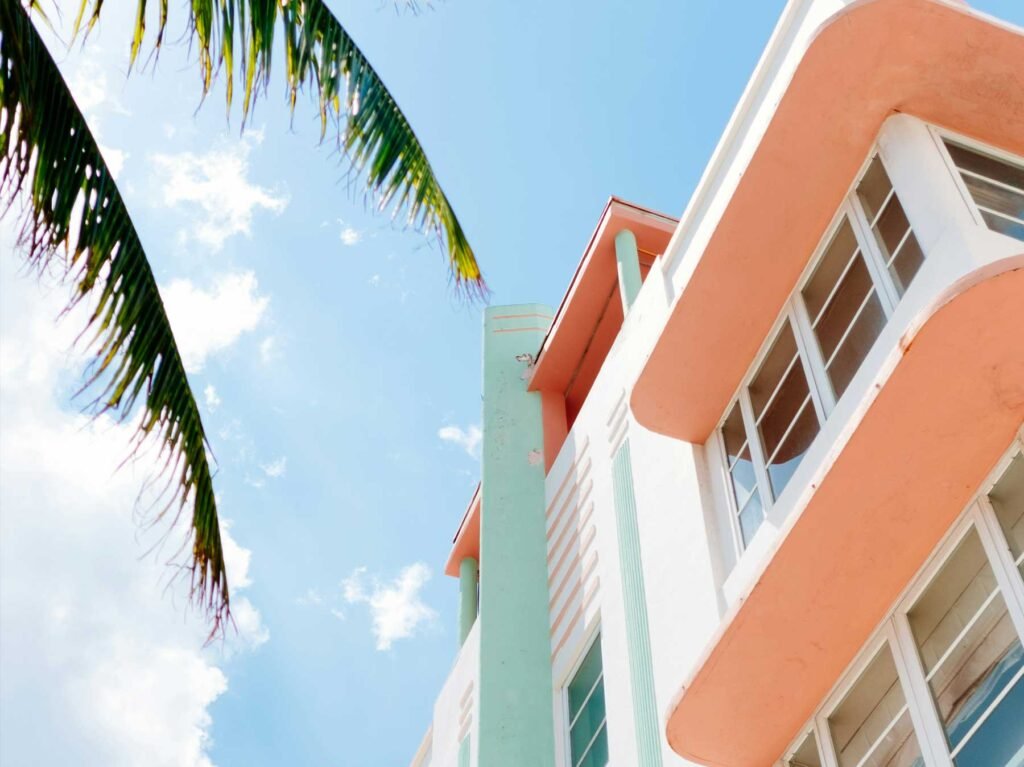
The Miami Beach Architectural District, almost always called the Art Deco District, was listed on the National Register of Historic Places on May 14, 1979. It runs from the Atlantic Ocean west to Alton Road, and from 6th Street north to the Collins Canal and Dade Boulevard. Depending on how you count, it holds between the over 800 properties built between 1923 and 1943 cited by the City of Miami Beach and roughly 960 historic buildings counted elsewhere. Either way it is the largest collection of Art Deco architecture anywhere in the world.
What it costs to own here: the three-story rule
Florida milestone inspection requirements apply to condominium and cooperative buildings three stories or more in height, at 30 years of age, or 25 years where the local enforcement agency cites conditions such as salt-water proximity (Fla. Stat. 553.899). HB 913 (2025) refined the trigger to buildings with three or more occupied stories, excluding garages and non-habitable areas, and applied the same threshold to Structural Integrity Reserve Studies, required every 10 years.
At 2 stories, The Aloha falls below that statutory threshold. It is not compelled to carry out milestone inspections or fund a Structural Integrity Reserve Study on a mandated schedule. In a market where Miami condo special assessments in 2026 commonly run $30,000 to $75,000 per unit, with some projects exceeding $100,000 per unit, that is a material difference in carrying cost.
The counterweight matters just as much. Exemption from a mandated inspection is not exemption from physics. A building of this age still needs a roof, plumbing, electrical and a wind-rated envelope. The difference is that no statute forces the association to study and fund that work on a timetable. Read the reserve balance, the minutes and the maintenance history yourself, and budget for what a study would have found. Lower mandated cost, higher personal diligence burden.
Renovating in a historic district
Interiors are generally straightforward. Exterior alterations are not: work visible from the street in a Miami Beach local historic district goes through the city Historic Preservation Board review process, codified in Miami Beach Code Chapter 118, Article X. Miami-Dade is also a High-Velocity Hurricane Zone, so impact-rated windows and doors are required, and inside the district those products have to satisfy preservation review on appearance as well as code. Budget more time than a comparable renovation off the beach, and use trades who have been through the process before.
There is a second layer buyers routinely miss. Local Miami Beach designation governs day-to-day alterations. National Register listing is what triggers the stronger state-law protections under SB 1730 and SB 1526. Many buildings here are locally designated but not individually National Register listed, and the two are not interchangeable. Ask which applies to this specific building before assuming it is protected.
Is the district protected from demolition?
Substantially, yes. The Florida Resiliency and Safe Structures Act (SB 1526, 2024), which allows owners to demolish and replace certain non-conforming coastal buildings, explicitly excludes structures on the National Register and several locally designated Miami Beach neighbourhoods including Ocean Drive and the Art Deco District. The 2025 Live Local update, SB 1730, effective July 1 2025, caps development inside National Register districts at the maximum height allowable within a three-quarter-mile radius and permits facade replication. Its protections attach to National Register districts rather than to buildings that are only locally designated.
Why supply here can never grow
The historic district southern boundary is 6th Street. That one line explains the entire South Beach price map. Everything south of it, including Continuum, Apogee, Portofino Tower, Icon South Beach, Murano Grande and Five Park, sits outside the preservation overlay, which is why 40-plus-story towers were legally possible there and nowhere in the blocks immediately north. Inside the district, the two and three-story stock is permanently capped. New Art Deco cannot be built. It can only be restored.
The neighborhood around The Aloha
- Art Deco Welcome Center, 1001 Ocean Drive, the Miami Design Preservation League base. Daily 90-minute walking tours run $35 for adults and $30 for students and seniors; a self-guided audio tour is $25.
- Ocean Drive, the photographic core of the district, including the Colony Hotel at 736 Ocean Drive and its much-photographed neon.
- Espanola Way, three blocks of Mediterranean Revival, pedestrianised at weekends.
- Lincoln Road, the pedestrian mall from Washington to Alton, designed by Morris Lapidus in the 1960s.
- Collins Avenue, the Streamline Moderne hotel corridor running north toward the Raleigh redevelopment at 18th Street.
Who buys in the Art Deco district
Three buyers, consistently. Design-motivated primary and second-home purchasers, for whom this is the only walkable, ocean-adjacent product in Miami Beach at anything near this price point. Cost-conscious buyers deliberately targeting sub-three-story buildings to stay outside the milestone and reserve regime. And preservation-minded owners who treat design review as the price of a protected streetscape rather than as an obstacle.
Two practical notes. South Beach transacts at a high cash rate, and small older condominium buildings are frequently non-warrantable for conventional financing, so confirm financing early rather than late. And adaptive reuse has decisively proved the value thesis: the Shore Club restored its 1939 Art Deco building alongside a new tower and put a penthouse under contract north of $120 million, while the Rosewood Raleigh redevelopment is asking $150 million. Historic fabric is now the premium, not the constraint.
Frequently asked questions
How big is the Miami Beach Art Deco District?
The Miami Beach Architectural District was listed on the National Register of Historic Places on May 14, 1979. It runs from the Atlantic Ocean west to Alton Road and from 6th Street north to the Collins Canal and Dade Boulevard. Counts range from the City of Miami Beach figure of over 800 properties built between 1923 and 1943 to roughly 960 historic buildings, depending on the counting method. It is the largest collection of Art Deco architecture in the world.
Can you actually buy an Art Deco condo in Miami Beach, or are they all hotels?
You can buy them, but most of the famous Ocean Drive frontage is hotels. Genuine residential Art Deco condominiums cluster one to three blocks inland, on Meridian, Pennsylvania, Michigan, Jefferson and Euclid Avenues and along Espanola Way. A third category, condo-hotels, can be owned but operates as hospitality and is underwritten differently. Always confirm which of the three a specific building is before you make an offer.
Does The Aloha have to do Florida milestone inspections?
No. Florida milestone inspections and Structural Integrity Reserve Studies apply to condominium and cooperative buildings three stories or more in height, under Fla. Stat. 553.899 as refined by HB 913 in 2025. At 2 stories this building falls below that threshold and is not compelled to inspect or fund reserves on a statutory schedule. That lowers mandated cost, but it raises your own diligence burden, because the underlying maintenance need does not disappear.
Are Miami Beach Art Deco buildings protected from demolition?
Substantially. Florida 2024 Resiliency and Safe Structures Act, SB 1526, which allows demolition and replacement of certain non-conforming coastal buildings, explicitly excludes National Register structures and several locally designated Miami Beach neighbourhoods including Ocean Drive and the Art Deco District. The 2025 Live Local update, SB 1730, added height caps and facade replication rules inside National Register districts. Note that protections differ between National Register listing and local-only designation.
Can I renovate an Art Deco condo in Miami Beach?
Interiors are generally straightforward. Exterior alterations visible from the street go through the City of Miami Beach Historic Preservation Board review process under Chapter 118, Article X of the city code. Miami-Dade is a High-Velocity Hurricane Zone, so impact-rated windows and doors are required, and inside a historic district those products must also satisfy preservation review on appearance. Allow more time than an equivalent renovation elsewhere in the city.
Why does South of Fifth have towers when the Art Deco District has none?
Because the historic district southern boundary is 6th Street. Everything south of that line, including Continuum, Apogee, Portofino Tower, Icon South Beach, Murano Grande and Five Park, sits outside the preservation overlay, so high-rise development was legally possible there and not in the blocks immediately north. That single boundary explains both the South of Fifth premium and why Art Deco district supply is permanently capped.
Is financing harder on a small older Art Deco building?
Often, yes. Small older condominium buildings are frequently non-warrantable for conventional financing, which is one reason South Beach transacts at a high cash rate. Establish financing early rather than late, and ask the association for the documents a lender will want before you are under contract.
Related coverage
Part of Art Deco Miami Beach Condos.