

Neighborhoods · Morningside
How it was built, and why that still matters. Read off the public roll, not the listing feed.
By Josh Stein · Florida license SL3057661 · Updated 24 September 2026
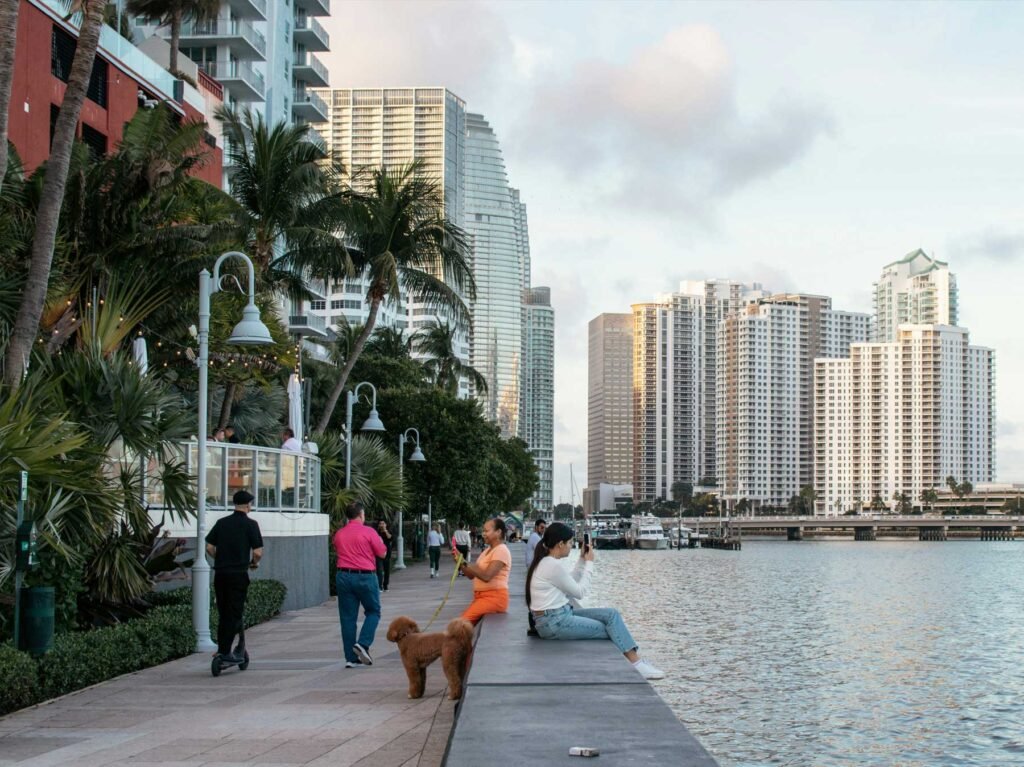
Morningside — photography to follow
Morningside is the most complete surviving 1920s residential neighbourhood in the City of Miami, and it is also the smallest luxury market most buyers have never seriously considered. The historic district contains 218 houses. Not 218 lots with towers coming — 218 detached single-family houses, all of them, permanently. That number does not grow. Everything else about buying here follows from it.
- 218 buildings in the historic district, “all of which are detached, single-family houses”
- Platted 1922 as Bay Shore by the Bay Shore Investment Company; envisioned by its president James H. Nunnally in 1924
- Designated a City of Miami historic district in 1984; listed on the National Register of Historic Places in 1992
- Boundaries: Biscayne Boulevard to Biscayne Bay, NE 55th Street to NE 60th Street
- Work by more than 40 architects, including Kiehnel and Elliott, L. Murray Dixon, Marion Manley, H. George Fink and Robert L. Weed
- Morningside Park: 42 acres on Biscayne Bay, immediately adjacent
How it was built, and why that still matters
In 1922 a large undeveloped bayfront tract near what was then the northern city limit was platted and named Bay Shore. The Bay Shore Investment Company subdivided it, and in 1924 its president, James H. Nunnally, set out the vision for what became Morningside.
Two decisions from that period still govern the experience of living here a century later.
The street plan, and why the diagonals matter
The first was the street plan. The designation report notes that “the earlier subdivisions were laid out with irregular lot lines and streets running in a diagonal direction.” That sounds like a technicality and is not. Miami’s default street grid is relentlessly orthogonal, which produces long uninterrupted sight lines and makes every street a potential cut-through. Morningside’s diagonals break the grid, kill through-traffic naturally, and produce the irregular lots and oblique corner views that give the neighbourhood its particular calm.
The canopy you cannot replicate
The second was the landscape. More than 4,000 trees were planted before the subdivision was presented to the public in 1924. A century of growth on that planting is why Morningside reads as a canopy neighbourhood rather than a collection of houses — and mature tree canopy is the single hardest amenity to replicate in South Florida. New development can match a kitchen. It cannot manufacture ninety-year-old live oaks.
The architecture is not decorative — it is the asset
Mediterranean Revival predominates, which is expected for a Miami subdivision of that decade. What is not expected is the depth of the roster. More than forty architects worked here, and the names include the people who defined South Florida architecture: Kiehnel and Elliott, L. Murray Dixon — whose Miami Beach work includes the Raleigh — Marion Manley, Florida’s first registered female architect, H. George Fink, who shaped Coral Gables, along with Martin Hampton, Gordon Mayor, V.H. Nellenbogen, Paist and Steward, Gene Baylis and Robert L. Weed.
Beyond Mediterranean Revival
Art Deco arrives later, gaining ground through the late 1930s, and there are Mission, Tudor Revival and vernacular houses throughout. The result is variety within a coherent period rather than the repetition of a single builder’s catalogue.
Why this inverts the usual Miami calculation
For a buyer this matters in a specific way. In most of Miami, a 1920s house is a teardown with a nice address — the land carries the value and the structure is a liability. In Morningside the structure is a substantial part of the value, it is protected, and the market prices it that way. That inverts the usual Miami calculation and it catches people out.
What historic designation actually means for you
This is the part that decides whether Morningside is right for a given buyer, and it is the part that almost never gets explained before an offer.
Because Morningside has been a City of Miami historic district since 1984, exterior work is subject to review by the Historic and Environmental Preservation Board (HEPB), the citizen board “charged with promoting the preservation of the City’s heritage.” The city’s permitting process provides for both a Standard Certificate of Appropriateness and a Special Certificate of Appropriateness. In practical terms: changes visible from the street generally require approval before a building permit issues.
The covenant you are buying with the house
Read that as a constraint and it is one. Read it as a covenant and it is the reason the neighbourhood still looks like this. Your neighbour cannot replace a Mediterranean Revival façade with a white stucco box, and neither can you. Every buyer who values what Morningside is should understand that they are buying the enforcement mechanism along with the house.
- Confirm the property is inside the district boundary. The line runs NE 55th to NE 60th, Biscayne Boulevard to the bay. Houses immediately outside carry a different regulatory reality — and often a different price for a similar building.
- Get your renovation scope in front of preservation staff before the inspection period ends, not after closing. Windows, roofs, doors, fenestration changes, front elevations and additions are where plans meet review. An informal read from staff is worth more than an architect’s optimism.
- Price the timeline, not just the budget. Board review adds calendar. If you need to be in by a date, build the review cycle into the schedule before you commit.
- Ask about the ad valorem historic property tax exemption. The city references it in connection with HEPB prescreening. It can offset a meaningful share of a qualifying restoration and is routinely left on the table.
- Have the house inspected by someone who works on 1920s construction. Original hollow clay tile, cast-in-place concrete, wood windows and early plumbing are not what a standard South Florida inspector sees daily.
- Check flood zone, elevation certificate and insurance before anything else. This is a bayfront neighbourhood with pre-code housing stock. Insurance can be the deciding number.
Location, and the park
Morningside sits on Biscayne Bay in Miami’s Upper Eastside, with Biscayne Boulevard as its western edge. That position produces the neighbourhood’s practical argument: it is one of the few places in the city where you get a bayfront single-family street, a canopy, and genuine architectural pedigree, while remaining inside the City of Miami rather than on a barrier island or behind a causeway.
Immediately adjacent is Morningside Park, 42 acres along Biscayne Bay. The designation report is precise that the park lies outside the historic district — which is worth knowing, because it means the park is governed by the city’s parks planning rather than by preservation review. For a buyer the effect is straightforward: a large public waterfront amenity at the neighbourhood’s edge, with tennis, a pool, a boat ramp and open bayfront, none of which is carried on the association’s budget.
The market context
Morningside trades as a single-family market, and Miami-Dade’s single-family market is currently the tight side of a divided county.
Miami-Dade single-family, June 2026
In June 2026, Miami-Dade single-family homes recorded a median sale price of $695,000, up 3.7% year over year, on 1,049 closed sales — a 16.8% increase. Active single-family inventory fell 22.7% to 4,380 listings, leaving 4.9 months of supply. Anything under roughly six months is a seller’s market.
The contrast with condominiums is the story of this cycle: 11,550 active condo listings, 12.3 months of supply and a median down 3.1% to $431,000. The same county is running a seller’s market in houses and a buyer’s market in condos simultaneously.
Why Morningside is tighter than the county
Morningside sits firmly on the tight side of that divide, and its own supply constraint is more severe than the county’s. Four-point-nine months of supply describes a market where inventory is scarce. A neighbourhood with a permanent ceiling of 218 houses, protected from densification, is scarcer than that by construction. In practice this means very few sales per year, wide dispersion in price depending on condition and restoration quality, and comparables that require judgement rather than arithmetic.
Who this neighbourhood is actually for
Morningside is right for a buyer who wants a period house, on the bay, inside the city, and who understands that they are becoming a custodian of a designated building rather than simply an owner. The regulatory layer is real and it is permanent.
It is the wrong neighbourhood for a buyer who wants a new-construction footprint, glass walls, contemporary massing and a fast permit. That buyer will be happier — and will spend less on friction — in Bay Point, Belle Meade or on the Miami Beach islands, where the constraints are different.
If you are considering a Morningside house and want the designation implications, renovation scope and insurance position read before you are contractually committed, that is the work worth doing first. See also all Miami neighbourhoods and current Miami waterfront homes.
Related reading: the historic homes of the Miami River · Miami’s 100 most expensive homes · selling a Miami property.
Morningside, Miami — common questions
How many homes are in Morningside?
The Morningside Historic District contains 218 buildings, and per the City of Miami designation report all of them are detached single-family houses. Because the district is designated and cannot be densified, that number is effectively permanent — which makes Morningside one of the most supply-constrained single-family markets in the City of Miami.
Is Morningside a historic district?
Yes, on two levels. Morningside was designated a City of Miami historic district in 1984 and was listed on the National Register of Historic Places in 1992. The district runs from NE 55th Street to NE 60th Street, between Biscayne Boulevard and Biscayne Bay.
Can I renovate a house in Morningside?
Yes, but exterior work is subject to review by the City of Miami’s Historic and Environmental Preservation Board. The city provides for a Standard Certificate of Appropriateness and a Special Certificate of Appropriateness, and in practice changes visible from the street require approval before a building permit issues. Take your renovation scope to preservation staff during the inspection period rather than after closing, and build the review cycle into your timeline.
Who designed the houses in Morningside?
More than forty architects worked in the neighbourhood. The designation report names Kiehnel and Elliott, L. Murray Dixon, Marion Manley, H. George Fink, Martin Hampton, Gordon Mayor, V.H. Nellenbogen, Paist and Steward, Gene Baylis and Robert L. Weed. Mediterranean Revival predominates, with Art Deco gaining ground in the late 1930s and Mission, Tudor Revival and vernacular houses throughout.
When was Morningside built?
The tract was platted in 1922 as Bay Shore and subdivided by the Bay Shore Investment Company, whose president James H. Nunnally set out the vision for the neighbourhood in 1924. More than 4,000 trees were planted before the subdivision was presented to the public that year, which is why the mature canopy is one of its defining features today.
Is Morningside a good investment?
It is a scarcity play rather than a growth play. Miami-Dade single-family recorded a median of $695,000 in June 2026, up 3.7% year over year, with inventory down 22.7% and just 4.9 months of supply — a seller’s market. Morningside’s fixed stock of 218 protected houses is tighter still. The trade-off is low transaction volume, wide price dispersion by condition, and a regulatory layer on renovation that a buyer must be comfortable with.
Sources and further reading
- City of Miami — Morningside Historic Districtmiami.gov
- City of Miami — Morningside Historic District Designation Reporthistoricpreservationmiami.com
- City of Miami — Historic Preservation and the Historic and Environmental Preservation Boardmiami.gov
- MIAMI REALTORS — South Florida Market Stats, June 2026miamirealtors.com
Related coverage
Part of Miami Neighborhoods.