

Neighborhoods · Pine Tree Drive
How this land was made. Read off the public roll, not the listing feed.
By Josh Stein · Florida license SL3057661 · Updated 8 October 2026Leer en español →
- Asking range$439,000 to $110,000,000
- List price per sq ft$2,856
- Months of inventory8.4
- Sold, 12 months239


Listing information is deemed reliable but is not guaranteed and is provided exclusively for consumers' personal, non-commercial use. Data is supplied by the MLS and may be subject to change or withdrawal without notice.
Last updated 3 seconds ago
Recently sold in Miami Beach
4 listings


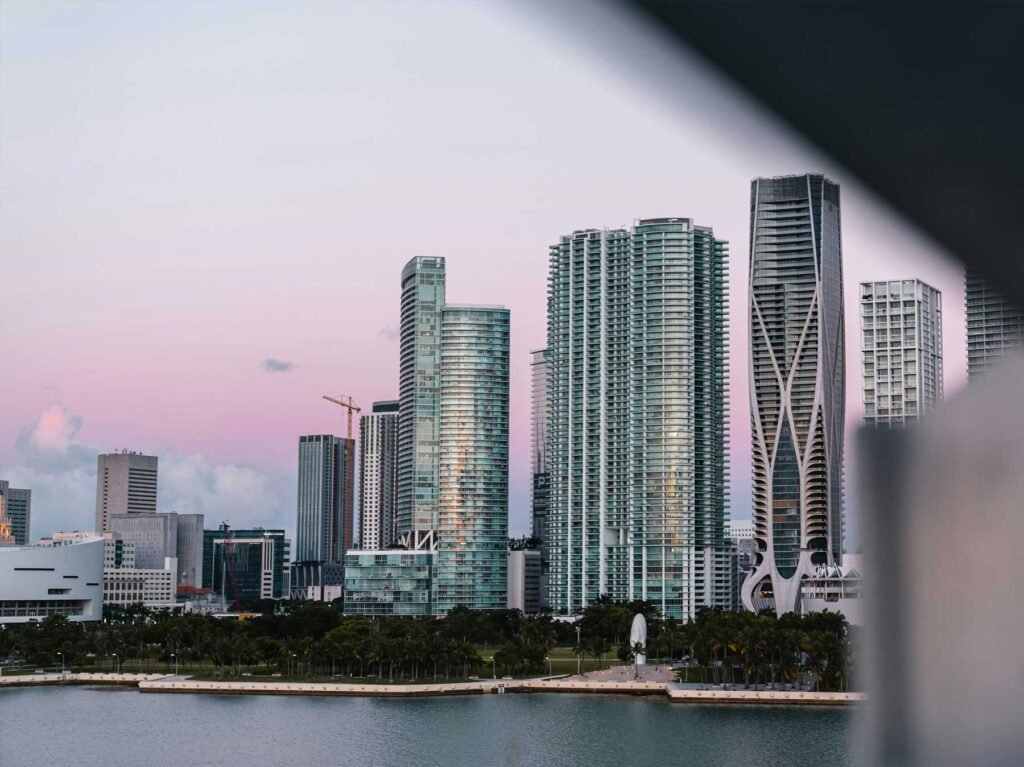
Pine Tree Drive is the estate spine of mid Miami Beach — a long, canopied road running north from the Collins Waterfront district along the western bank of the Indian Creek waterway. It is one of the few streets in the city where genuinely large single-family estates sit on protected water, minutes from Lincoln Road, on the mainland side of the barrier island rather than exposed to the ocean.
It is also a street where two houses that look comparable can be worth very different amounts, for one reason: which side of the road they sit on.
- Runs along the Indian Creek waterway — protected water, not open ocean
- East side parcels back onto the creek with dockage potential; west side parcels do not
- The Collins Waterfront Historic District boundary runs “along the center line of Pine Tree Drive” at its southern end — designated 31 January 2001
- Land shaped by John Collins and the Miami Beach Improvement Company, formed 1912, which “dredged the marshy southern end of Indian Creek”
- Mature canopy — the “Pine Tree” name is not decorative
How this land was made
Almost nothing about the geography here is natural, and that is the point.
The area began as John Collins’ agricultural venture — an avocado grove, not a resort. In 1912 the family formed the Miami Beach Improvement Company, which platted the land and, critically, “dredged the marshy southern end of Indian Creek.” That dredging is why Indian Creek is a navigable waterway with hard edges and buildable banks instead of mangrove flats. Pine Tree Drive exists because someone decided where the water would go.
From avocado grove to Redistribution Station
What followed tracked the century. The 1920s boom produced Mediterranean Revival hotels and estates. The 1930s and 1940s brought Art Deco. During the Second World War the district became Army-Air Forces Redistribution Station #2, processing returning combat veterans through requisitioned hotels — a period that erased a good deal of pre-war residential fabric. The post-war decades brought the Modern hotels that define Collins Avenue’s mid-Beach stretch today.
Why the survivors are scarce
The residential survivors are what Pine Tree Drive trades on. Relatively few original estate houses came through all of that intact, which is a supply story as much as an architectural one.
The east side / west side split — the single most important thing to understand
On Pine Tree Drive, the road is the dividing line between two different products at the same address.
The east side
East side. These parcels back onto Indian Creek. Subject to seawall, permitting and clearance realities, they carry the possibility of private dockage on protected water — no ocean exposure, no inlet crossing to reach a slip. In a market where deep-water access is the scarcest single attribute in South Florida, that is the value driver.
The west side
West side. Same street, same canopy, same address prestige, no water. These are large dry-lot estates. They are not lesser houses — many are larger, because the lots are not constrained by a waterway setback — but they are a fundamentally different asset, and they should never be valued off an east-side comparable.
A buyer being shown “a Pine Tree Drive house” should establish the side of the street before anything else, and a seller being given a valuation drawn from the wrong side of the road is being misled, in whichever direction.
The designation question — and how to answer it in five minutes
Miami Beach regulates historic properties aggressively, and Pine Tree Drive sits right at an edge. The Collins Waterfront Historic District — approved unanimously by the City Commission on 31 January 2001 — has a boundary that literally runs “along the center line of Pine Tree Drive” at its southern end before turning along Indian Creek toward 44th Street.
Designation is parcel-specific
The practical consequence: designation status on this street is parcel-specific. Two neighbouring properties can sit under different regimes. Whether a given house is contributing, non-contributing, inside a district, or individually designated determines whether a renovation goes through the Historic Preservation Board or straight to plan review — and that difference is measured in months and in what you are permitted to demolish.
- Look the address up in the City of Miami Beach Historic Properties viewer. The city publishes a parcel-level tool. It will tell you whether the property is in a district and how it is classified. This takes minutes and almost nobody does it before writing an offer.
- If it is contributing or designated, get your demolition and addition scope in front of preservation staff during the inspection period. Not after. A teardown assumption that turns out to be a restoration requirement is the most expensive mistake available on this street.
- Confirm seawall condition and remaining life on any east-side parcel. This is a six-figure item and it is frequently deferred by long-term owners.
- Confirm dock permitting and, above all, bridge clearance. Indian Creek is protected water reached through bridges. The relevant question is not “can I have a dock” but “can the boat I actually own get from that dock to open water.” Establish air draft against the route before you buy the boat or the house.
- Get the elevation certificate and flood zone before the insurance quote. On a dredged waterway with pre-war housing stock, insurance is often the number that decides the deal.
- Have an arborist look at the canopy. Miami Beach protects trees, and a mature specimen sitting where you planned the pool is a design constraint, not a landscaping decision.
Why buyers choose Indian Creek over the ocean
There is a persistent assumption that oceanfront is automatically the superior Miami Beach product. For a primary residence it frequently is not, and Pine Tree Drive is the clearest illustration of why.
What protected water buys you
Protected water means no direct ocean exposure — less salt load on the building, less erosion risk, calmer water at the dock, and a boat that can be left in the water. It means a street-facing house with a private rear garden rather than a house whose best face is toward a public beach. It means single-family scale on a barrier island where most oceanfront land has long since been converted to towers.
The trade is the view. You are looking at a waterway and the houses opposite, not the Atlantic horizon. Buyers who want that horizon should be in an oceanfront condominium or on the sand; buyers who want a boat, a garden, privacy and a house should be looking at Indian Creek. Those are different people and they should be steered differently.
Market context
Pine Tree Drive is a single-family market, and Miami-Dade single-family is currently the tight half of a split county.
June 2026: median single-family sale price $695,000, up 3.7% year over year, on 1,049 closed sales — up 16.8%. Active inventory fell 22.7% to 4,380 listings, leaving 4.9 months of supply. Cash was 27.6% of single-family closings.
The condo market, by contrast
Condominiums, same county, same month: 11,550 active listings, 12.3 months of supply, median down 3.1% to $431,000, and 48.5% cash. A seller’s market in houses and a buyer’s market in condos, simultaneously.
Treat those county figures as direction, not as comparables. Estate streets transact in small numbers, and on Pine Tree Drive the water/no-water split, lot size, designation status and seawall condition move value far more than any county median. Anyone quoting a single price per square foot for “Pine Tree Drive” is averaging two different markets.
Who this street suits
Pine Tree Drive works for a buyer who wants a substantial house with land and canopy, on the island, with the option of protected-water dockage, and who is prepared to do parcel-level homework on designation before committing to a renovation plan.
It does not suit a buyer who wants ocean views, a turnkey new build with no regulatory friction, or a quick permit. That buyer is better served on the Venetian or Sunset Islands, in Belle Isle, or in a new oceanfront condominium.
If you are looking at a specific Pine Tree Drive property and want the designation status, seawall position, dock feasibility and insurance read before you are contractually committed, that is the work that should happen first. See also Miami Beach, waterfront homes across Miami and other Miami enclaves.
Related reading: the Venetian Islands · the $5 million to $10 million band · Miami’s loft market.
Pine Tree Drive, Miami Beach — common questions
Are all Pine Tree Drive homes on the water?
No, and this is the most important distinction on the street. Parcels on the east side of Pine Tree Drive back onto the Indian Creek waterway and can carry private dockage subject to seawall, permitting and bridge clearance. Parcels on the west side are dry lots — often larger, since they are not constrained by a waterway setback, but a fundamentally different asset. East-side and west-side properties should never be valued from each other’s comparables.
Is Pine Tree Drive in a historic district?
Partly, and it is parcel-specific. The Collins Waterfront Historic District, designated unanimously by the Miami Beach City Commission on 31 January 2001, has a boundary that runs “along the center line of Pine Tree Drive” at its southern end. Two neighbouring houses can therefore fall under different regimes. Check the individual address in the City of Miami Beach Historic Properties viewer before assuming anything about demolition or renovation rights.
Can I keep a boat on Indian Creek?
Often yes, but the binding constraint is usually bridge clearance rather than the dock itself. Indian Creek is protected water reached through bridges, so the question to answer is whether your specific vessel’s air draft clears the route to open water — not simply whether the property can be permitted for a dock. Confirm dock permitting, seawall condition and remaining life, and the clearance on the actual route before you commit.
How was Indian Creek formed?
It was engineered. The area began as John Collins’ agricultural land, and in 1912 the family formed the Miami Beach Improvement Company, which platted the land and “dredged the marshy southern end of Indian Creek.” The navigable waterway with buildable banks that defines Pine Tree Drive today is the result of that dredging rather than natural geography.
Why choose Indian Creek over oceanfront in Miami Beach?
Protected water means no direct ocean exposure — less salt load on the structure, calmer water at the dock, a boat that can stay in the water, and a private rear garden rather than a frontage onto a public beach. It also means single-family scale on an island where most oceanfront land has been converted to towers. The trade-off is the view: you look at a waterway and the houses opposite, not the Atlantic.
What should I check before buying on Pine Tree Drive?
Confirm which side of the street the parcel sits on; look the address up in the Miami Beach Historic Properties viewer to establish designation status; if it is contributing or designated, take your demolition and addition scope to preservation staff during the inspection period; confirm seawall condition and remaining life; confirm dock permitting and bridge clearance for your actual vessel; pull the elevation certificate and flood zone before getting an insurance quote; and have an arborist assess protected trees before an architect draws a footprint.
Sources and further reading
- City of Miami Beach — Collins Waterfront Historic District Designation Reportmiamibeachfl.gov
- City of Miami Beach — Historic Properties Viewerapps.miamibeachfl.gov
- City of Miami Beach — Studies and Designation Reportsmiamibeachfl.gov
- MIAMI REALTORS — South Florida Market Stats, June 2026miamirealtors.com
Related coverage
Part of Miami Neighborhoods.