

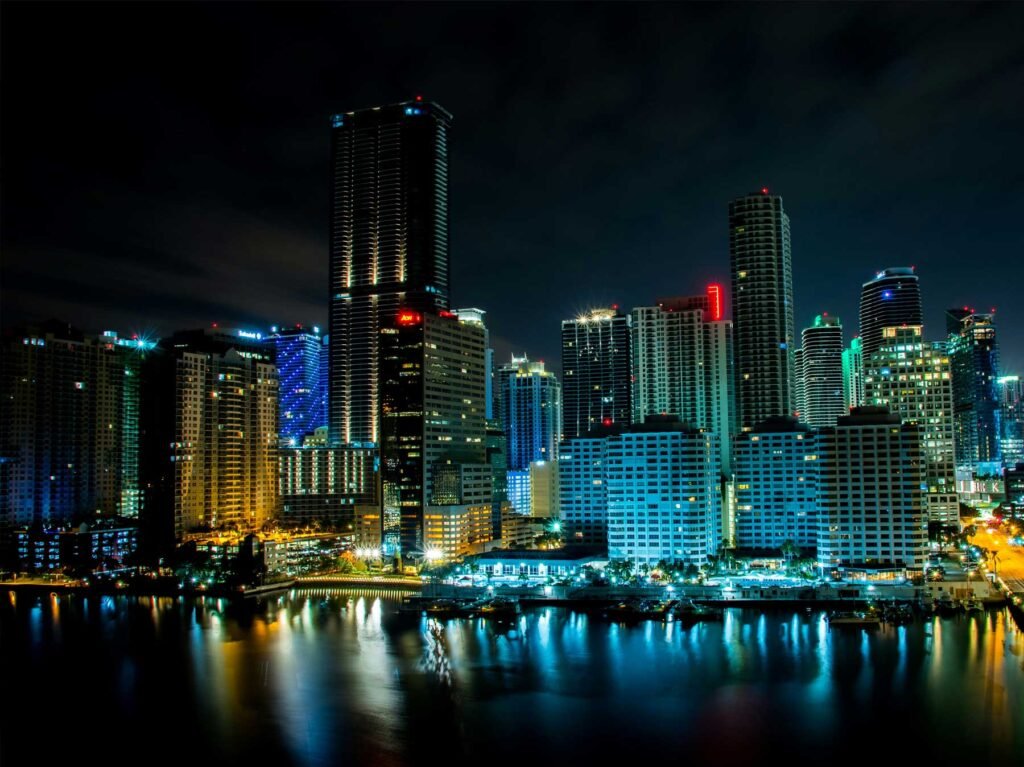
Belle Meade — photography to follow
Two 1925 plats, one neighbourhood. Read off the public roll, not the listing feed.
Belle Meade is 396 houses on 136 acres between Biscayne Boulevard and Biscayne Bay, and almost every one of them was built before 1960. It is one of the very few Miami neighbourhoods where a buyer gets bayfront-adjacent single-family living, a genuine canopy, an island of its own — and, unlike its neighbour Morningside, no historic-district review board standing between them and a renovation. That single distinction is the most important fact about buying here, and nobody explains it.
- 396 houses across an “isolated, exclusive enclave of 136 acres“
- Plat filed 16 September 1925 by civil engineer Watson M. Garris for the Belle Meade Land Company
- Belle Meade Island — separated from the mainland by a 100-foot canal, reached by two bridges
- Boundaries: Biscayne Boulevard west, Biscayne Bay east, the waterway near NE 78th/77th north, NE 72nd Terrace south
- Population 906; per-capita income $72,931 against a Miami-Dade average of $28,823
- Not a City of Miami designated historic district
Two 1925 plats, one neighbourhood
Belle Meade is the product of two adjacent land companies working the same boom.
Two plats, three weeks apart
On 24 August 1925, the engineer W.C. Bliss filed a plat for a subdivision called Aqua Marine, on behalf of owners Herman Brandt, his brother Hugo E. Brandt with his wife Ruth E. Brandt, and Mary V. Allgeyer — all of them from Cook County, Illinois. Three weeks later, on 16 September 1925, the civil engineer Watson M. Garris filed the plat for Belle Meade on behalf of the Belle Meade Land Company, whose president was Walter S. Morrow and whose secretary was Samuel Shites.
The original Belle Meade boundaries ran to the Little River on the north, Aqua Marine on the north and west, Biscayne Boulevard on the west, and Biscayne Bay on the east. The plan’s signature move was Belle Meade Island — a residential island cut from the mainland by a 100-foot canal and reached by two bridges.
Deed restrictions, not preservation law
Both plats carried deed restrictions, to be enforced first by the developer and then, once all the lots were sold, by a successor homeowners association. That structure is still the governing logic of the neighbourhood: private covenants and an active association rather than municipal preservation law.
The building record, and what it tells you
The 1925 boom collapsed almost immediately, and Belle Meade’s construction history reads like a chart of the century.
The first house went up in 1925. Then, essentially, nothing — until 1934, when building began in earnest. There were 14 houses in 1935, and from there, in the association’s own phrasing, “construction simply took off.” By 1942, 241 of the neighbourhood’s current 396 houses were finished. Post-war building peaked at 33 houses in 1950, then tapered to zero by 1960.
What a closed stock of 396 houses means
Sit with those numbers, because they define the product. Roughly 60 percent of Belle Meade is pre-war. The balance is late-1940s and 1950s — which in Miami means MiMo: Miami Modern, the low-slung, breeze-block, flat-roofed idiom that the city spent decades under-valuing and now protects along Biscayne Boulevard. And after 1960, the neighbourhood stopped. Every house built here since is an infill or a replacement on an existing lot.
A buyer is therefore choosing between three things on any given street: a restored 1930s house, an original mid-century house, and a modern rebuild on a 1925 lot. All three exist within a few hundred feet of each other, and they price very differently.
The Morningside comparison — the decision most buyers should actually be making
Belle Meade and Morningside sit within a few blocks of each other on the same stretch of the Upper Eastside. They look superficially similar: 1920s plats, bay frontage, canopy, single-family only, strong associations. Buyers routinely tour both and choose on the house.
That is the wrong basis, because the two neighbourhoods operate under fundamentally different rules.
Nine districts, and Belle Meade is not one
The City of Miami maintains nine designated historic districts: Bayside, Beverly Terrace, Buena Vista, Downtown Miami, Lummus Park, MiMo/Biscayne Boulevard, Morningside, Palm Grove and Riverview. Belle Meade is not among them.
The consequence is direct. In Morningside, exterior work goes before the Historic and Environmental Preservation Board and requires a Certificate of Appropriateness. In Belle Meade, it does not — your constraints are zoning, the building code, and the neighbourhood’s own deed restrictions and association, which are private instruments rather than municipal review.
Choose Morningside if you want a period house, you intend to restore rather than reinvent, and you want a guarantee that your neighbour cannot build something jarring next door. You are buying the enforcement mechanism as much as the house.
Choose Belle Meade if you want the same era, the same canopy and the same bay proximity, but you intend to substantially modernise, extend, or replace — and you would rather negotiate with a homeowners association and the zoning code than with a preservation board and a public hearing calendar.
This is not a claim that one is superior. It is a claim that they are different products at similar addresses, and that a buyer with renovation plans who lands in the wrong one will spend two years discovering it.
Belle Meade Island
The island is the neighbourhood’s premium tier and functions almost as a separate market. Cut off by a 100-foot canal, reached by two bridges, it delivers the thing every Miami buyer says they want and few actually get: water on multiple sides, a single point of entry from the neighbourhood, and a lot count small enough that turnover is measured in a handful of sales a year.
Island diligence
The practical diligence on any island property here is waterfront-specific rather than architectural. Seawall condition and remaining life is the number that matters most, because seawall replacement is a six-figure item and it is not always disclosed as a pending expense. Dock and boat-lift permitting through Miami-Dade, canal depth at low tide relative to the vessel you actually own, bridge clearance on the route to open water, flood zone and elevation certificate, and the insurance quote that follows from them — all of it before the inspection period closes.
Who lives here
The Miami-Dade planning organisation’s community background report puts Belle Meade’s population at 906, with 62.1% of working age. Average per-capita income is $72,931, against a Miami-Dade County average of $28,823 — roughly two and a half times the county figure. 42.23% of residents are foreign-born, and the population is 54.1% Hispanic.
That last pair of numbers describes something specific about the Upper Eastside that a broker should say plainly: this is an international neighbourhood of established households, not a second-home enclave that empties in June. The distinction shows up in everything from school demand to how the association actually functions.
Market context
Belle Meade trades as single-family, and that is currently the strong side of a split county.
Miami-Dade single-family, June 2026
In June 2026, Miami-Dade single-family homes posted a median sale price of $695,000, up 3.7% year over year, on 1,049 closed sales — up 16.8%. Active inventory fell 22.7% to 4,380 listings, leaving 4.9 months of supply, comfortably inside seller’s-market territory. Cash accounted for 27.6% of single-family closings.
The condo market, by contrast
Condominiums in the same county and the same month ran 11,550 active listings, 12.3 months of supply, and a median down 3.1% to $431,000. One county, two opposite markets.
Belle Meade’s own constraint is tighter than the county’s: a closed stock of 396 houses on 136 acres, with no mechanism to add more. Expect few sales a year, and expect comparables to require adjustment for condition and vintage rather than straight per-foot arithmetic — a 1938 original and a 2019 rebuild on the next lot are not the same asset.
The honest summary
Belle Meade is the pragmatist’s version of the Upper Eastside. You get the 1925 street plan, the canopy, the island, the association and the bay, without signing up for design review on every window. In exchange you accept that the neighbourhood’s character is protected by private covenants and neighbours rather than by law — which is a weaker guarantee than Morningside’s, and a considerably lighter burden.
7709 Atlantic Way sold for $25.4 million in May 2021, the highest closed sale profiled in Altos del Mar’s oceanfront home sales.
If you are weighing Belle Meade against Morningside, or looking at the island specifically, the renovation plan should drive the neighbourhood choice rather than the other way round. See also Miami’s luxury neighbourhoods, waterfront property in Miami and Bay Point Estates.
Related reading: Edgewater immediately to the south · the Miami penthouse market · homes between $1 million and $3 million.
Belle Meade, Miami — common questions
How many homes are in Belle Meade?
396. The Miami-Dade planning organisation describes Belle Meade as an “isolated, exclusive enclave of 136 acres,” and the homeowners association’s own history records that 241 of the current 396 houses were finished by 1942, with construction peaking at 33 houses in 1950 and tapering to zero by 1960. The stock is effectively closed.
Is Belle Meade a historic district?
No. The City of Miami’s nine designated historic districts are Bayside, Beverly Terrace, Buena Vista, Downtown Miami, Lummus Park, MiMo/Biscayne Boulevard, Morningside, Palm Grove and Riverview. Belle Meade is not among them, which means exterior renovation does not require a Certificate of Appropriateness from the Historic and Environmental Preservation Board. Deed restrictions and the homeowners association apply instead.
Can I renovate or rebuild a house in Belle Meade?
Generally yes, subject to zoning, the building code and the neighbourhood’s deed restrictions and homeowners association — not to municipal historic review. This is the principal practical difference between Belle Meade and neighbouring Morningside, and it is the reason a buyer with substantial renovation plans is usually better served here.
When was Belle Meade built?
The plat was filed on 16 September 1925 by civil engineer Watson M. Garris for the Belle Meade Land Company, three weeks after the adjacent Aqua Marine subdivision was platted by W.C. Bliss. The first house went up in 1925, serious construction began in 1934, and by 1942 241 houses were complete. Building peaked at 33 houses in 1950 and stopped by 1960.
What is Belle Meade Island?
Belle Meade Island is the neighbourhood’s premium tier — a residential island separated from the mainland by a 100-foot canal and reached by two bridges. It functions as a distinct market with very low turnover. Diligence on an island property should centre on seawall condition and remaining life, dock and lift permitting, canal depth at low tide, bridge clearance to open water, and the flood zone and insurance position.
Where is Belle Meade in Miami?
In Miami’s Upper Eastside, bounded by Biscayne Boulevard on the west, Biscayne Bay on the east, the waterway between NE 78th and NE 77th Streets on the north, and NE 72nd Terrace on the south. It sits immediately north of Morningside.
Sources and further reading
- Belle Meade Homeowners Association — Historybellemeademiami.com
- Miami-Dade TPO — Belle Meade Community Background Reportgiscloud.fiu.edu
- City of Miami — Historic Districtsmiami.gov
- MIAMI REALTORS — South Florida Market Stats, June 2026miamirealtors.com
Related coverage
Part of Miami Neighborhoods.