

Key Biscayne is spending $75 million to keep the island dry, and a portion of that bill arrives on the homeowner — between $150 and $1,200 a year depending on the value of the house. Almost nobody mentions this when they show you a property here. It is the most important number on the island, and it is public record.
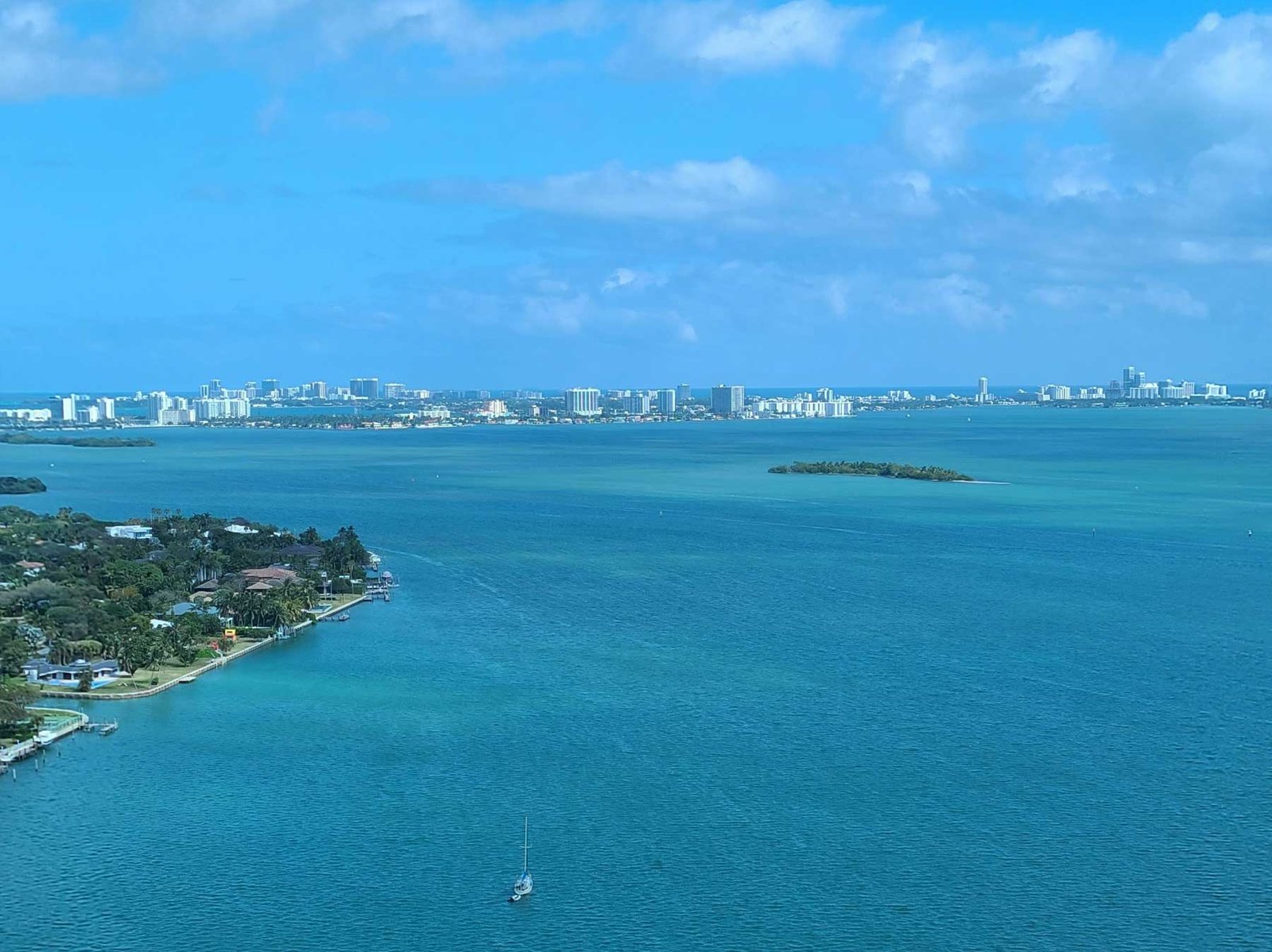
Key Biscayne (33149) — early 2026
Sources: Redfin 33149 data, early 2026; Douglas Elliman Barrier Islands report, Q3 2025; CBS Miami reporting on the Village of Key Biscayne Resilient Infrastructure and Adaptation Program.
Ignore the zip-code median. It is telling you nothing.
Every portal will show you a Key Biscayne median around $2.52 million. That figure blends single-family houses with 1970s and 1980s oceanfront condominiums, and the two are not remotely the same asset. Douglas Elliman’s Barrier Islands reporting put Key Biscayne single-family medians in the high three to four million range as of Q3 2025 — meaningfully above the blended number.
Price per square foot ran around $1,040 in early 2026, up roughly 27% year on year. That is a large move, and it reflects what happens when demand rises against supply that physically cannot expand.
Two practical consequences. First, if you are budgeting from the zip median you are under-budgeting by a wide margin. Second, if a seller prices a house off condo comparables, or an appraiser blends them, the number is wrong in one direction or the other and it is worth challenging.
The $75 million line item nobody shows you
The Village of Key Biscayne has committed $75 million to its Resilient Infrastructure and Adaptation Program — drainage, stormwater and flood mitigation across the island. The funding stack is roughly $41 million from the state revolving fund, $15 million in grants, $2 million from Miami-Dade Water and Sewer, and $4 million from residents. That resident share works out to $150 to $1,200 per household per year, scaled by home value. Construction was scheduled to begin at the end of 2025 or early 2026, beginning with Zone 1 and expanding across the island.
Why the Village is doing it, in their own framing: officials stated plainly that without addressing the flooding, the island’s property values may decrease, insurance rates may rise, and quality of life will decline. Key Biscayne K-8 has taken two to three feet of water during rain events.
Read that honestly and it cuts both ways. The bad reading is obvious: this is an island with a water problem serious enough to require a nine-figure conversation. The good reading is that Key Biscayne is one of very few municipalities in South Florida actually funding a fix rather than deferring it — and a funded, executing resilience programme is materially better for long-run value than a beautiful island that has not started. If you are comparing Key Biscayne to a barrier-island alternative, ask what that alternative has committed and when its shovels go in the ground. Most cannot answer.

What you are actually buying: a supply constraint
Key Biscayne is a barrier island reached by one causeway. It has its own village government, its own zoning, its own police and fire, and a hard physical boundary that no amount of demand can move. Between Crandon Park at the north end and Bill Baggs Cape Florida State Park at the south, a substantial share of the island is public land that will never be developed.
That means the number of single-family houses on Key Biscayne is, for practical purposes, fixed. New product arrives only through teardown and rebuild on an existing lot. There is no assemblage play, no upzoning, no next phase. In a county where supply responds to demand almost everywhere else, that is genuinely unusual, and it is why the island rarely produces distressed inventory even in soft markets.
The trade is that everything else about island life is a constraint too: one road in, hurricane evacuation that runs through that road, insurance priced for a barrier island, and a flood profile you must underwrite honestly rather than emotionally.
The island’s sub-markets
Bayfront — the west side
Protected water, private docks, calmer conditions, and a shorter run to the bay and downtown. This is where the island’s largest transactions happen. Dockage, water depth at low tide and seawall condition drive value more than square footage does.
Oceanfront and ocean-adjacent — the east side
Direct Atlantic exposure. Higher wind and surge loading, higher insurance, and a beach that requires ongoing renourishment. The views are the best on the island and the carrying costs reflect it.
The interior village
The bulk of the island’s houses. Walkable, family-oriented, close to the K-8 and the village centre, and where most buyers actually end up. This is the segment where the resilience programme matters most directly, because interior streets are where the standing water shows up.
Condominiums
A large share of the island’s inventory and the reason the blended median is misleading. Many of these buildings are 40+ years old and therefore exposed to Florida’s milestone inspection and reserve-funding requirements — the same dynamic that pushed the wider Miami-Dade condo market to 12.9 months of supply while houses sat at 5.2. Underwrite the association, the reserve study and the assessment history before the unit.
Seven things to check before you buy on Key Biscayne
1. The resilience assessment on that specific property. The homeowner contribution is scaled to home value, between $150 and $1,200 a year. Find out the figure for the address you are buying and how it changes as the programme expands beyond Zone 1.
2. Elevation certificate and finished floor height. On this island the elevation certificate is not a formality. Get it, read it, and know how the specific street drains in a heavy rain event — not just the FEMA zone letter.
3. Insurance quoted before you go hard. Barrier-island wind and flood pricing is a different universe from inland Miami-Dade, and roof age is the largest single variable. Quote it during the inspection period, not after.
4. Whether the comparables are houses. Reject any valuation that mixes single-family sales with condo sales. On this island that error is worth seven figures.
5. Seawall and dock on bayfront lots. Condition, remaining life, permit status, water depth at low tide, and clearance to open water. Seawall replacement on this island is a serious number and it is the buyer’s problem after closing.
6. Permit history. A great deal of the island’s older stock has been added to over fifty years. Unpermitted work surfaces at appraisal and at resale.
7. Evacuation and access reality. One causeway. Understand what that means for your household before you commit, not during a storm week.
How I read Key Biscayne
The supply constraint is real and it is the strongest argument for buying here. The water is also real, and anyone who tells you otherwise is selling. The honest position is that Key Biscayne is one of the few places in South Florida where the municipality has put nine figures and a construction schedule behind the problem rather than a press release — and that a house here should be underwritten with the resilience assessment, the insurance quote and the elevation certificate in hand before you commit a deposit.
I have been selling in Miami since 2002 and I will tell you when the answer is that this particular house is not worth it. That is the same standard I apply to condo towers in The Miami Confidential: dated figures, named sources, and an honest read even when it costs me the transaction.
Related: Miami Luxury Homes — the county-wide picture · Coconut Grove Homes · Coral Gables Homes · Miami Waterfront Homes · Key Biscayne neighbourhood guide
Key Biscayne homes — common questions
How much does a house cost on Key Biscayne in 2026?
More than the headline median suggests. The 33149 zip-code median sits near $2.52 million, but that blends houses with condominiums. Douglas Elliman’s Barrier Islands reporting put Key Biscayne single-family medians in the high three to four million range as of Q3 2025. Price per square foot ran roughly $1,040 in early 2026, up about 27% year over year.
What is the $75 million Key Biscayne resilience programme and does it affect buyers?
It is the Village’s Resilient Infrastructure and Adaptation Program, covering drainage, stormwater and flood mitigation. Funding is roughly $41 million from the state revolving fund, $15 million in grants, $2 million from Miami-Dade Water and Sewer and $4 million from residents. The homeowner share works out to between $150 and $1,200 per year, scaled by home value. Construction was scheduled to begin at the end of 2025 or early 2026, starting with Zone 1.
Does Key Biscayne flood?
Yes, which is why the Village committed $75 million to address it. Key Biscayne K-8 has taken two to three feet of water during rain events. Village officials stated that without action, property values may decrease and insurance rates may rise. The important distinction for a buyer is that Key Biscayne is one of the few South Florida municipalities that has funded a fix and set a construction schedule rather than deferring it.
Why is Key Biscayne so expensive?
Fixed supply. It is a barrier island reached by one causeway, with its own village government, and large portions of it — Crandon Park at the north end and Bill Baggs Cape Florida State Park at the south — are permanently public land. The number of single-family houses cannot meaningfully increase; new product arrives only through teardown and rebuild on existing lots.
How long do homes take to sell on Key Biscayne?
Roughly 92 days in early 2026, down from about 102 days a year earlier. That is slower than the tightest inland Miami markets, which reflects the price point and the small buyer pool rather than weak demand.
Should I buy a house or a condo on Key Biscayne?
They carry different risks. Much of the island’s condominium stock is over 40 years old and therefore exposed to Florida’s milestone inspection and reserve-funding requirements — the same dynamic that pushed Miami-Dade condo supply to 12.9 months while single-family sat at 5.2. If you are considering a condo here, underwrite the association’s reserve study and assessment history before the unit itself.
What should I check before buying on Key Biscayne?
The resilience assessment for that specific address, the elevation certificate and finished floor height, an actual insurance quote obtained during the inspection period, comparables drawn only from single-family sales, seawall and dock condition on bayfront lots, and full permit history on any addition.
Sources and further reading
- CBS Miami — Key Biscayne commits $75 million for infrastructure after past floodscbsnews.com
- Village of Key Biscayne — Elevating Our Island Paradise, resilience programmekeybiscayne.fl.gov
- Key Biscayne Home Value (33149) — market analysis citing Redfin and Douglas Elliman Barrier Islands databarbaragretsch.substack.com
- MIAMI Association of Realtors — Miami-Dade market report, May 2026prnewswire.com
Start here
The main sections of The Miami Confidential.