

The Miami Confidential · updated 28 August 2026
Two condo markets are running in parallel in Miami and they are moving in opposite directions. The top is setting records. The middle is repricing downward. Every number below is dated and sourced, and 422 buildings have their own page at the foot of this one.
Own in one of them? See what recorded sales in your building support: 214 buildings, the last 24 months of county-recorded sales.
Miami’s luxury condo market crossed a line in 2025: for the first time, the annual median price per square foot for $1M-plus condo sales finished above $1,000, at $1,030, boosted mostly by new construction entering the market (CondoBlackBook, 20 February 2026). Volume kept climbing into 2026 — 424 luxury condos closed in the first quarter, up 15.2% year over year, at a median of $1,841,000. And yet the same market carried roughly 19 months of luxury inventory. Both things are true at once, and understanding why is the difference between overpaying and buying well.
What the 2026 Numbers Actually Say
Miami is running two condo markets in parallel. New and branded product is setting records: the $2M-plus segment posted 204 sales in Q1 2026, up 25.9% year over year. Meanwhile the broader condo market — including thousands of older units across Miami-Dade — sits at roughly 12.9 months of supply with a countywide condo median near $415,000. Buyers with patience have genuine leverage in the second market. Sellers of trophy product have almost none of that pressure.
Cash is the other defining feature. Just under half of all Miami-Dade condo sales, 48.5%, closed in cash in June 2026, and at $1 million and above the share was 82% in 2025, according to the MIAMI Association of Realtors (17 July 2026). When most of your competition is not waiting on financing, speed and clean terms matter as much as price.
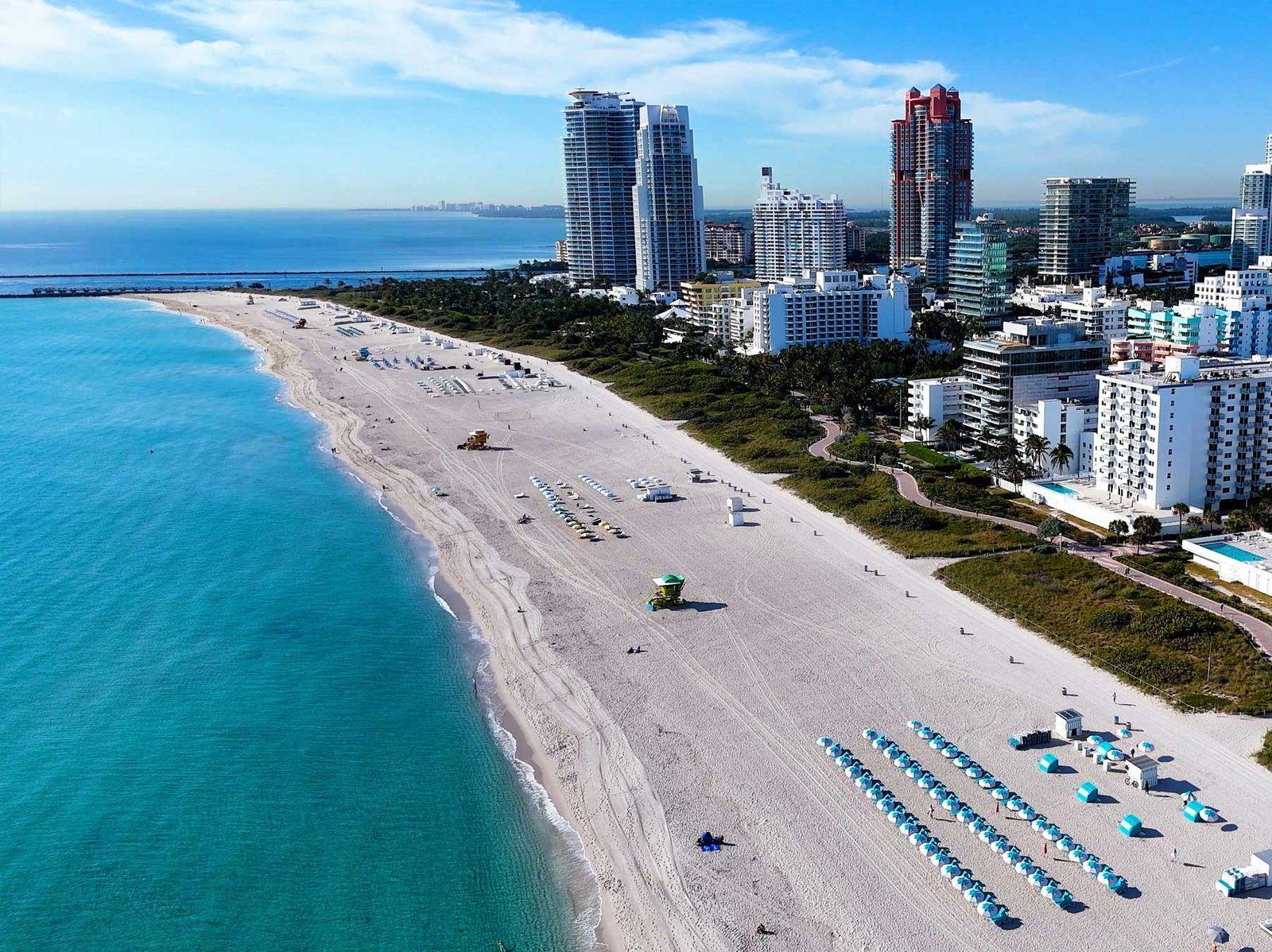
Setting records, and the entry line to “luxury” keeps moving up.
Repricing downward, with 11,550 listings competing.
Source: CondoBlackBook, Q1 2026 Miami Luxury Condo Market Summary (26 May 2026), for the Q1 2026 luxury figures; MIAMI Association of Realtors, June and first-half 2026 reports, for the rest. Luxury = the top 5% of the market by price. Volume, price, inventory and speed are four different measures — they are kept apart here on purpose.
The Two-Speed Market and Why Older Buildings Are Cheaper
Since Florida tightened its structural rules after Surfside, buildings three storeys and older than thirty years must complete milestone inspections and fund structural reserve studies. That has pushed real costs onto older associations, and it is the single biggest reason two condos in the same neighbourhood can differ so much in price per square foot.
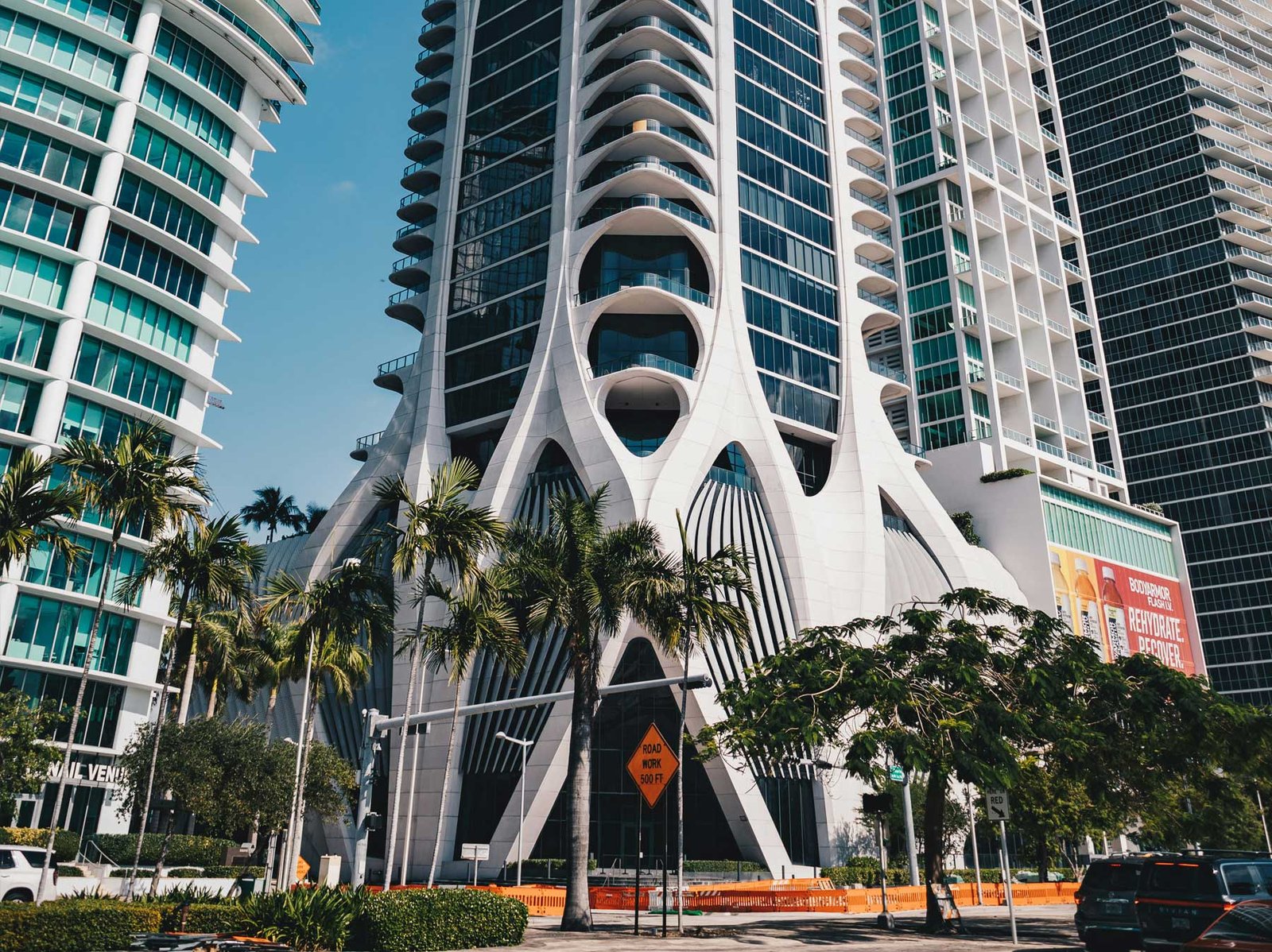
The late Zaha Hadid designed One Thousand Museum’s 62 stories and just 84 residences, one building in Miami condos designed by starchitects.
This is not automatically a reason to avoid older buildings. Association data from 2025 showed well-priced older condos actually selling faster than newer units — 66 days versus 81. The rule is simply that the diligence changes: before making an offer on any building of that age, you read the milestone inspection, the reserve study, the last three years of minutes and the assessment history. A building that has already completed its work and funded reserves is often the better buy precisely because the market discounted it anyway.
Where the Luxury Inventory Is
Miami Beach remains the deepest luxury market — 231 luxury condo sales in Q1 2026. Greater Downtown, including Brickell and Edgewater, posted 112 luxury sales, up 21.7%. Coconut Grove and Coral Gables together added 81, up 44.6% — the fastest growth of the three.
The buildings that define the top of each submarket are worth knowing by name: Continuum and Apogee in South of Fifth, Faena House and Eighty Seven Park on the mid and north beach, the Four Seasons Residences at The Surf Club and Seaway in Surfside, One Thousand Museum and Aston Martin Residences downtown, and Una Residences and the coming St. Regis Residences on Brickell’s waterfront.
Luxury condominium sales by submarket, Q1 2026
Miami Beach is the deepest market. Coconut Grove and Coral Gables are the fastest-growing.
Source: CondoBlackBook, Q1 2026 Miami Luxury Condo Market Summary (26 May 2026).
Branded Residences: Miami Is Now Second Only to Dubai
Miami has 48 completed branded residence projects and 55 more in the pipeline, placing it second worldwide behind Dubai. Globally, branded product commands roughly a 33% price premium. In practice that premium buys hotel-grade service, a managed rental option in some buildings, and — the part buyers underrate — a brand standard that constrains how the building is maintained over decades.
Brickell now concentrates more branded development than any other market in the Western Hemisphere: St. Regis, Cipriani, Baccarat, Dolce&Gabbana and Mercedes-Benz are all building within blocks of each other. Elsewhere in Miami you will find Aston Martin downtown, Missoni in Edgewater, Faena on the Miami River, Mandarin Oriental on Brickell Key and Four Seasons in Surfside and Coconut Grove.
Records Worth Knowing
The Miami-Dade condo record is $86 million, paid in November 2025 for a 16,053-square-foot penthouse at Seaway at The Surf Club — about $5,358 per square foot. The Real Deal reported it beat a $44 million Four Seasons Residences penthouse; the county also records a $60,000,000 two-unit sale at Faena House in 2015. On the contract side, a Shore Club penthouse has been under contract above $120 million since 2024, and two Mandarin Oriental penthouses went under contract in 2026 at roughly $49.9 million each — but neither has recorded a deed, so treat them as contracts, not closed sales.
What Changed on 3 August 2026 — and Why It Reprices Buildings, Not Units
On 3 August 2026, Fannie Mae retired the Limited Review process for established condominium projects under Lender Letter LL-2026-03. Limited Review was the light-touch path: a larger down payment bought a shorter list of questions about the building. It no longer exists.
Established projects now require a Full Review, or a Waiver of Project Review — and the waiver, as expanded in the same letter, covers projects with ten or fewer units. Essentially no Miami condominium tower qualifies. In practice: if your buyer is financing, the building is getting a Full Review, at every down-payment level. Twenty percent down no longer shortens the questions. Fifty percent down no longer shortens the questions.
Two related dates from the same letter belong in every buyer’s and every seller’s calendar:
- Since 1 July 2026 — a master property insurance policy with a deductible above $50,000 per unit makes a project ineligible. Coastal carriers have pushed deductibles hard, and associations that accepted the increase to hold premiums down did so without understanding what it did to their owners’ resale market.
- From 4 January 2027 — the minimum reserve allocation rises from 10% to 15% of annual budgeted assessment income. An underfunded association has months, not years, to fix it.
One change ran the other way, and it matters in Brickell and Edgewater specifically: the 50% investor-concentration limit on established projects under Full Review was retired with immediate effect. Buildings with heavy rental ownership just had a long-standing barrier removed.
Why a lending rule is a pricing event
48.5% of Miami-Dade condominium sales closed in cash in June 2026. The other 51.5% needed a lender.
When a building fails a Full Review it does not become unsellable. It becomes cash-only, and roughly half of its buyer pool disappears. Set that against supply: Miami-Dade condominiums carried 11,550 listings and 12.3 months of supply in June 2026, with the median price down 3.15% year over year and a median 85 days to contract. Single-family homes, by contrast, sat at 4.9 months with the median up 3.73%.
Losing half your buyers in a 4.9-month market is survivable. Losing half your buyers in a 12.3-month market is a repricing. This is the single most important thing to understand about buying a Miami condominium in 2026, and it is a building-level question, not a unit-level one.
Months of supply, Miami-Dade, June 2026
Losing half your buyers in a 4.9-month market is survivable. Losing half your buyers in a 12.3-month market is a repricing.
Source: MIAMI Association of Realtors, June 2026.
The higher you go, the less the lender matters
Cash share of Miami-Dade condominium sales — and the reason a failed Full Review hurts the middle of the market far more than the top.
Source: MIAMI Association of Realtors, 17 July 2026 (the $1M+ figure cites Realtor.com).
2026 The $50,000 deductible ceiling A master property insurance policy with a deductible above $50,000 per unit now makes a project ineligible. Coastal carriers pushed deductibles hard, and associations that accepted the increase to hold premiums down did so without understanding what it did to their owners’ resale market. In force
2026 Limited Review is gone The light-touch path — a larger down payment buying a shorter list of questions about the building — no longer exists for established projects. The Waiver of Project Review covers projects with ten or fewer units, so essentially no Miami tower qualifies. Twenty percent down no longer shortens the questions. Fifty percent down no longer shortens the questions. The repricing event
2026 And one change ran the other way The 50% investor-concentration limit on established projects under Full Review was retired with immediate effect. Buildings with heavy rental ownership just had a long-standing barrier removed — which matters in Brickell and Edgewater specifically. Favourable
2027 Reserves rise from 10% to 15% The minimum reserve allocation climbs to 15% of annual budgeted assessment income. Ask for three years of budgets and reserve balances and measure them against that standard before you offer. Coming
The Number Nobody Publishes: Your Building’s Milestone Year
Florida Statute 553.899 requires a milestone structural inspection of any condominium or cooperative building three habitable stories or more, performed by 31 December of the year the building reaches 30 years of age, and every 10 years thereafter. A local enforcement agency may also determine that local circumstances require the first inspection at 25 years — discretion aimed squarely at buildings close to salt water, which in Miami is most of them.
Here is what that means practically, and why it is the most valuable unpublished data point in this market:
Every condominium in Miami has a first milestone year that follows mechanically from its certificate of occupancy date. Take the CO year, add 30 — or 25 where the local agency has exercised its discretion — and you have the deadline. It is arithmetic. And essentially nobody publishes it building by building, which means most buyers make an offer without knowing whether a structural inspection and the reserve study behind it land inside their intended holding period.
A building that has already been through its milestone and funded the work is frequently a better buy than one that has not: the liability is behind it and the price often has not caught up. A building that has not been through it is offering you a discount whose size nobody has calculated.
Ask for five documents before you offer, in writing:
- The certificate of occupancy date — and therefore the milestone year
- The milestone inspection report, if it has been performed, and what it found
- The structural integrity reserve study (SIRS)
- The master insurance policy and its per-unit deductible, against the $50,000 ceiling
- Three years of budgets and reserve balances, against the 15% standard arriving 4 January 2027
A seller who will not produce these has told you something useful. A building that produces them cleanly is worth paying more for, and that premium is rational.
Milestone inspection calculator
Enter the certificate of occupancy year
The CO year is on the building’s page on this site, and on the county property record. Add 30 — or 25 where the local agency has exercised its discretion — and you have the deadline.
Source: Florida Statute 553.899. This is arithmetic from the CO date, not legal advice — confirm the building’s status with the association and the local enforcement agency.
A building that has already been through its milestone and funded the work is frequently a better buy than one that has not: the liability is behind it and the price often has not caught up. A building that has not been through it is offering you a discount whose size nobody has calculated.
Design-Branded or Service-Branded? The Distinction Most Buyers Pay For Without Knowing
Miami now trails only Dubai in branded residences, and the premium is real. What is rarely explained is that “branded” describes two completely different risk profiles.
A service-brand is a live operating relationship. A hotel or hospitality operator runs the building under a management contract. That contract has a term. It can be renegotiated, and it can end. What you bought — the staffing, the standard, the name over the door — is contingent on a third party continuing to show up.
A design-brand was applied once, at delivery. The architecture, the interiors and the specification are fixed and cannot be withdrawn. Whatever happens to the company afterwards, the building is unchanged.
Both can justify a premium. They carry very different long-run dependency, and they are frequently priced as though they were the same thing. Ask which one you are buying, and ask what the operating agreement says about term and termination — the answer is in the documents, and it is not always the answer the sales gallery implies.

Service-brand
A live operating relationship. A hotel or hospitality operator runs the building under a management contract.
- That contract has a term
- It can be renegotiated
- It can end
What you bought — the staffing, the standard, the name over the door — depends on someone continuing to show up.
Design-brand
Applied once, at delivery. The architecture, the interiors and the specification are fixed and cannot be withdrawn.
- No operating dependency
- No contract to renew
- The building is unchanged
Whatever happens to the company afterwards, what you bought is still there.
Ask which one you are buying, and ask what the operating agreement says about term and termination. The answer is in the documents, and it is not always the answer the sales gallery implies.
Where the Tiers Actually Begin
“Luxury” is used loosely in this market, so here is the arithmetic. MIAMI Association of Realtors defines luxury as the top 5% and ultra-luxury as the top 1%. For the first half of 2026, in Miami-Dade:
- Condominiums: luxury begins at $3.4 million, ultra-luxury at $10.0 million
- Single-family: luxury begins at $4.3 million, ultra-luxury at $15.0 million
The speed of the move is the more useful fact. At the wider South Florida level, the condominium luxury threshold rose from $2.0 million in 2025 to $2.3 million in the first half of 2026, while the median of the overall condominium market fell 3.15%. The top of this market is repricing upward while the middle repriced downward — which is why a single “Miami condo market” narrative is always wrong.
Source: MIAMI Association of Realtors, first half 2026. At the wider South Florida level the condominium luxury threshold rose from $2.0M in 2025 to $2.3M in H1 2026, while the median of the overall condominium market fell 3.15%.
How to Use This Section
Every building we cover has its own page, and the full A–Z directory sits at the foot of this one. The right sequence for a buyer in 2026 is:
First, shortlist by building, not by unit. Run the five documents above. A beautiful line-through unit in a badly governed building is the most expensive mistake available in this market.
Second, decide which tier you are actually in — $3.4M is the statistical luxury line for condominiums, and marketing language does not move it.
Third, negotiate properly. 12.3 months of supply is the strongest hand condominium buyers have held in years, and it applies at $800,000 and at $8 million.
Related reading: $1M–$3M · $3M–$5M · $5M–$10M · $10M+ · Miami penthouses · the most expensive sales on record · most expensive Miami apartments · selling a Miami condominium.
Key Takeaways
- Luxury condo sales rose 15.2% year over year in Q1 2026 to a median of $1,841,000, while inventory stayed near 19 months — a market that rewards prepared buyers.
- 2025 was the first full year with a median above $1,000 per square foot for $1M-plus condo sales, at $1,030.
- Nearly half of Miami-Dade condo sales are cash (48.5% in June 2026); at $1 million and above, 82% of Miami condo sales were all-cash in 2025.
- Older buildings trade at a discount because of milestone inspections and reserve funding — a risk to underwrite, and sometimes an opportunity.
- Miami is the world’s second-largest branded-residence market, with 48 built and 55 in the pipeline.
Every Miami luxury condo building we track
422 buildings
Frequently Asked Questions
What is the average price of a luxury condo in Miami?
The median for $1M-plus condo sales was $1,841,000 in the first quarter of 2026, at roughly $1,040 per square foot. The $2M-plus segment ran a median of about $3.6 million.
Is 2026 a good time to buy a Miami condo?
For buyers, the resale market is favourable: roughly 19 months of luxury inventory and 93 days on market give room to negotiate. New and branded product is the exception — it is scarce and priced accordingly.
Why are some Miami condos so much cheaper per square foot?
Almost always the building’s age. Buildings over thirty years old must complete milestone inspections and fund structural reserve studies, and the resulting assessments are priced into the unit. Review the inspection report, reserve study and assessment history before offering.
What was the most expensive condo ever sold in Miami?
A penthouse at Seaway at The Surf Club in Surfside closed at $86 million in November 2025, about $5,358 per square foot — the Miami-Dade record.
How many Miami buyers pay cash?
48.5% of Miami-Dade condo sales closed in cash in June 2026, and 82% of Miami condo sales at $1 million and above were all-cash in 2025, according to the MIAMI Association of Realtors (17 July 2026).
What is a branded residence and is it worth the premium?
A condominium affiliated with a hotel or luxury brand that sets service and maintenance standards. Branded product carries roughly a 33% global price premium; whether it is worth it depends on how much you value managed service and long-term building standards.
Are foreign buyers still active in Miami?
Yes. Foreign buyers purchased $4.4 billion of South Florida residential property in 2025, up from $3.1 billion, led by Colombia, Argentina, Mexico and Brazil, with about half paying cash.
Which Miami neighbourhood is best for luxury condos?
It depends on what you want: Miami Beach and South of Fifth for oceanfront and walkability, Brickell for new branded towers and city life, Coconut Grove and Coral Gables for quieter low-rise luxury, and Surfside and Bal Harbour for the very top of the market.
Explore further: Miami penthouses · waterfront homes · new construction · the 2026–2031 pre-construction pipeline · Brickell · South Beach · selling your condo
What changed for Miami condo buyers on 3 August 2026?
Fannie Mae retired the Limited Review process for established condominium projects under Lender Letter LL-2026-03. Established projects now require a Full Review at every down-payment level unless they have ten or fewer units, which excludes essentially every Miami tower. Since 1 July 2026 a master policy deductible above $50,000 per unit also breaks eligibility, and from 4 January 2027 minimum reserves rise from 10% to 15% of annual budgeted assessment income.
What happens if a building fails a Full Review?
It becomes a cash-only building. Roughly half the buyer pool disappears — 48.5% of Miami-Dade condominium sales closed in cash in June 2026, meaning 51.5% required a lender. With condominiums carrying 12.3 months of supply, that is a repricing rather than an inconvenience.
How do I find out a building’s milestone inspection year?
It is arithmetic. Florida Statute 553.899 requires a milestone inspection of any condominium building three habitable stories or more by 31 December of the year it turns 30, then every 10 years, with a local agency able to require the first at 25 years near salt water. Take the certificate of occupancy year and add 30 — or 25 where that discretion applies. Almost nobody publishes it building by building.
What documents should I ask for before making an offer?
Five, in writing: the certificate of occupancy date and therefore the milestone year; the milestone inspection report if performed; the structural integrity reserve study; the master insurance policy and its per-unit deductible against the $50,000 ceiling; and three years of budgets and reserve balances against the 15% standard arriving 4 January 2027.
Where does luxury actually begin in the Miami condo market?
For the first half of 2026 the top 5% of the Miami-Dade condominium market began at $3.4 million and the top 1% at $10.0 million. Note the divergence: at South Florida level the condominium luxury threshold rose from $2.0 million in 2025 to $2.3 million, while the overall condominium median fell 3.15%. The top repriced upward while the middle repriced downward.
Explore the Miami market
Sources and further reading
- Florida Statutes Chapter 718, the Condominium ActGoverns declarations, budgets, reserves, assessments and buyer rescission rights.
- Florida Statutes 553.899, milestone inspectionsThe three-storey and 30-year thresholds that decide whether a building must be inspected.
- Miami-Dade County Property AppraiserOwnership, year built, square footage and assessed value for any Miami-Dade property.
- MIAMI Association of Realtors market reportsMonthly Miami-Dade sales volume, median price and inventory data.
- Florida Building CodeHigh-Velocity Hurricane Zone requirements that apply across Miami-Dade.
- Fannie Mae — Lender Letter LL-2026-03, Updates to Project Standards and Property Insurance Requirements, 18 March 2026singlefamily.fanniemae.com
- The Florida Senate — Florida Statute 553.899, mandatory structural inspectionsflsenate.gov
- MIAMI Association of Realtors — Miami-Dade Real Estate Posts Best June in Three Years, 17 July 2026miamirealtors.com
- CondoBlackBook — Q1 2026 Miami Luxury Condo Market Summary, 26 May 2026condoblackbook.com
- The Real Deal — Fort Partners sells oceanfront Seaway penthouse for record $86M, 24 November 2025therealdeal.com
- MIAMI Association of Realtors — South Florida Luxury Home Market Reaches New Milestones, 23 July 2026miamirealtors.com
- 1 Hotel & Homes South Beach
- 1000 Island Boulevard, Williams Island
- 1000 Venetian
- 101 Key Biscayne
- 1010 Brickell
- 1060 Brickell
- 1100 Millecento
- 1111 Residences
- 1500 Ocean Drive
- 1800 Biscayne Plaza
- 1800 Club
- 2000 Island Boulevard, Williams Island
- 2000 Ocean
- 23 Biscayne Bay
- 26 Edgewater
- 2600 Island Boulevard, Williams Island
- 2800 Island Boulevard, Williams Island
- 3000 Island Boulevard, Williams Island
- 321 Ocean
- 350 Meridian
- 360 Condos
- 400 Sunny Isles
- 4000 Island Boulevard, Williams Island
- 500 Brickell
- 57 Ocean
- 6000 Indian Creek
- 7000 Island Boulevard, Williams Island
- 900 Biscayne Bay
- Acqualina Residences
- Akoya in Miami Beach
- Alana Bay Harbor
- Apogee Beach
- Apogee South Beach
- Aqua Miami Beach
- Aria on the Bay
- Arte Surfside
- Artech Residences
- Artecity
- Asia Brickell Key
- Atlantis on Brickell
- Aurora
- Aventura Marina
- Axis on Brickell
- Azure Condos
- Baltus House
- Bay Harbor One
- Bay House
- Bayside Village
- Beach Club
- Beach House 8
- Bellamare
- Belle Plaza
- Belle Tower
- Bellini Bal Harbour
- Bellini Williams Island
- Bentley Bay
- Bijou Bay Harbor
- Biscayne Beach
- Blue & Green Diamond
- Blue Condominium
- Brickell Arch
- Brickell Bay Club
- Brickell Flatiron
- Brickell Heights
- Brickell House
- Brickell Mar
- Brickell on the River
- Brickell Park
- Brickell Place
- Brickell Place Phase II
- Brickell Ten
- Brickell Townhouse
- Bristol Tower
- Canvas
- Capobella
- Capri South Beach
- Carbonell Brickell Key
- Caribbean
- Cassa Brickell
- Chateau Beach Residences
- Cielo on the Bay
- Cite on the Bay
- City 24
- Cloisters on the Bay
- Continuum South Beach
- Costa Brava
- Echo Aventura
- Echo Brickell
- Eighty Seven Park
- Eloquence on the Bay
- Elysee Miami
- Emerald at Brickell
- Epic Residences
- Estates at Acqualina
- Gables Club Tower I
- Gables Club Tower II
- Gables on the Green
- Gallery Art Condominium
- Glass Miami Beach
- Gran Paraiso
- Grand Bay Residences
- Grand Venetian
- Grove at Grand Bay
- Grove Isle
- Grovenor House
- L’Atelier Miami Beach
- La Baia Bay Harbor
- La Perla
- Latitude on the River
- Le Nautique
- Le Parc at Brickell
- Louver House
- Madison Downtown
- Majestic Tower
- Mansions at Acqualina
- Marea
- Marenas Resort
- Marina Blue
- Marina Palms
- Marquis Residences
- Mei Miami Beach
- Merrick Manor
- Met 1
- Millennium Condos
- Mint, Miami River
- Mirador South Beach
- Monaco Yacht Club & Residences
- Monad Terrace
- Moon Bay
- Mosaic Miami Beach
- Mr. C Residences
- Murano at Portofino
- Murano Grande
- Muse Residences
- My Brickell
- O Residences
- Ocean Four
- Ocean House
- Ocean Marine Yacht Club
- Ocean Park South Beach
- Ocean Place
- Ocean Reserve
- Ocean Seven
- Oceana Bal Harbour
- Oceana Key Biscayne
- Oceanside
- Onda Residences
- One Bal Harbour
- One Bay Residences
- One Ocean
- One Paraiso
- One Thousand Museum
- Onyx on the Bay
- Opera Tower
- Palau Sunset Harbour
- Palazzo Del Mare
- Palazzo Del Sol
- Palazzo Della Luna
- Palm Bay Towers
- Paraiso Bay
- Paramount Bay
- Paramount Miami Worldcenter
- Park Grove
- Parque Towers
- Pearl House
- Peloro Miami Beach
- Platinum Condo
- Plaza on Brickell
- Porsche Design Tower
- Porto Vita
- Portofino Tower
- Prive Island
- Reach Brickell City Centre
- Regalia
- Residences
- Residences at Riverwalk
- Residences at Vizcaya
- Rise Brickell City Centre
- Ritz Carlton Residences Miami Beach
- Ritz Carlton Residences Sunny Isles Beach
- Riva Bay Harbor
- Roney Palace
- Santa Maria
- Sereno Residences
- Setai South Beach
- Sixty 80 Design Hotel
- Skyline on Brickell
- SLS Brickell
- SLS Lux
- Solaris at Brickell
- Sole on the Ocean
- South Pointe Towers
- St. Regis Bal Harbour
- Sunset Harbour
- Ten Museum Park
- Ten30 South Beach
- Terra Beachside Villas
- Terrace Towers
- The Ambassadors
- The Bath Club
- The Bond on Brickell
- The Bridgewater
- The Carillon
- The Club at Brickell Bay
- The Cosmopolitan
- The Courts Miami Beach
- The Crimson
- The Edition Residences at Miami Beach
- The Elser Residences
- The Floridian
- The Grand Condos Miami
- The Imperial at Brickell
- The Ivy at Riverfront
- The Lexi
- The Mark on Brickell
- The Metropolitan
- The Neville
- The Palace at Bal Harbour
- The Palace at Brickell
- The Peninsula
- The Pinnacle
- The Plaza 901 Brickell
- The Surf Club Four Seasons
- The Towers of Quayside
- The Vistas
- The Waverly South Beach
- The Waves
- The Yacht Club at Portofino
- Three Hundred Collins
- Three Tequesta Point
- Tiffany of Bal Harbour
- Trump Hollywood
- Trump Palace
- Trump Royale
- Trump Towers I
- Turnberry Ocean Club
- Turnberry Ocean Colony
- Two Tequesta Point
For what owners in these buildings actually got back when they sold, rather than what units list for, see The Miami Resale Record: 36,535 resales recorded by Miami-Dade County across 215 buildings, with the share in each that closed below the seller’s purchase price.
Looking at one of these buildings? Get its recorded sales first
Tell Josh which building. He’ll send every closed sale he can verify on the Miami-Dade record — price, date and $/sq ft — plus what is actually available there today, which no page can show.